

 +44-7897-074717
Research Article - African Journal of Food Science and Technology ( 127) Volume 16, Issue 1
Received: 20-Aug-2024, Manuscript No. AJFST-24-145843; Editor assigned: 22-Aug-2024, Pre QC No. AJFST-24-145843; Reviewed: 05-Sep-2024, QC No. AJFST-24-145843; Revised: 18-Jan-2025, Manuscript No. AJFST-24-145843; Published: 25-Jan-2025
This study analyzed the perception of climate change among smallholder coffee farmers in Yeki woreda, southwest Ethiopia. The study used cross-sectional data collected from a randomly selected sample of 307 with a three-stage sampling technique in 2023. Both qualitative and quantitative data from the primary and secondary sources was collected through face-to-face interviews, FGDs, KIIs, and reviewing written and unwritten materials. Descriptive statistics were used to examine the gathered data, producing tables, graphs, means, and percentages. The results indicate that the farmers perceived a considerable change in temperature and precipitation parameters, which has been characterized by rising temperatures and an uneven distribution of rainfall. The rise in pests and diseases, the decline in yield, the falling of flowers and fruits, and the failure of coffee trees were the major climate change impacts on stallholder coffee production.
Climate change, Perception, Coffee, Brassicaceae, Fabaceae
Climate change and associated impacts have been reported to be capable of posing imperative short-term and longterm impacts on crop production and food security (Amare et al., 2017). The impacts of climate change are evident on livelihood of many, especially the rural farmers in Africa who depend on rainfall for crop cultivation with low adaptive capacity (Mcsweeney et al., 2010). Ethiopia's agriculture industry is very susceptible to the impacts of climate change, and even with its substantial economic contribution, it is inherently vulnerable to climate-related disasters like drought and flood (Whitmarsh et al., 2018). This is due to the sectors strong reliance on traditional, rainfed farming methods with limited capacity of adaptation (Daba A et al., 2023). These make smallholder farmers more susceptible to climatic variability, which in turn impacts the productivity of agriculture (Woyesa et al., 2021). Smallholder farmers are particularly affected by climate change and variability since they are primarily dependent on rain-fed farming practices and have limited capacity for adaptation (Tadesse et al., 2021).
An understanding of local perceptions and adaptive behavior improves insights and information pertinent to policy that addresses the problem of sustainable agricultural development in the face of unpredictable and changing environments (Albore et al., 2019). Climate change perception is a complex process that encompasses a range of psychological constructs such as knowledge, beliefs, attitudes and concerns about if and how the climate is changing (Denu et al., 2016).
It is important to know farmers’ views about climate change parameters (including precipitation patterns, droughts, temperature, floods, cyclones, and rainfall), which help to design appropriate adaptation and mitigation strategies (Gebre et al., 2021). A farmer's decision to adapt depends in large part on their capacity to recognize the effects of climate change. Perception is influenced and shaped, among other things, by the individuals’ characteristics, their experience, the information that they receive, and the cultural and geographic context in which they live (Gebremichael et al., 2019). Assessing farmers’ perceptions of climate change and its impacts is imperative to provide guidance to decision-makers in the development of efficient climate change adaptation plans (Geberewold et al., 2023).
Thus, the objectives of the study are to: 1) Assess coffee farmers’ perception of changes in temperature, precipitation, and dry spells and compare their perception with the observed metrological data, 2) Examine the perceived impacts of climate change on coffee. Farmers’ perceptions about hydroclimatic trends and impacts of climate change were gathered through the face to face interview, Focus Group Discussions (FGDs) and Key Informant Discussion (KIIs) (Chanie et al., 2021). The insights gained from this study contribute to advancing our fundamental understanding of the impacts of climate change on coffee production in the study area, which, in turn, could help inform the design of adaptation and mitigation strategies (Mulatu et al., 2019).
Description of study area
The study was conducted in Yeki woreda, Sheka Zone. It shares borders with the Andracha woreda to the north, the Benchi-Sheko zone to the south, the Kaffa zone to the east, and the Gambella Region to the west. The study area is located between 7°10′0′′ N and 7°20′0′′ N and between 35°20′0′′ E and 35°40′0′′ E in coordinates. It also covers an area of 590.035 km2 . With a height of 1200 meters above sea level, and has temperatures that range from 36 °C to 15 °C at its lowest point (Difabachew et al., 2022).
Livelihood activities
The majority of residents in the study areas rely on agriculture as their primary source of income. The main income crops are coffee, spices (ginger, turmeric, and black pepper), and maize and sorghum, which are also the area's main yearly staple crops. The potential for fruits, primarily bananas, avocados, and mangos, is well known in the research area.
Data acquisition and analysis
Characteristics of the respondents
The survey results for the demographic and socioeconomic characteristics of the respondents are shown in Table 1. The results found that the majority of the respondents, 79.80%, were male; the mean age of respondents in the study area was 45.67 years; and the mean year of schooling was 2.73. The mean family size of respondents in adult equivalent was 5.02; the respondents also stated that they had a mean farming experience of 14.98 years.
| Variable | Total sample (N=307) | t-test | |||||
| Mean | SD | ||||||
| Age HH in year | 45.67 | 4.46 | 4.04*** | ||||
| Education level (year) | 2.73 | 2.06 | -7.69*** | ||||
| Family size in AE | 5.02 | 0.87 | -8.39*** | ||||
| Farm experience (year) | 14.98 | 3.02 | -7.68*** | ||||
| Land holding (ha) | 1.58 | 0.56 | -3.16*** | ||||
| Freq. | % | Freq. | % | Freq. | % | ||
| Sex of household head | Female | 39 | 25.32 | 23 | 15.03 | 62 | 20.2 |
| Male | 115 | 74.68 | 130 | 84.97 | 245 | 79.8 | |
Table 1. Socioeconomic characteristics of respondents.
Perception of respondents on trends of climate change in the study area
The smallholder coffee farmers were asked to report the changes in local climate patterns they had observed over the past 20 years (2000–2020) and how these changes influenced their coffee production. Farmers’ perception of climate change is considered as an aggregated awareness about the trend of the following three climatic parameters (rainfall, temperature, dry spells) generated from the historical climate records of the research area. During the surveys, farmers were asked whether they had observed any long term changes in temperature and rainfall over the last 20 years.
Perceptions of respondents on CC and its impacts
Data collected through questionnaire surveys and FGDs indicate that the farmers perceived a considerable change in temperature and precipitation parameters. As per the survey results presented in Figure 1, 99.35% of the respondents stated that throughout the past 20 years, there has been climatic change in the research area. Conversely, just 0.65% reported that they have not noticed any change in the environment.
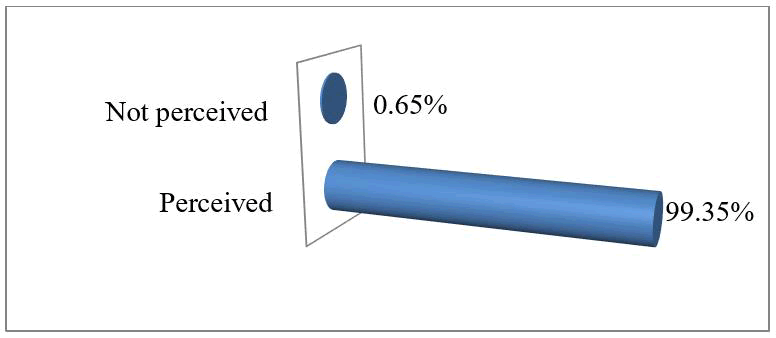
Figure 1. Perception of respondents on occurrence of CC in the last 5-20 years.
Perceptions of respondents on temperature
When the sample HHs were questioned about the perception of changes in temperature in the study area over the last 20 years, the majority, constituting 94% of the total respondents, perceived an increase in temperature, while 4% indicated decrease in temperature and 2% perceive no change (Figure 2). In comparing this perception with the actual trends of the maximum and the minimum temperature recorded during the last 20 years (Figure 3), a clear increase was noted, suggesting that farmers’ perception in terms of long term changes in temperature was supported by the climatological evidence (Figure 2).
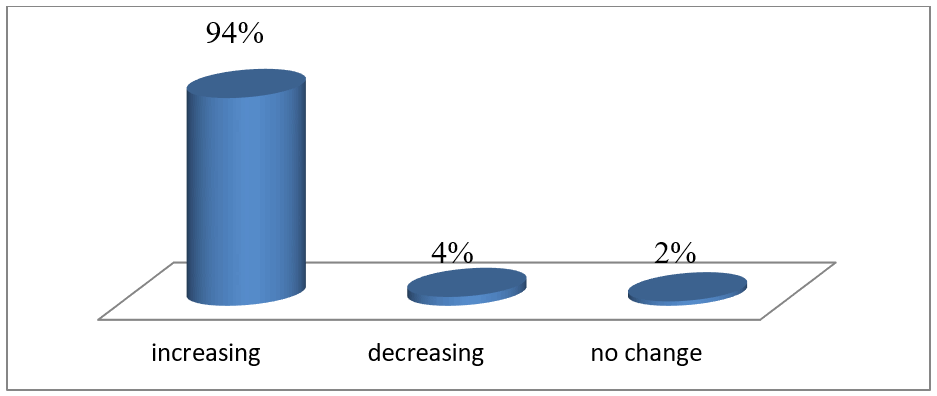
Figure 2. Perception of respondents on temperature in the last 5-20 years.
Perceptions of respondents on rainfall patterns
About 51% of the respondents claimed that the distribution of rainfall in the research area over the last 20 years has been "erratic, while 22%, 15% and 12% of respondents reported that rainfall pattern was increasing, decreasing and no change, respectively (Figure 3). The perception report indicates that there is an uneven distribution of rainfall, a periodic increase in temperature during the dry season, and other factors that are making agricultural activities in general and coffee producers in particular in the study area more difficult.
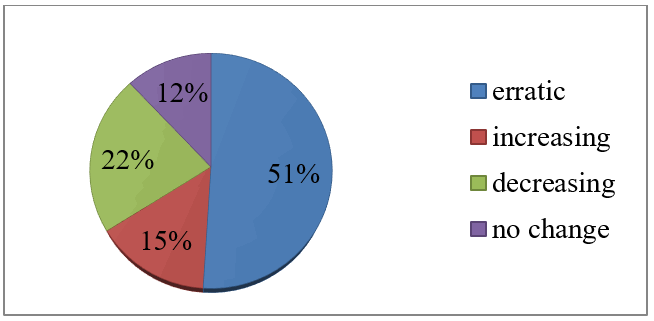
Figure 3. Perception of respondents on rainfall in the last 5-20 years.
Perceptions of respondents on dry spells
About 59% of the respondents indicated that there had been an increase in dry season patterns during the previous 20 years, while roughly 6% and 24% of respondents reported that there was a decrease and no change, respectively, in relation to the study area's (Figure 4).
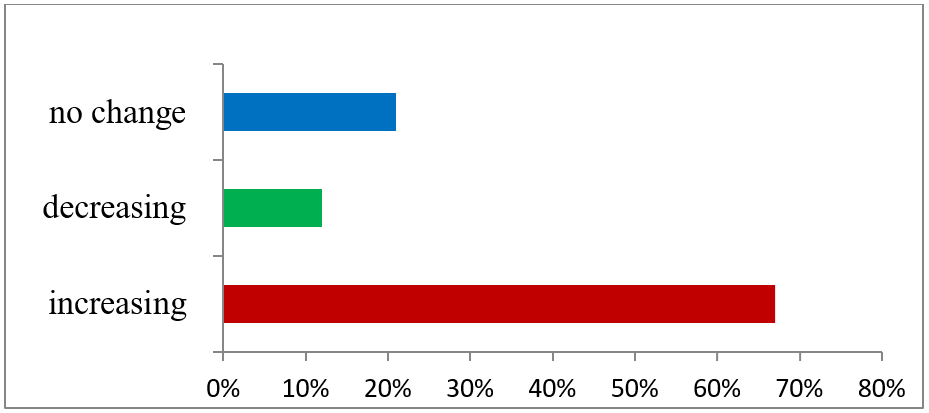
Figure 4. Perception of respondents on dry spells in the last 5-20 years.
Views of participants focus group discussions and key informants
Participants in the Focus Group Discussions (FGDs) in the study area highlighted the occurrence of climate change during the past two decades, which has been characterized by rising temperatures and an uneven distribution of rainfall. According to certain participants in FGDs, the irregular distribution pattern makes it challenging to forecast trends in rainfall. The participants of FGDs that “Rainfall can arrive early and disappear early, arrive late and disappear late, cause flooding, and then dry out for a period”. In general, they claimed that the seasons are erratic and that it is today hard to distinguish between the Kiremit and Belg seasons.
Furthermore, throughout the last 20 years, CC incidents have been reported in the research area by key informants as well. This was demonstrated by altered rainfall patterns, an increase in the highest temperature, extended dry spells from the customary January to April, a reduction in the length of the previous April–August rainfall season, an alteration in humidity levels, and the appearance of new diseases and pests over a two-decade period. In the research area, there have been observations of rising temperatures, erratic rainfall patterns, and prolonged dry seasons that stretch from December through May.
Metrological data based trend analysis of climate change (2000-2020)
The past 20 years of climate data on trends and variability of precipitation and temperatures in the study area recorded by the Ethiopian Meteorological Institute (EMI) were evaluated in comparison with how farmers perceived these changes. The study area's total annual and seasonal rainfall, as well as the annual and seasonal means of temperature, was tested for linear trends.
Trends of temperature
The statistical record of temperature data of the study area from the Ethiopian Institute of Meteorology between 2000 and 2020 shows an increasing trend. The research area's temperature distribution was typified by yearly variations as well as general patterns of higher temperature. The research area's maximum and minimum yearly temperatures for the previous 20 years have varied between 26.1°C and 35°C and 9.4°C and 17.9°C, respectively, according to data retrieved from EMI. The study area's yearly average minimum temperatures for the previous 20 years varied from 13.51°C to 16.43°C, while its average maximum temperature varied from 29.36°C to 30.53°C, indicating a high degree of temperature variability. The highest temperature (35°C) and lowest temperature (9.4°C) for the past 20 years (2000–2020) were recorded in 2017, and 2005, respectively. The maximum and minimum temperatures in the study area increased steadily over the 20 years between 2000 and 2020, as shown in Figure 3. In the studied area, the average annual minimum and maximum temperatures in 2000 were 14.75 and 30.55, respectively, whereas in 2019 they were 15.05 and 31.05, respectively. The mean annual maximum and minimum temperatures in the study area have increased by roughly 0.1°C and 0.3°C over the previous 20 years, as shown in Figure 5.
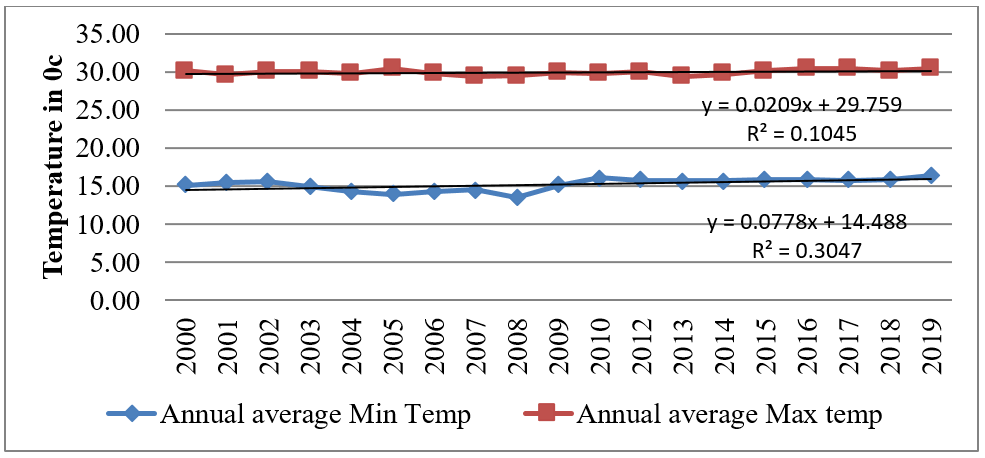
Figure 5. Annual average min and max temperature of the study area (2000–2020).
Trends of rainfall in the study area
The study area saw an annual rainfall of 1127.3 to 2386.7 mm, with a mean of 1488.05 mm, a standard deviation of 270.67 mm, and coefficient of variation 18% (Table 2). This suggests that although rainfall varies somewhat, it is not far from high variability. The years with the least and most annual precipitation totals in the region were 2012 and 2008, respectively. The analysis confirms the findings of McSweeney et al., who found that Ethiopia has significant seasonal and yearly rainfall variability. The distribution of yearly rainfall in the research area has shown an irregular trend over the last 20 years, as shown in Table 2, and the seasonal and annual rainfall distribution patterns are still unpredictable.
|
Year |
Spring |
Summer |
Autumn |
Winter |
Annual total |
|
2000 |
484.3 |
429.5 |
473.5 |
90.6 |
1477.9 |
|
2001 |
452.3 |
594.4 |
353.1 |
131 |
1530.8 |
|
2002 |
398.8 |
459.4 |
319.2 |
109.8 |
1287.2 |
|
2003 |
292.3 |
521.8 |
434 |
107.1 |
1355.2 |
|
2004 |
438.2 |
403.3 |
348.9 |
156.6 |
1347 |
|
2005 |
337.1 |
506.9 |
318.6 |
43.3 |
1205.9 |
|
2006 |
484.1 |
607.7 |
481.6 |
141.1 |
1714.5 |
|
2007 |
445.4 |
553.6 |
357.6 |
121.3 |
1477.9 |
|
2008 |
511.9 |
1170.9 |
545 |
158.9 |
2386.7 |
|
2009 |
549.1 |
356.7 |
330 |
126.7 |
1362.5 |
|
2010 |
463 |
512.9 |
444.1 |
234.6 |
1654.6 |
|
2012 |
452.7 |
105.9 |
452.9 |
115.8 |
1127.3 |
|
2013 |
464.2 |
546 |
471.1 |
116.5 |
1597.8 |
|
2014 |
318.8 |
496.8 |
401.8 |
70 |
1287.4 |
|
2015 |
503.4 |
418.1 |
505.3 |
34.2 |
1461 |
|
2016 |
570.5 |
489.7 |
291.5 |
107.8 |
1459.5 |
|
2017 |
520.8 |
502.2 |
545.5 |
61.2 |
1629.7 |
|
2018 |
409.4 |
352.8 |
321.4 |
103.4 |
1187 |
|
2019 |
320.9 |
418.4 |
680.2 |
248.6 |
1668.1 |
|
2020 |
403.06 |
500.97 |
484.48 |
123.91 |
1512.42 |
|
Min |
292.3 |
105.9 |
291.5 |
34.2 |
1127.3 |
|
Max |
570.5 |
1170.9 |
680.2 |
248.6 |
2386.7 |
|
Mean |
457.5 |
498.33 |
427.99 |
120.28 |
1488.05 |
|
SD |
70.64 |
192.43 |
99.7 |
53.29 |
270.67 |
|
CV % |
15 |
39 |
23 |
44 |
18 |
Table 2. Seasonal and annual rainfall distribution of the study area (2000-20200).
Based on the results displayed in the Table 2, the average amount of rain that fell during the spring was 457.5 mm, with the highest total amount recorded in 2016 at 570.5 mm and the lowest in 2003 at 292.3 mm. With a standard deviation of 70.64 mm and a coefficient of variation of 15%, it suggests that springtime rainfall varies moderately. The average summer rainfall was 498.33 mm, with the highest total rainfall of 1170.9 mm in 2008 and the lowest of 105.90 mm in 2012. The summer rainfall had a high degree of variability (CV of 39%) and little consistency (SD of 192.43 mm). accordingly, it is challenging to forecast the patterns of rainfall distribution in the research area. Because rain-fed agricultural production systems are the only ones used in the research area, this could have a major negative impact on the cropping systems there.
Perception on the observed impacts of CC on coffee farming
The effects of climate change that have been observed on coffee cultivation over the previous 20 years in the research region were assessed through the use of a survey containing appropriate questions. The survey results displayed in Table 3 demonstrated the different impacts of CC that have been observed on coffee production in the study area throughout the course of the preceding 20 years. The main effects that the respondents in the study area noted were the rise in pests and diseases, the decline in yield, the falling of flowers and fruits, and the failure of coffee trees. In response to questions about the occurrence of pests and diseases in coffee farming, 47.23%, 43%, and 9.77% respondents said they were ''strongly agreeing,'' ''agreeing,'' and ''ambivalent,'' respectively. The sample respondents, comprising 49.19%, 43.32%, and 7.49%, expressed strong agreement, agreement, and ambivalence on the decrease in smallholder coffee producing yield. The falling of fruits and flowers was one of the CC-influenced concerns that smallholder coffee growers in the research area had to deal with; 48.86% and 43.97% respondents said they "strongly agreed" and "agreed," respectively. 14.03%, 28.99%, and 57.98% of the respondents said that they "strongly agree," "agree," and "ambivalently" felt about the failure of coffee trees, respectively.
The participants of FGDs talked about their experiences with harvesting and post-harvest losses due to unexpected rain, fruit falling, and difficulty in drying and storing all of which degrade coffee quality. This clearly showed how farmers in the research area are starting to recognize the threat that climate change poses.
| Occurred impacts | Level of perception | |||||
| Strongly agree | Agree | Ambivalent | ||||
| Freq. | % | Freq. | % | Freq. | % | |
| Occurrence of pests and disease | 145 | 47.23 | 132 | 43 | 30 | 9.77 |
| Decreasing of yield | 151 | 49.19 | 133 | 43.32 | 23 | 7.49 |
| Falling of flowers and fruits | 150 | 48.86 | 135 | 43.97 | 22 | 7.17 |
| Failure of coffee trees | 40 | 13.03 | 89 | 28.99 | 178 | 57.98 |
Table 3. Perception on adverse impacts CC on coffee farm in the last 5-20 years.
Perception on extent of impact of CC on coffee production
An appropriate inquiry was given to the respondents in order to find out if the research area's coffee production was being impacted by CC. According to the survey results shown in Table 4, 50%, 37%, and 13% of respondents reported that the effect of climate change on coffee has been high, medium, and low throughout the previous 20 years.
| Perception | Level of perception | Freq. | % | X2 |
| Extent of impacts on coffee farm | High | 154 | 50 | 20.97*** |
| Medium | 113 | 37 | ||
| Low | 40 | 13 |
Table 4. Perception of impacts of CC on coffee in the last 5-20 years.
Perception of respondents on sources of information
Regarding the availability of information on CC and CSAPs, the survey report showed that all respondents had access to information from various sources. Table 5 provides a summary on the sources of information that smallholder farmers used to learn about climate variability and CSAPs. Extension agents were the major source of information for smallholder farmers in the study area, followed by neighbor farmers, radio and television, respectively.
| Sources information | ‘Yes’ responses on each sources of information (N=307) | Rank | |
| Freq. | % | ||
| Extension services | 290 | 94.46 | 1st |
| Radio and television | 240 | 78.18 | 3rd |
| Neighbor farmer | 263 | 85.67 | 2nd |
| Local administrations | 45 | 14.66 | 4th |
Table 5. Information sources about CC and CSAPs.
This study analyzed the historical trends of observed temperature and precipitation in Yeki woreda, Southwest Ethiopia. The study compares the farmers’ perceptions with the observed temperature and precipitation trends recorded by the Ethiopian Metrological Institute over the past 20 years. Face-to-face surveys, focus group discussions, and key informant interviews were conducted to assess farmers’ perceptions about climate change and its impacts on smallholder coffee production. The results indicate that the farmers perceived a considerable change in temperature and precipitation parameters. The results suggest that farmers’ perceptions of temperature and precipitation trends approximately coincided with observed trends. The changes in climate parameters (temperature, rainfall, and dry spells) substantially and negatively affected smallholder coffee production.
[Crossref] [Google Scholar] [PubMed]
[Crossref] [Google Scholar] [PubMed]
[Crossref] [Google Scholar] [PubMed]
Citation: Bekele T (2025). Perception of Smallholder Coffee Farmers on Trends of Climate Change and Its Impacts: A Case of Yeki Woreda, South West Ethiopia. AJFST. 16:121.