

 +44 3308180992
Research Article - Educational Research ( 2025) Volume 16, Issue 1
Received: 18-Jul-2024, Manuscript No. ER-24-142199; Editor assigned: 22-Jul-2024, Pre QC No. ER-24-142199 (PQ); Reviewed: 05-Aug-2024, QC No. ER-24-142199; Revised: 16-Jan-2025, Manuscript No. ER-24-142199 (R); Published: 23-Jan-2025, DOI: 10.14303/2141-5161.2025.280
The lecturer's responsibility is to impart skills, experience and knowledge to their students for their future career or life. Teaching entails guiding classroom exercises to ensure students derive value from them. Excessive additional responsibilities for lecturers might compromise the quality of teaching and impact student outcomes. This article aims to investigate the correlation between stress and extra responsibilities among instructors. The study sample consisted of 96 lecturers employed at University of Cape Coast, Ghana, spanning both College of Education and School of Business. The results indicated that workloads were moderate, with a mean of 3.55, and stress had a mean of 3.18. Lecturers are not significantly burdened by workloads, which prevents stress among them. The study demonstrated that the teaching quality stays high despite the heavy workloads of lecturers, which positively impacts student achievement.
Stress, Lecturer, Additional task, Business, Education
Teaching in a higher education institution differs from teaching in basic and secondary schools in terms of age group and educational objectives (Amina Abdullahi Ubangari et al., 2014). College-level instructors should equip students with relevant knowledge, experience, and abilities to prepare them for their future vocations and lifestyles (Barkhuizen N et al., 2008). Lecturers prioritize ensuring that pupils derive benefits from classroom activities (Bavanhi A Raman et al., 2017). Education at universities is linked to industry needs, which impact the curriculum and instructional methods (Butt G, 2005). Bavanhi and Norasmah observed that teachers significantly influence the cognitive and affective development of students (Childs JH et al., 2012).
A lecturer's teaching effectiveness may improve when they concentrate on classroom activities throughout a lecture, presentation, case study and group discussion (Emsley R et al., 2009). Furthermore, diverse activity materials can improve students' knowledge and skills (Haryati, 2013). Non-academic tasks can impact teaching satisfaction. This scenario could lead to a distraction for educators from academic matters, thereby impacting student achievement (Niem PM et al., 1999). These extra tasks can disrupt teaching hours and lead to class cancellations (Norreza, 2014). An additional lesson may be necessary in this scenario to ensure pupils acquire the required knowledge (Kamaruzaman, 2007).
Currently, the teaching profession is demanding since teachers are required to not only educate but also handle numerous other responsibilities (Lazarus RS, 1966). This situation reduces their satisfaction. Rohaidah observed that this phenomenon is a result of workplace stress (Lazarus RS et al., 1984). A survey conducted by Pelzer et al., revealed that 55% of South African educators want to exit the education field because of occupational stress. Stress and Burnout in the workplace has adverse effects on individuals, organizations, and clients or pupils (Nayak J, 2008).
This article aims to investigate the correlation between stress and extra responsibilities among instructors (Pelzer K et al., 2005). The study sample comprised 96 lecturers from several departments at University of Cape Coast, Ghana, including the College of Education and School of Business (Raja, 2011). The results indicated that workloads were moderate, with an average of 3.55, and stress had an average of 3.18. Lecturers are not burdened by workloads, resulting in no reduction in stress levels among them. The data indicates that the lecturers' teaching quality stays high despite their heavy workloads, which positively impacts student achievement (Rohaidah, 2015).
The subsequent sections are structured as follows: Section 2 elaborates on our hypothesis and thoroughly explores the themes from previous research that is most pertinent to the current investigation. Section 3 delves into the research design and technique issues. The final sample details and variable measurements are also addressed in this chapter. The results and discussion can be found in section 4. Section 5 outlines the conclusions, constraints, and recommendations for future research.
Managing stress is essential to guarantee that professors uphold their instructional quality (Smith A, 2007). Stressed professors may impact their teaching and students' performance. Therefore, it is crucial for lecturers to prioritize their professional responsibilities (Tajulashikin, 2013). When lecturers are given additional non-academic responsibilities, it might result in stress. Stress is a significant ailment that is frequently linked to an individual's or employee's job performance, health, and productivity. Furthermore, it is linked to mental health according to Haryati, Norreza, and Raja (Van Dick R et al., 2001).
Salaries are determined based on credentials, abilities, and experience, all of which are associated with job descriptions. Weak justifications for assigning tasks beyond a job description might lead to stress. Employees believe in the importance of honoring the initial agreement between teachers and the institution. If a duty is not specified in the job description, the organization should compensate the teacher further for completing it. This scenario can help prevent teacher stress.
Employees are typically content with their duties when they align with their job descriptions. If employees are assigned activities that are outside the scope of their job descriptions, they may experience stress from being overwhelmed and having insufficient time to complete all their tasks. As long as professors fulfill their job responsibilities, they may effectively handle their stress.
Smith suggested that work-related stress was significantly associated with the pressure of fulfilling evolving targets and deadlines, extended working hours, escalating workloads, and frequent changes in schedules or tasks. Moreover, the study found that over 80% of educators reported an increase in their workloads over the previous three years, leading to elevated stress levels. Barkhuizen and Rothmann performed research with academic personnel at South African universities. Academic staff faced significant workplace stress related to compensation, workload, and balancing work and personal life.
How do workloads impact lecturers' stress levels? Lecturers are tasked with equipping pupils for the workforce. Industry typically favors students with a deep understanding of specific courses and robust soft skills. Students must enhance their knowledge and soft skills through academic activities to meet industrial demands. Lecturers must create notes and be present in class for this case. Nevertheless, having extra responsibilities little impacts teaching hours and adds to stress levels.
How can stress impact teaching quality? Why do lecturers struggle to handle both teaching and extra responsibilities? Is this a result of instructors lacking time management skills? This will be addressed later in the text.
Extra responsibilities involve tasks concerning meetings, outstations, short-notice assignments, and events, which could result in the cancellation of class. Meetings typically occur during regular office hours, conflicting with class schedules. This scenario could lead to dissatisfaction and demotivation as they have already made preparations for the class (Figure 1).
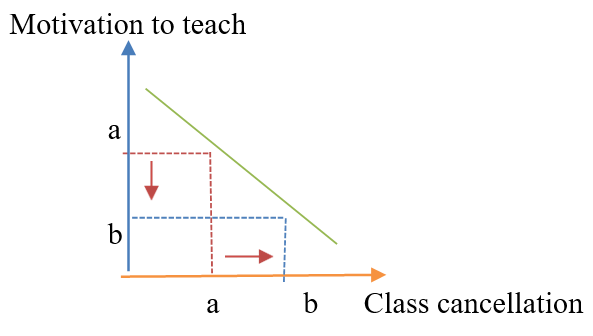
Figure 1. Relationship between motivation to teach and class cancellation.
Class cancellations may be to either internal or external meetings. Class cancellations for internal meetings may impact only a few periods, causing stress for lecturers who have already prepared materials for those periods. External meetings are more significant as they may result in the cancellation of classes for extended durations, ranging from two to three days or even longer. What do students think of lecturers when a class is cancelled? This situation could cause instructors to feel pressured, as they might be perceived as indolent. Furthermore, a loss in motivation may occur if their reputations are impacted.
Let's analyze the lecturer's readiness and instructional hours more thoroughly. For instance, while 16 hours are dedicated to teaching, it is crucial to additionally acknowledge the significance of preparation hours in boosting the lecturer's confidence and improving teaching quality. Lecturers need to improve their time management abilities to help students.
Nevertheless, when lecturers take on more responsibilities, it might impact the teaching and learning process. This is because the lecturers will need to allocate more time to supplementary activities instead of academic activities may need to be rescheduled, leading to potential stress for individuals involved in teaching and learning. Lecturers will need to allocate time between additional activities and instruction. Extra responsibilities related to time management might lead to stress.
Below is a definition from prior research: Selye described stress as a body's response that is not particular to any demand. Lazarus claimed that how stressful circumstances affect a person is influenced to some extent by the individual's perceptions of the events. Lazarus and Folkman provided the following definition of stress:
"A relationship where an individual perceives the demands of the environment as overwhelming and potentially harmful to their well-being."
McGrath, as referenced in Nayak, described stress as a perceived mismatch between the requirements placed on an individual and their ability to cope, especially when failing to meet these demands could have serious repercussions.
Why is it necessary to manage stress? What are the consequences of severe stress? What impact does stress have on student achievement? How can stress be minimized? Stress in instructors may impact student performance. Lecturers' inability to concentrate on teaching may lead to pupils struggling to comprehend the subject matter. This situation could lead to students failing quizzes and examinations. It is crucial for lecturers to avoid being overwhelmed by excessive tasks unrelated to teaching and learning activities.
Stress can push individuals to sustain their highest level of knowledge, expertise, and abilities, benefiting the firm. Edward suggests that a moderate level of stress can serve as a beneficial motivator for achieving success. If stress levels become excessive, it can disrupt daily operations and impact the organization. Niemi and Valniomaki stated that excessive stress might lead to both physical and mental health issues. If stress is not well managed, it can lead to harm within the organization. Janet suggested that inadequate management of stress can result in significant overall issues.
Inadequate management of stress by lecturers can impact the quality of teaching, student satisfaction, and performance. This demonstrates that stress can impact the connection between lecturer and student performance. The graphic illustrates the correlation between student academic performance and lecturer stress (Figure 2).
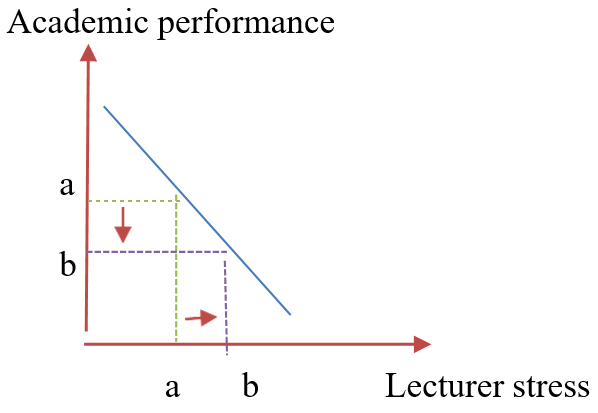
Figure 2. Relationship between academic performance and lecturer stress.
Figure 2 illustrates the correlation between student academic achievement and lecturer stress. Increased stress levels in the professor could impact student performance.
This scenario is unfavorable for both the public and industrial sectors. Weak student achievement can impact employability. Employability is strongly linked to lecturer stress, so top management must take significant measures to minimize stress levels among instructors.
Prior research focused on the adverse impact of stress on the teaching profession. Butt conducted a study indicating that teachers experience significant work-related stress. Work-related stress could be a factor in prompting academics to retire early, as suggested by Van Dick & Wagner. Emsley et al., mentioned that excessive stress and associated psychiatric conditions can lead to absenteeism.
Research methodology
This section covers elements of the study including study design, study population, study sample, study location, research instruments, validity and reliability, pilot study, data collection techniques and data analysis procedures.
The study population comprised educators who taught at University of Cape Coast, Ghana. The overall sample size was derived via random sampling. The study sample consisted of 110 lecturers employed at University of Cape Coast, Ghana from the College of Education and School of Business. There were 30 lecturers from each department in the College of Education and 20 lecturers from the School of Business in the sample distribution.
This study utilized a questionnaire divided into three parts to gather responses from the participants. Part A focused on the respondent's demographic background. Part B contained 10 items concerning the factors of extra tasks assigned to instructors. Part C included 10 items related to stress concerns among instructors.
The questionnaire was provided to the lecturers during their free time, avoiding any disruption to their class schedule. The participants had two days to complete the questionnaire, which was then to be submitted to the clerk at the front desk of each department on the third day. A face-to-face interview was not feasible due to the varying schedules of each instructor, making it challenging to arrange meetings.
A preliminary study was carried out to assess the accuracy and consistency of the items in the questionnaire. A pilot research was carried out with 10 lecturers from the general study department. The results from the alpha index analysis conducted using Statistical Package for the Social Sciences (SPSS) yielded values of .782 for workloads and 0.884 for stress. Hence, the questionnaire might be utilized to collect data for this study.
The researchers disseminated the questionnaire to lecturers chosen with the help of the administration. All lecturers were provided with information and instructions to prevent errors and issues. The data in this study was analyzed using statistical distribution frequency, mean and percentage. The formula and range of means used to assess respondents' perception were as follows: 1.00 to 2.33 for a low level, 2.34 to 3.67 for a moderate level and 3.68 to 5.00 for a high level. SPSS was utilized to examine the necessary information or data. The analysis was performed when all questionnaires from each department were gathered.
Table 1 displays the demographic features. The findings showed that the majority of respondents were female (65 people) versus male (31 people). Moreover, 65% of the participants were between 36 and 40 years old. The results suggested that only one participant was between 25 and 30 years old. Four responders were older than 51 years.
96% of respondents were married, while 2% were single and 2% were divorced. Furthermore, the findings showed that 78% (75 individuals) held posts as junior lecturers, whereas 21% (20 individuals) were senior lecturers. Most presenters have teaching experience, with 60 individuals having over 11 years of experience. 42% had 11 to 15 years, whereas 20% had 16 to 20 years. Initially, it was found that most lecturers were under the age of 45 and had significant teaching experience.
| Demographic | Categories | Frequency | Percentage (%) |
| Gender | Male | 31 | 32 |
| Female | 65 | 68 | |
| Age | 25-30 years | 1 | 1 |
| 31-35 years | 19 | 20 | |
| 36-40 years | 43 | 45 | |
| 41-45 years | 21 | 22 | |
| 46-50 years | 8 | 8 | |
| 51 and above | 4 | 4 | |
| Marital status | Married | 92 | 96 |
| Single | 2 | 2 | |
| Divorce | 2 | 2 | |
| Position | Junior lecturer | 75 | 78 |
| Senior lecturer | 20 | 21 | |
| Senior member | 1 | 1 | |
| Education background | Diploma degree | ||
| Master, PhD | |||
| Teaching experience | 1-5 years | 2 | 2 |
| 6-10 years | 28 | 29 | |
| 11-15 years | 40 | 42 | |
| 16-20 years | 20 | 21 | |
| Above 20 years | 6 | 6 |
Table 1. Demographic characteristics of respondents.
Table 2 displays the examination of stress and workloads. Panel A displays workload elements ranked by mean from highest to lowest. The results showed that lecturers believed that the time allotted for additional work was more than that for academic activities, with a mean of 3.80. Furthermore, organizing programs was found to lead to increased workloads (mean=3.64), disrupting academic activity. The average time frames for extra tasks' due dates and tasks delivered on short notice were 3.59 and 3.43, respectively. Lecturers must fulfill non-teaching responsibilities with a mean score of 3.27.
| Panel A: Workloads | |||
| Workloads | Mean | Std Dev. | Ranking |
| 1. Time allocation for extra tasks was greater than for academic activities | 3.84 | 1.04 | 1 |
| 2. Conducting programs | 3.64 | 0.872 | 2 |
| 3. Have too little time to finish extra tasks | 3.59 | 0.99 | 3 |
| 4. Task given on short notice | 3.43 | 1.093 | 4 |
| 5. Task given not related to teaching | 3.27 | 1.081 | 5 |
| Panel B: Stress | |||
| Stress | Mean | Std Dev. | Ranking |
| 1. Class cancelled | 3.43 | 1.304 | 1 |
| 2. Attending meeting | 3.41 | 1.072 | 2 |
| 3. Student performance | 3.33 | 1.185 | 3 |
| 4. Preparation for teaching materials | 3.01 | 1.21 | 4 |
| 5. Performance evaluation by head of Department | 3.01 | 1.21 | 4 |
| 6. Relationship with department | 2.94 | 1.141 | 5 |
Table 2. Analysis stress and workload.
Table 3 shows the minimum values for workloads and stress. The results indicated that the average workload score was 3.55, while the stress score was 3.18. Lecturers were able to effectively manage their assignments, resulting in moderate workloads and stress levels. The amount of assignments assigned to lecturers was nevertheless lower in comparison to their instructional responsibilities.
Main responsibility outlined in their job descriptions. In addition, lecturers received higher compensation and were in charge of overseeing their additional responsibilities, such as teaching and learning. When lecturers effectively handle their workloads, stress levels decrease. This is crucial since lecturer stress is linked to student performance. The study concluded that the teaching quality was high due to the manageable workloads and acceptable stress levels, enabling lecturers to excel in the teaching and learning activities.
| Items | Mean | Std Dev. | Ranking |
| 1. Workloads | 3.55 | 0.825 | 1 |
| 2. Stress | 3.18 | 0.871 | 2 |
Table 3. Mean workloads and stress.
Table 4 displays the association between workloads and stress. A positive link was found between workloads and stress, with a correlation coefficient of 0.499 and a significance level of p<0.01. A lecturer's increased workload can lead to higher levels of stress. It is crucial to minimize the lecturer's stress by effectively managing the workload to avoid any negative impact on the teaching and learning processes.
| Workloads | Stress | |
| Workloads | 0.499** | |
| Stress | 0.499** | |
| Note: ** Correlation is significant at the 0.01 level (2-tailed), * Correlation is significant at the 0.05 level (2-tailed) | ||
Table 4. Correlation.
Lecturers are tasked with imparting skills, experience, and knowledge to students for their future vocations or lives. Students should derive advantages from classroom activities. If lecturers are burdened with several extra responsibilities, it may compromise the standard of their teaching.
This article aimed to investigate the correlation between stress and extra responsibilities among instructors. The study's sample consisted of 96 lecturers from College of Education and School of Business at University of Cape Coast, Ghana.
The study revealed that lecturers had moderate workloads, resulting in moderate levels of stress. The lecturers effectively handled their additional responsibilities alongside their teaching duties, resulting in an improved standard of instruction. This scenario is advantageous for student performance since the lecturers can effectively handle their stress. Moreover, the outcomes were impacted by job descriptions and wages. The number of responsibilities assigned to the lecturers was still fewer in comparison to teaching, which was their primary responsibility as outlined in their job descriptions.
This study centered on lecturers in Cape Coast, where the cost of living was comparatively cheaper than in other urban areas. These findings are only relevant to small cities. Researchers are advised to investigate the correlation between workloads and stress, which may be influenced by salary, in next studies. The sample should be collected from several states, including other polytechnic institutes in different cities.
[Crossref] [Google Scholar] [PubMed]
[Crossref] [Google Scholar] [PubMed]
[Crossref] [Google Scholar] [PubMed]