

 +44 3308180992
Research Article - International Research Journal of Engineering Science, Technology and Innovation ( 2025) Volume 10, Issue 1
Received: 22-Oct-2024, Manuscript No. irjesti-25-150709; Editor assigned: 25-Oct-2024, Pre QC No. irjesti-25-150709 (PQ); Reviewed: 08-Nov-2024, QC No. irjesti-25-150709; Revised: 20-Feb-2025, Manuscript No. irjesti-25-150709 (R); Published: 27-Feb-2025, DOI: 10.14303/2315-5663.2025.128
The rapid advancement of Autonomous Vehicles (AVs) is transforming transportation by integrating cutting-edge technologies, with Computer Vision (CV) playing a pivotal role. This research explores the critical applications of computer vision in enabling autonomous vehicles to navigate complex environments, detect objects, and make real-time decisions. Computer vision techniques, including object detection, lane tracking, pedestrian recognition, and traffic signal detection, provide AVs with a comprehensive understanding of their surroundings. We examine how deep learning models, particularly Convolutional Neural Networks (CNNs), enhance the accuracy of these tasks by processing vast amounts of visual data. Additionally, sensor fusion, integrating camera data with LiDAR and radar, is discussed to highlight its importance in creating robust perception systems for AVs. We also address the challenges in adverse weather conditions, dynamic environments, and real-time processing limitations that impede the full potential of computer vision in AVs. This paper aims to contribute to the ongoing development of safer, more efficient autonomous driving systems by proposing advancements in computer vision algorithms and techniques. By analysing current state-of-the-art approaches, we suggest future research directions to overcome existing limitations and improve the reliability of autonomous vehicles.
Quantum cryptography, Quantum Key Distribution (QKD), Wireless communication, Cybersecurity, Quantum mechanics, Secure key exchange
Autonomous Vehicles (AVs), or self-driving cars, are considered the future of transportation (Gonzalez RC et al., 2018). These vehicles have the potential to make driving safer, more efficient, and even reduce traffic problems. One of the most important technologies that allow autonomous vehicles to work is Computer Vision (CV) (Redmon J et al., 2016). This technology helps cars understand the world around them by processing images from cameras and making decisions based on what they "see."
Computer vision in autonomous vehicles is designed to replicate how humans see and understand their surroundings (Bojarski M et al., 2016). It allows the vehicle to recognize things like pedestrians, other cars, traffic signs, and road markings (Liu W et al., 2016). The core tasks that computer vision handles include object detection, lane detection, and recognizing traffic lights and road signs (Goodfellow I et al., 2016). To achieve this, deep learning techniques, especially Convolutional Neural Networks (CNNs), play a key role (Chen LC et al., 2017). These CNNs help in breaking down images and identifying important elements in real time (Shin J et al., 2018).
However, cameras alone aren’t enough for a fully functional self-driving car (Zhou X et al., 2019). Other sensors, like LiDAR and RADAR, are also used (Rashtchian C et al., 2014). LiDAR helps the car measure distance by using laser pulses, while RADAR is good for detecting objects, especially in poor weather conditions (Kendall A et al., 2016). Together, these sensors create a full picture of the car’s surroundings, which is known as sensor fusion (Janai J et al., 2020).
Although computer vision technology has advanced a lot, there are still many challenges (Liu L et al., 2020). One big issue is how these systems perform in bad weather, like rain or fog (Kato S et al., 2015). Poor visibility can make it difficult for the cameras to capture clear images, which could affect the safety of the car (Li Y et al., 2023). Processing these images quickly enough for real-time decision-making is also tough, since autonomous vehicles need to react instantly to sudden events, like a pedestrian stepping into the street or a vehicle cutting in suddenly (Figure 1).
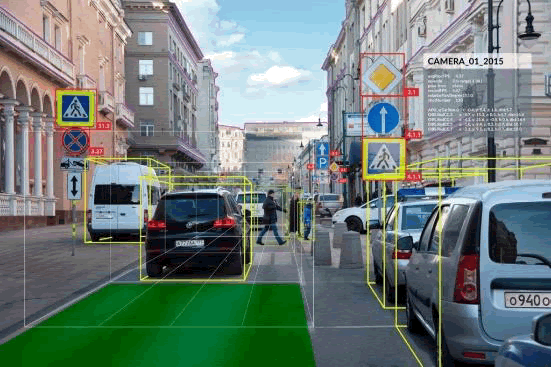
Figure 1. Object detection for autonomous vehicles.
Another challenge is ensuring the safety of these systems. Since autonomous cars will share the road with human drivers, it's critical that their computer vision systems are extremely reliable, even more so than human drivers.
This will require significant testing and improvements in both the software and hardware.
In this paper, we explore the role of computer vision in autonomous vehicles, including the technology behind it, the challenges it faces, and its future potential. Moreover, we look at how deep learning is used in object recognition, why sensor fusion is important, and discuss some of the current limitations.
Finally, we suggest ways that computer vision can improve to help autonomous vehicles become a mainstream reality.
Ease of use
One of the most significant factors driving the adoption of computer vision in autonomous vehicles is its ease of use from both a development and application perspective. The goal is to make the technology accessible and reliable for both vehicle manufacturers and end users, while ensuring that it operates effectively in real-world conditions.
From the developer's standpoint, the ease of integrating computer vision into autonomous vehicles has been greatly improved thanks to the availability of open-source libraries and frameworks. Libraries such as OpenCV (Open Source Computer Vision Library) and Tensor Flow provide pre-built tools and functions that allow developers to implement object detection, lane tracking, and image classification without having to code these features from scratch. These frameworks come with extensive documentation and large community support, making them relatively simple to implement for those with knowledge of computer vision and machine learning. Additionally, companies like Nvidia offer specialized hardware such as GPUs (Graphics Processing Units) and software development kits like Nvidia Drive, which are designed to optimize the performance of computer vision applications in autonomous vehicles.
On the hardware side, ease of use is also facilitated by the growing availability of powerful yet affordable sensors. High-resolution cameras, LiDAR, and RADAR systems are becoming more compact and cost-effective, allowing for easier integration into vehicle designs. The plug-and-play nature of these sensors, along with advancements in sensor fusion technology, enables developers to combine data from multiple sources seamlessly, creating a more accurate and comprehensive understanding of the vehicle’s environment.
For the end user, or the passenger, the ease of use is characterized by the seamless experience of the autonomous driving process. Autonomous vehicles are designed to operate with minimal human intervention, making the driving experience as straightforward as possible. Once the system is engaged, computer vision handles complex tasks such as recognizing and reacting to traffic lights, pedestrians, and road obstacles. This reduces the need for constant user input, offering a comfortable and convenient mode of transport. Most AVs are equipped with intuitive user interfaces, allowing passengers to input destinations and monitor the vehicle's status with ease. Additionally, as these systems become more widespread, features such as Over-the-Air (OTA) updates allow for automatic improvements to the vehicle's software, ensuring that the system remains up to date without requiring manual interventions.
However, challenges still exist in terms of user trust and system transparency. For many people, fully relying on a machine to handle driving tasks is a new experience, and understanding how the vehicle’s computer vision system works can help build confidence in the technology. Therefore, it is essential to design user interfaces that clearly communicate the vehicle's actions and decisions in real time, helping users feel more in control of their journey. Furthermore, as technology becomes more refined, usability will increase through enhanced reliability, reduced errors, and improved performance in a variety of driving conditions.
In conclusion, computer vision systems for autonomous vehicles are becoming easier to implement due to the availability of tools, hardware, and support. Additionally, the user experience has been designed to be as seamless as possible, focusing on convenience and minimal intervention. While there are still areas to improve, especially regarding user trust and transparency, the ease of use of these systems is a key factor that will drive further adoption of autonomous vehicles in the near future.
Technology used
The successful operation of autonomous vehicles heavily relies on various advanced technologies that allow these systems to perceive, understand, and navigate their surroundings. At the heart of this lies computer vision—a key technology that enables autonomous vehicles to process visual information and make real-time decisions. The technology used in computer vision systems for AVs can be categorized into hardware, software, and algorithmic approaches (Figure 2).
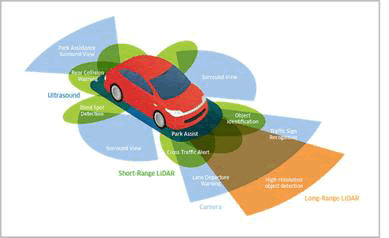
Figure 2. Sensors commonly used in autonomous vehicles.
Hardware components
Autonomous vehicles are equipped with a range of sensors that feed data into the computer vision system. The main hardware components include:
• Cameras: High-resolution cameras are the primary tools used to capture visual data. They are often mounted around the vehicle to provide 360-degree coverage, including front, rear, and side views. Cameras capture real-time video streams that are analyzed by computer vision algorithms to detect objects, read traffic signs, and track lane markings.
• LiDAR (Light Detection and Ranging): LiDAR sensors use laser pulses to measure distances to nearby objects. They create detailed 3D maps of the vehicle’s environment, providing depth information that complements the 2D images from cameras. This is particularly useful in determining the precise location of obstacles, road boundaries, and other vehicles.
• RADAR (Radio Detection and Ranging): RADAR is used to detect objects and measure their speed, especially in poor weather conditions where visibility is low. Unlike cameras, RADAR works well in rain, fog, or darkness, making it essential for reliable autonomous driving.
• Ultrasonic sensors: Typically used for short-range detection, ultrasonic sensors help with tasks like parking and detecting close-range obstacles that cameras or RADAR might miss.
The fusion of data from these sensors allows the vehicle to have a comprehensive understanding of its environment, both in terms of visual perception and distance measurement.
Software and algorithms
The software used in autonomous vehicles for computer vision is centered around complex algorithms that interpret the data captured by the sensors. The key software components include:
• Convolutional Neural Networks (CNNs): CNNs are a type of deep learning algorithm specifically designed for image processing. They are the backbone of most modern computer vision systems in AVs. CNNs analyze visual data from cameras, breaking down images into different features, such as edges, textures, and shapes, to recognize objects like pedestrians, vehicles, and road signs. They are trained on massive datasets to improve accuracy in real-time recognition.
• Object detection and classification: Algorithms like YOLO (You Only Look Once) and SSD (Single Shot Multibox Detector) are commonly used for object detection in autonomous vehicles. These algorithms help the vehicle detect various objects around it in real time, determine their classification (e.g., pedestrian, car, cyclist), and predict their movement to avoid collisions.
• Semantic segmentation: This technique allows the vehicle to divide an image into different segments and label each pixel. For example, semantic segmentation can differentiate between the road, sidewalks, vehicles, and pedestrians, allowing the vehicle to understand its environment in greater detail. Popular algorithms used for this include U-Net and Fully Convolutional Networks (FCNs).
• Lane detection algorithms: Lane detection is a critical aspect of computer vision in AVs. Algorithms based on Hough transform, Canny edge detection, and deep learning-based lane tracking systems allow the vehicle to identify road lanes and stay within them, even when they are poorly marked or partially obscured.
• Sensor fusion: Combining data from multiple sensors (cameras, LiDAR, RADAR, etc.) enhances the vehicle's overall perception. This technique, called sensor fusion, integrates inputs from different sensor types, allowing for more accurate and reliable decision-making. For example, while cameras provide detailed colour information, LiDAR adds 3D depth data, and RADAR ensures detection in poor visibility conditions. By fusing this data, AVs can create a comprehensive 3D map of their surroundings.
Machine learning and artificial intelligence
• Deep learning: Most of the computer vision systems used in autonomous vehicles are powered by deep learning models. These models are trained using vast datasets to learn how to recognize and classify objects accurately. Supervised learning is typically used, where the system is trained with labelled data (e.g., images of cars, pedestrians, road signs) to learn how to identify them in new situations.
• Reinforcement learning: In some cases, autonomous vehicles use reinforcement learning to improve their driving performance. The vehicle learns by interacting with its environment, receiving rewards or penalties based on its actions, and gradually learning the best driving behavior.
• Edge computing: Autonomous vehicles need to process vast amounts of data in real time. To minimize latency, edge computing is employed, where data is processed directly on the vehicle (onboard computing) rather than relying on external cloud servers. This ensures faster decision-making, which is critical for real-time navigation and collision avoidance.
Cloud connectivity
While most real-time processing is done on the vehicle, autonomous systems often rely on cloud connectivity for task like map updates, system updates, and training algorithms. The cloud is also useful for sharing data between vehicles (V2V communication) and infrastructure (V2I communication), which helps improve overall safety and efficiency in connected environments.
In summary, the technology used in computer vision for autonomous vehicles involves a combination of high-tech sensors, sophisticated software algorithms, deep learning models, and real-time computing. These technologies work together to allow autonomous vehicles to perceive their surroundings, make decisions, and navigate safely. As research and development in this field continue, advancements in these areas will further enhance the capabilities and reliability of autonomous driving systems.
The research section outlines the approach and steps involved in designing, developing, and testing the computer vision system for autonomous vehicles. This includes collecting data, training models, integrating sensors, and evaluating the system’s performance.
Data collection and preprocessing
The first step in developing a computer vision system for autonomous vehicles is gathering large amounts of high-quality data. The system needs diverse datasets to learn how to identify objects, recognize road signs, and detect lanes in different environments and conditions (e.g., day, night, rain, fog). The data primarily comes from cameras, LiDAR, and RADAR sensors installed on vehicles.
• Image data: High-resolution images from cameras are collected. These images include various road scenes, such as highways, city streets, and rural roads, as well as different weather and lighting conditions.
• LiDAR and RADAR data: 3D point cloud data from LiDAR and distance data from RADAR are collected simultaneously to give depth information about the vehicle’s surroundings.
• Annotated data: The raw data is then annotated, meaning objects like pedestrians, cars, lanes, and signs are labelled manually. This helps in training machine learning models to recognize these objects.
Before the data is fed into the system, it undergoes preprocessing to ensure it's in the correct format for analysis. This includes:
• Image resizing: All images are resized to a uniform resolution to reduce computational requirements.
• Normalization: Pixel values are normalized to improve model training.
• Data augmentation: Techniques like rotation, flipping, and cropping are applied to artificially expand the dataset and make the model more robust to various conditions.
Model selection and training
The core of the computer vision system is built on Convolutional Neural Networks (CNNs), a type of deep learning model designed specifically for image recognition tasks. CNNs are used for tasks like object detection, lane detection, and road sign recognition.
• Object detection: For detecting and classifying objects like pedestrians and other vehicles, models such as YOLO (You Only Look Once) or Faster R-CNN are used. These models are chosen for their speed and accuracy in real-time detection.
• Lane detection: Lane detection is performed using a combination of traditional image processing techniques (like Canny edge detection) and deep learning-based methods such as semantic segmentation. This allows the system to identify road lanes even when they are partially obscured or poorly marked.
The selected models are trained on the collected and annotated dataset using a supervised learning approach. During training, the model adjusts its parameters (weights and biases) based on the labelled data until it can accurately recognize objects and patterns in new, unseen data.
• Training process: The training process involves feeding batches of images through the CNN. The model makes predictions, and these predictions are compared with the actual labels (e.g., whether the object is a pedestrian or not). The loss function (a measure of prediction error) is calculated, and the model uses backpropagation to adjust its parameters to minimize this loss.
• Validation: To avoid overfitting (where the model performs well on training data but poorly on new data), the dataset is split into training and validation sets. After each training cycle (epoch), the model’s performance is tested on the validation set to ensure it generalizes well.
Sensor fusion and integration
Once the models are trained, the next step is integrating them with the vehicle’s sensor system. Autonomous vehicles rely on multiple sensors, including cameras, LiDAR, and RADAR, to perceive their surroundings. Sensor fusion is the process of combining data from these different sensors to create a comprehensive view of the environment.
• Data synchronization: Sensor data is synchronized in time to ensure all inputs (images, 3D point clouds, distance measurements) correspond to the same moment in the environment.
• Kalman filters and Bayesian networks are used to fuse this data, improving accuracy and reliability. For instance, while cameras provide colour and shape information, LiDAR gives depth data, and RADAR helps detect objects in low-visibility conditions.
The result is a rich, multi-sensor perception system that enables the vehicle to accurately detect and track objects in real-time.
System testing and evaluation
After the system has been integrated with the vehicle, it is rigorously tested in both simulated and real-world environments. Testing is critical to ensure that the computer vision system can handle various driving scenarios, including unexpected events.
• Simulation: Initially, the system is tested in simulated environments using tools like CARLA and LGSVL. Simulations allow for the testing of different driving conditions (e.g., rain, snow, heavy traffic) without risking safety. Here, the system’s ability to detect objects, recognize road signs, and follow lanes is evaluated.
• Real-world testing: The system is then deployed on an actual autonomous vehicle for real-world testing. This includes driving on highways, city streets, and rural roads, where it faces a variety of conditions such as pedestrians, traffic signals, road construction, and unpredictable driver behavior.
• Performance metrics: The system is evaluated based on key performance metrics such as accuracy, precision, recall, and latency. Accuracy measures how often the system correctly identifies objects, while latency measures the time taken to process and act on data, which is critical for real-time performance.
• Error analysis: Any errors or misclassifications (e.g., failing to detect a pedestrian) are analyzed, and the system is refined to improve performance. This often involves retraining the model with more data or adjusting the algorithm.
System optimization
To ensure that the computer vision system operates efficiently, especially in real-time applications, optimization techniques are applied. These include:
• Model compression: Techniques such as pruning and quantization are used to reduce the size of the trained model, making it faster and more efficient without sacrificing accuracy.
• Hardware acceleration: Specialized hardware like GPUs and TPUs (Tensor Processing Units) are used to speed up model inference, enabling the vehicle to process large amounts of sensor data in real time.
In conclusion, the integration of computer vision technology into autonomous vehicles marks a significant leap towards achieving safer and more efficient transportation. Through sophisticated algorithms and machine learning techniques, these vehicles can interpret and navigate their surroundings with remarkable accuracy. The methodology outlined in this paper demonstrates the crucial steps involved in developing a robust computer vision system, from data collection and model training to sensor fusion and real-world testing.
The ability to recognize objects, detect lanes, and respond to dynamic environments empowers autonomous vehicles to operate with a level of reliability comparable to human drivers. Moreover, advancements in sensor technology and data processing are continuously enhancing the performance of these systems, enabling them to handle various driving conditions and unforeseen obstacles.
As the industry moves forward, further research and development are necessary to address challenges such as improving the system's robustness against edge cases, ensuring compliance with regulatory standards, and enhancing the ethical considerations surrounding autonomous driving. The potential impact of this technology on reducing traffic accidents, improving traffic flow, and promoting sustainable transportation is immense.
Ultimately, the successful deployment of computer vision in autonomous vehicles could revolutionize the future of transportation, paving the way for smarter, safer, and more connected urban environments.
[Crossref] [Google Scholar] [PubMed]