

 +44 3308180992
Research Article - International Research Journal of Arts and Social Sciences ( 2025) Volume 13, Issue 1
Received: 28-Jul-2024, Manuscript No. irjass-25-143549; Editor assigned: 30-Jul-2024, Pre QC No. irjass-25-143549 (PQ); Reviewed: 13-Aug-2024, QC No. irjass-25-143549; Revised: 26-Jan-2025, Manuscript No. irjass-25-143549 (R); Published: 03-Jan-2025, DOI: 10.14303/2276-6502.2025.105
Project management practices are the fundamental guidelines that should be followed for the effective management of processes, initiatives or projects in organizations. Project management practices have largely been applied by firms to improve their performance, sustainability and competitive advantage. The purpose of the study was to evaluate the influence of project management practices on the competitive advantage of Naivas supermarkets in Mombasa county, Kenya. The study selected Mombasa county since it had experienced poor performance and closure of various convenience stores in the past five years. The study sought to establish the influence of project leadership, project communication, project risk management and teamwork amongst project staff on the competitive advantage of Naivas supermarkets in Mombasa county, Kenya. This study applied a descriptive survey research design. The target population was 112 employees in four branches of the supermarkets in Mombasa county, Kenya. The sample size for this study was 88 employees that were selected using stratified random sampling technique. The study used a structured questionnaire to collect the quantitative data required. Prior to the final data collection, the designed questionnaire was subjected to a pilot test that was conducted on 9 employees of Carrefour supermarket, Mombasa. Data was collected using the drop-and-pick method. The analysis of collected data was done using descriptive statistics including frequencies, percentages, means and standard deviations and regression analysis. The study findings determined that project leadership (β=0.747, t=8.089, p<0.05) project communication (β=0.944, t=10.388, p<0.05), project risk management (β=0.455, t=2.845, p=0.006) and teamwork amongst project staff (β=0.744, t=11.259, p<0.05) all had a significant influence on competitive advantage of Naivas supermarket in Mombasa county. The study concludes that project leadership, teamwork amongst project staff, project communication, and project risk management were all essential project management practices for the competitive advantage of convenience stores in Mombasa county, Kenya. The study recommends to organizations such as retail trade association of Kenya (RETRAK) to ensure that they have a policy that binds organizations in the retail sector into adopting project management practices such as project leadership, teamwork amongst project staff, project risk management and project communication. Moreover, the study makes recommendations to other convenience stores in Mombasa county and also in other parts of the country to adopt project management practices like those adopted by Naivas supermarkets in Mombasa county.
Syntactic analysis, Narrative essay, Lexical, Grammatical and mechanic or substance errors, Structural mechanics
CBD: Central Business District; CFA: Confirmatory Factor Analysis; ICT: Information Communication Technology; KRA: Kenya Revenue Authority; NACOSTI: National Commission of Science, Technology and Innovation; PLS-SEM: Partial Least Squares Structural Equation Modelling; SME: Small and Medium Enterprise; SPSS: Statistical Package for Social Sciences; TQM: Total Quality Management; UK: United Kingdom; CVFM: Competing Values Framework Model; LT: Lasswell Theory; RRMT: Robson Risk Management Theory
As competition increases in the market place, organizations are seeking ways to remain competitive and relevant (Amarakoon U et al., 2018). Project management practices are the fundamental guidelines that should be followed for the effective management of processes, initiatives or projects in organizations to enable the organization attain its objectives and achieve competitive advantage (Badewi A, 2016). Badewi provides a list of practices of project management that organizations in all sectors adopt to have successful outcomes (Ballard G et al., 1998). These include formal project management structure, engaged project leadership, clarity in goals, objective and expected outcomes, formality in responsibilities and roles, risk management, project communication, teamwork amongst project staff, delivery capabilities and performance management baseline (Chimhanzi J et al., 2005). According to Zulu, these practices have been applied by firms in all sectors which manage projects or which have project like management processes (Creswell JD et al., 2017).
Project management practices have largely been applied by firms to improve their performance, sustainability and competitive advantage (Easterby-Smith M et al., 2019). This study assessed how project management practices can influence competitive advantage (Eshima Y et al., 2017). A firm is considered to enjoy competitive advantage when it designs and executes a value adding strategy which is different from what other potential and current competitors have (Goldratt EM et al., 1984). Further, the competitive advantage becomes sustainable when rival firms are unable to replicate the benefits, strategies or activities of the firm (Hili P et al., 2017). Great success can be attained by the firm if it focusses on aligning human, internal and marketing capabilities (Hosseini AS et al., 2018). This alignment is achieved by collaboration, coordination and integration of the various departments in the organization including marketing, human resource and operations departments (Hunitie M, 2018).
The relationship between project management practices and competitive advantage have been a subject of theoretical and empirical research in various contexts (Ikeziri LM et al., 2019). Ridwan and Bakri observe that a firm’s competitive advantage and application of project management practices have a positive relationship (Johnston RB et al., 1996). Naeem et al., indicated that possessing a strategic resource that is rare, non-substitutable, imperfectly mobile and valuable is not a guarantee that it will generate competitive advantage (Kasasbeh EA et al., 2017). Andersen supported this view by indicating that adopting optimum management capabilities and practices does not always result into competitive advantage (Kinyua E et al., 2015). However, Eshima and Anderson also observed that an organization cannot attain and sustain competitive advantage without having optimum management practices. When a firm possess a strategic resource, this does not automatically mean that it uses that resource efficiently (Minbaeva DB, 2018). As a result, according to Othman et al., for a strategic resource to contribute to competitive advantage, procedures, activities, and routines must be in place to efficiently use and coordinate its use. These become the link between strategic capabilities and competitive advantage. This study hypothesizes that project management practices can enable a firm to use its resources to gain competitive advantage (Mithamo MK et al., 2015).
This chapter provides a review of the available literature on practices of project management and competitive advantage in convenience stores in Mombasa county (Naeem S et al., 2018). This includes empirical literature on competitive advantage, project leadership, project communication, project risk management and teamwork amongst project staff (Naor M et al., 2013). Besides, the chapter presents the theoretical framework which provides three theories (Competing values framework model, Lasswell theory and Robson risk management theory) that guide the study. Moreover, the conceptual framework, knowledge gaps and summary of the chapter are presented in this chapter (Daniel CO, 2019).
The concept of competitive advantage
The dependent variable in this study is competitive advantage. This is the capacity of a firm to sustainably outperform its competitors, therefore allowing the company achieve superior profitability. Various studies have been conducted on competitive advantage. A study in Iran by Hosseini et al., assessed the factors that affected competitive advantage and also assessed how competitive advantage in return affects new product development. The authors indicated that competitive advantage is attained by an organization when it has profitability that is generally higher than the average of its industry for a long time. This is attainable when a firm has sustainable efficiency, quality, innovation and accountability. This study determined that factors that influence competitive advantage are effective leadership, innovation, branding, cost structure, product quality and customer service.
In Indonesia, Nurisra et al., assessed the factors that determined competitive advantage of contractor companies. The authors had noted that it is important for contractor companies to have competitive advantage to enable them to compete and thrive in the industry. The target population of the study was medium-class contractors in Banda Aceh. The study used questionnaire to collect data from 31 middle-class contractors. The findings determined that relationships between the company and stakeholders, relationship with the government, risk management, project communication and project scheduling and resource allocation were the key factors that determine competitive advantage.
Competitive advantage is an important organizational construct that enables the firm to thrive and renew itself to fit to its environment. Kasasbeh et al., assessed the factors that contribute towards competitive advantage in the banking sector. The study applied six measures of competitive advantage which were service quality, efficiency, innovation, organizational agility and reputation. The findings from the study were that management efficacy, marketing innovation, corporate social responsibility, quality of service and creativity were the key factors that influenced competitive advantage in the banking sector.
A study by Wambugu assessed the factors that influenced competitive advantage amongst the forms in the micro finance industry of Kenya. This study was conducted through a survey and the target population was microfinance institutions in Kenya. The findings of the study indicated that leadership, employee management, risk management, resource integration and employee development were the most critical aspects that influenced competitive advantage amongst the firms in the microfinance industry. Measures of competitive advantage applied in the study included employee growth, sales growth, sustainably high profitability and flexibility.
Theoretical framework
This section provides the theoretical framework that guided the study. The three theories that guide the study are competing values framework model, Lasswell theory, and Robson risk management theory.
Conceptual framework
The conceptual framework that guided the study is provided in Figure 1. In the framework, the dependent variable is competitive advantage. The indicators of the competitive advantage are provided. These are growth in sales, sustainably high profitability, low costs, innovation and reputation. The independent variables in the conceptual framework are project leadership, teamwork amongst project staff, project communication and project risk management. The moderating variable is resource availability which can affect the relationship between competitive advantage and the project management practices.
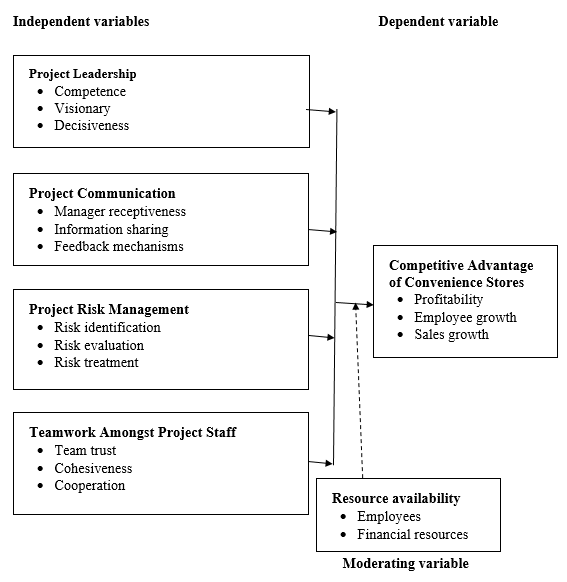
Figure 1. Conceptual framework.
Knowledge gaps
The knowledge gaps that the current study sought to fill is summarized in Table 1.
| Study | Purpose | Methodology | Findings | Knowledge gaps |
Focus of current study |
| Kahiga | Influence of project leadership on the competitive advantage of a banks in Kenya | Data was collected using interviews and analyzed through content analysis | Project leadership positively affects competitive advantage | This study was on the banking sector in Nairobi |
The current study was on convenience stores in Mombasa county |
| Fuchs | Assessing the relationship between different project leadership styles and competitive advantage in service sector | Mixed methods study that used questionnaires and interviews | There is a direct correlation between apathetic project leadership style and firm performance | The study did not use inferential statistics to test hypothesis |
This study applied simple linear regression analysis to test effect of project management practices on competitive advantage |
| Nwabueze and Mileski | Assessment of the effectiveness of communication in competitive advantage | The research was a case study of the Macondo oil spill | Project communication is vital for project performance and success | This study was case study in the petroleum sector and findings may not be generalizable to convenience stores |
The study assessed the influence of project communication on |
|
Syaifuddin and Rizal |
Effects of effective communication on customer public perception on Len-Indonesian State-Owned Company |
The study used a case study approach and corrected data using questionnaires |
Project communication was significant in influencing competitive advantage |
The study only focused on project communication principle |
The current study included other project management practices such as project leadership, risk management and teamwork |
|
Karanja |
Effects of risk management on competitive advantage among Kenyan commercial banks |
Study applied a descriptive research design and survey method for data collection |
Integration of risk management practices such as avoidance, absorption and transferring create a profitable competitive advantage for commercial banks in Kenya |
The study was conducted in the banking sector which is a different context to the retail sector |
The current study was conducted in the retail sector |
|
Rabechini et al. |
Impact of project risk management on the performance indices of Brazilian companies |
Study applied descriptive survey design and collected data using questionnaires |
Adopting risk management practices has a significant positive impact on project success |
This study was conducted in Brazil which has different contextual environment |
This study was conducted in Kenya on Naivas supermarkets in Mombasa |
|
Waweru |
Impact of the teamwork approach on project performance in Kericho county Kenya |
Study applied descriptive research design and data was collected through interviews and questionnaires |
Teamwork is encouraged in project management in the organizations surveyed and this helps the project and the organization to attain competitive advantage |
The study only focused on project team work and left out other project management practices |
This study included other project management practices such as project leadership, project communication and project risk management |
|
Kariuki |
Effect of teamwork on competitive advantage of water companies in Kenya |
Study applied a correlational design with structured questionnaire as the data collection instrument |
Teamwork has a positive relationship with competitive advantage in terms of productivity and profitability |
The study was conducted on water companies |
Current study was on Naivas supermarkets in Mombasa county, Kenya |
Table 1. Summary of knowledge gaps.
This chapter describes the research technique used to carry out the study. The research design, target demographic, sample size and sampling techniques used in the study are all presented here. The chapter also includes the data collecting instruments, as well as the process for pilot testing and verifying the reliability and validity of the instruments. Furthermore, the data collecting processes and strategies applied in data analysis are provided in the chapter. Lastly, the ethical considerations and the operationalization of the study variables are also included in the chapter.
Research design
A research design is the overall strategy used in a study to combine the many components of the investigation in a logical and cohesive manner to guarantee that the research topic is properly addressed. A descriptive survey research approach was used in this study. This is a design that tries to methodically and properly explain a phenomenon, situation, or population by addressing the questions "how," "when," "where," and "what." This strategy was used for this study because it allowed the investigation to answer the 'what' research questions in the study. The design also assisted the study to assess the influence of project leadership, project communication, project risk management and teamwork amongst project staff on the competitive advantage of Naivas supermarkets in Mombasa county, Kenya.
Target population
Target population in a research is the entire set of individuals, organizations, elements or units for which the study findings are intended to generalize. In this study, the target population was the 112 employees in four branches of Naivas supermarkets in Mwembe Tayari, Bamburi, Nyali and Likoni. The target population is as presented in Table 2.
| Category | Number | % |
| Senior employees | 4 | 3 |
| Supervisors | 23 | 21 |
| Non-management staff | 85 | 76 |
| Total | 112 | 100 |
Table 2. Target population.
Sample size and sampling procedures
This section provides the procedures that were applied in determining the sample size and selecting the units from the target population that will participate in the study.
Sample size
The number of units from the target population who engage in the study is referred to as the sample size. This study's sample size was determined using the calculation procedure by Yamane which is provided hereunder.
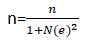
In the formula, 'n' is the sample size that participated in the study, 'N' is the size of the target population while 'e' is the selected significance level which in this study was 5%. Applying the formula, the computed sample size is as indicated below.
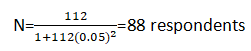
The total population of 112 employees in four branches of Naivas supermarkets in Mombasa county, Kenya was applied in the formula. Using the formula, 88 was the sample size.
Sampling procedure
The strategy or process of selecting a sample from the target population to participate in the research is referred to as the sampling procedure. To guarantee that the sample chosen is representative of the target group, the sampling process should be appropriate for the characteristics of the target population. Because the study's target population was split between Mwembe Tayari, Bamburi, Nyali and Likoni, which are the four branches of Naivas supermarkets in Mombasa county, stratified random sampling was used. Population was hence selected proportionately. The population is split into groups in this form of random sampling, and the randomly selected sample is selected according to the distribution of the different groups in the target population.
Operationalization of the variables
This section discusses variable measurement and operationalization. The process of converting variables into quantifiable indicators is known as operationalization. Furthermore, the framework in Table 3 demonstrates how all of the variables were assessed as well as the appropriate degrees of measurement (Table 3).
| Variable | Measurements | Level of measurement | Data collection instrument | Data analysis method |
| Project leadership |
|
Ordinal (likert scale questions) | Questionnaire with closed questions | Descriptive statistics (frequencies, percentages and means) Regression analysis |
| Teamwork amongst project staff |
|
Ordinal (likert scale questions) | Questionnaire with closed questions | Descriptive statistics (frequencies, percentages and means) Regression analysis |
| Project communication |
|
Ordinal (likert scale questions) | Questionnaire with closed questions | Descriptive statistics (frequencies, percentages and means) Regression analysis |
| Project risk management |
|
Ordinal (likert scale questions) | Questionnaire with closed questions | Descriptive statistics (frequencies, percentages and means) Regression analysis |
| Competitive advantage |
|
Ordinal (likert scale questions) | Questionnaire with closed questions | Descriptive statistics (frequencies, percentages and means) Regression analysis |
Table 3. Operationalization of the variables.
Data presentations, analysis and interpretations
This chapter contains data presentations, analysis of study findings and interpretations of study outcomes and the results. The chapter begins with the return rate and then moves on to the outcomes regarding demographic characteristics of the study participants. Besides, the chapter presents a discussion of the diagnostics tests conducted, the descriptive statistics in relations to the study objectives and the linear regression results for each of the study objectives. The testing of the hypothesis of the study results in relation to the theoretical and empirical literature is also provided in this chapter.
Questionnaire return rate
The study targeted 88 employees from four branches of Naivas supermarkets in Mombasa county, Kenya and received responses from 72 research participants. This related to an 81.8% success rate which was considered adequate. Saunders et al., posits that any response rate above 60% is considered adequate in descriptive surveys in the social sciences, management and business research. Following this authoritative assertion, the response rate in the study which was above the minimum stipulated was considered adequate.
Demographic characteristics of the respondents
The study explored various demographic characteristics of the respondents including gender, the highest level of education attained, the age and the number of years that the respondents had worked for Naivas supermarket. Descriptive statistics were used to summarize these responses and the findings are presented hereunder.
Gender of respondents
The study investigated the gender of the respondents to assess the gender balance in the supermarket as well as in the responses. The study results indicate that 54% of the study participants were male while 46% were female. These findings indicate a good gender balance which implies that Naivas Supermarket has attained an acceptable gender balance in its workforce. This shows that the supermarkets are gender sensitive.
Highest level of education of study participants
The study assessed the highest level of education attained by the study participants. This was aimed at assessing the education qualifications of employees employed in convenience stores and also assess the capacity of the participants to understand the questionnaire. The findings are presented in Table 4.
|
Education level |
Number |
% |
|
Secondary level |
8 |
11.1 |
|
College certificate |
17 |
23.6 |
|
College diploma |
23 |
31.9 |
|
Bachelor’s degree |
18 |
25 |
|
Master’s degree |
6 |
8.4 |
|
Total |
72 |
100 |
Table 4. Highest education level of study participants.
The findings summarized in Table 4 depict that 31.9% of the study participants had attained college diploma level of education while only 8.4% had masterâ??s degrees. Those with the lowest level of education were 11.1% who had a secondary level of education. Since the language of instruction in Kenyan secondary schools is English, and considering that the questionnaire was designed in easily understandable English, it was assumed that all the respondents were able to understand and respond to the questionnaire.
Age of the study respondents
The study investigated the ages of the study participants. This was aimed at assessing the age distribution of workers employed in convenience stores. The findings are summarized in Table 5.
| Age | Number | % |
| Below 30 years | 18 | 25 |
| 31-40 years | 32 | 44.4 |
| 41-50 years | 19 | 26.4 |
| 51-59 years | 3 | 4.2 |
| Total | 72 | 100 |
Table 5. Age of the study participants.
The findings summarized in Table 5 indicate that 44.49% of the study participants were between 31 and 40 years old while only 4.2% were between the age of 51 and 59 years. These findings suggest that most of the employees at Naivas supermarkets in Mombasa county were young and middle aged.
Number of years respondents had worked at the convenience store
The study investigated the number of years that the study participants had worked at the convenience store. The findings are displayed in Table 6.
| Number of years | Number | % |
| 2 years or less | 13 | 18.1 |
| 3-4 years | 16 | 22.2 |
| 5-6 years | 28 | 38.9 |
| 7-8 years | 10 | 13.9 |
| Above 8 years | 5 | 6.9 |
| Total | 72 | 100 |
Table 6. Number of years respondents had worked at the convenience store.
The findings provided in Table 6 show that 38.9% of the study participants had worked at Naivas supermarkets for between 5 and 6 years while only 6.9% had worked at the convenience store for more than 8 years.
Competitive advantage of Naivas supermarket
Competitive advantage was the dependent variable in the study. It was measured through profitability, employee growth and sales growth. To assess competitive advantage of Naivas supermarket in Mombasa county. Respondents were provided with several statements and required to indicate their level of agreement on a 5 level Likert scale (strongly disagree to strongly agree). The study applied descriptive analysis that included maxima, minima, mean and standard deviation. The results of the descriptive analysis are provided in Table 7.
| Statement | N | Minimum | Maximum | Mean | Std. deviation |
| Management in this store is competent and professional | 72 | 1 | 5 | 4.36 | 0.756 |
| This store provides the best prices compared to competitors in this town | 72 | 1 | 5 | 4.03 | 0.888 |
| The store experiences profitability that is above the average of the other stores in this city | 72 | 1 | 5 | 3.96 | 0.941 |
| This store has a good reputation as a store that provides value to customers | 72 | 2 | 5 | 4.33 | 0.65 |
| The store has experienced a high growth in sales compared to the past | 72 | 1 | 5 | 4.07 | 1.012 |
| The store has experienced high growth in employee numbers compared to the past | 72 | 1 | 5 | 4.12 | 0.963 |
| The store always provides quality products to customers | 72 | 1 | 5 | 3.99 | 0.986 |
Table 7. Competitive advantage of Naivas supermarket.
Project leadership and competitive advantage of convenience stores
The first objective of the study was to assess the effect of project leadership on competitive advantage of Naivas supermarkets in Mombasa county, Kenya. The study conducted descriptive analysis to assess the extent of project leadership in the supermarket and also conducted simple linear regression analysis to assess the influence of project leadership on competitive advantage. The findings of the descriptive and regression analysis are provided in this section.
Description of project leadership from Likert scale data
The study investigated the extent of project leadership at Naivas supermarket through providing statements that were on a 5-point Likert scale to the respondents (strongly disagree to strongly agree). The study applied descriptive analysis that included maxima, minima, mean and standard deviation. The results of the descriptive analysis are provided in Table 8.
| Statement | N | Minimum | Maximum | Mean | Std. deviation |
| Management in this store is competent and professional | 72 | 1 | 5 | 4.36 | 0.756 |
| Management in this store is always focused towards achieving the common goal of the store | 72 | 1 | 5 | 4.13 | 0.871 |
| Management in this store always guides and inspires confidence in employees | 72 | 1 | 5 | 4.25 | 0.852 |
| Management in this store always motivates employees to achieve their highest potential | 72 | 1 | 5 | 3.94 | 1.124 |
| Management in this store provides a clear vision of the direction the store should take into the future | 72 | 2 | 5 | 3.89 | 0.797 |
| Management in this store makes timely and sound decisions | 72 | 1 | 5 | 3.96 | 0.74 |
Table 8. Project leadership Likert scale data.
Regression analysis of project leadership and competitive advantage of convenience stores
The study applied simple linear regression to test the first alternative hypothesis of the study which was;
H11: Project leadership has a significant influence on the competitive advantage of Naivas supermarkets in Mombasa county, Kenya.
The results of the simple linear regression are provided in this section. Table 9 displays the study results of the model summary which indicates the models explanatory power (Table 9).
| Model | R | R square | Adjusted R square | Std. error of the estimate |
| 1 | 0.695 | 0.483 | 0.476 | 0.47698 |
Table 9. Model summary for project leadership.
The study also assessed the significance of the simple linear regression model through ANOVA. The findings are provided in Table 10.
| Model | Sum of squares | df | Mean square | F | Sig. | |
| 1 | Regression | 14.887 | 1 | 14.887 | 65.436 | 0.000 |
| Residual | 15.925 | 70 | 0.228 | |||
| Total | 30.813 | 71 |
Table 10. ANOVA for project leadership.
The findings displayed on Table 10 indicate that the model was statistically significant (F=65.436, p<0.05) at 5% level of significance since the p value was below the significance level of 5%. These findings imply that the regression model was a good fit for the data. Besides, the findings indicate that project leadership had a significant effect on competitive advantage. To assess the significance of project leadership on competitive advantage of Naivas supermarkets in Mombasa county, the coefficients were generated. The findings are summarized in Table 11.
| Model | Unstandardized coefficients | Standardized coefficients | t | Sig. | ||
| B | Std. Error | Beta | ||||
| 1 | (Constant) | 1.026 | 0.375 | 2.739 | 0.008 | |
| Project leadership | 0.747 | 0.092 | 0.695 | 8.089 | 0.000 | |
Table 11. Coefficients for project leadership and competitive advantage.
The study findings displayed in Table 11 indicate that project leadership had a significant influence on competitive advantage of Naivas supermarket in Mombasa county (a²=0.747, t=8.089, p<0.05). These findings led to acceptance of the alternate hypothesis of the study. The findings also indicated that a unit increase in project leadership in Naivas supermarkets in Mombasa county, would lead to 0.747 increase in competitive advantage and vice versa.
Project communication and competitive advantage of convenience stores
The studys second objective was to establish the influence of project communication on competitive advantage of Naivas supermarkets in Mombasa county, Kenya. The study conducted descriptive analysis to assess the extent of project communication in the supermarket and a simple linear regression analysis to examine the influence of project communication on competitive advantage of the convenience store. The findings of the descriptive and regression analysis are summarized hereunder.
Description of project communication from Likert scale data
The study assessed the extent of project communication at Naivas supermarket through providing statements that were on a 5-point Likert scale to the respondents (strongly disagree to strongly agree). The study applied descriptive analysis that included maxima, minima, mean and standard deviation to analyze the responses from the study participants. The results of the descriptive analysis are provided in Table 12.
| Statement | N | Minimum | Maximum | Mean | Std. Deviation |
| The communication from management to employees in this store is always clear | 72 | 1 | 5 | 4.08 | 1.242 |
| Management in this store always use proper language when communicating to employees | 72 | 1 | 5 | 4.14 | 1.011 |
| Employees in this store freely communicate to their managers without fear | 72 | 1 | 5 | 4.03 | 1.222 |
| Managers in this store always encourage employees to communicate to them in case of any issue | 72 | 1 | 5 | 3.33 | 1.233 |
| Managers in this organization always pay attention when employees are communicating to them | 72 | 1 | 5 | 3.42 | 1.004 |
| The views and suggestions that employees provided in this store are always considered | 72 | 1 | 5 | 4.22 | 0.938 |
Table 12. Project communication Likert scale data.
Regression analysis of project communication and competitive advantage of convenience stores
The study used simple linear regression to test the second alternative hypothesis of the study which was;
H12: Project communication has a significant influence on the competitive advantage of Naivas supermarkets in Mombasa county, Kenya
The results of the simple linear regression are provided in this section. Table 13 summarizes the study results on the model summary which indicates the explanatory power of the model (Table 13).
| Model | R | R Square | Adjusted R Square | Std. Error of the estimate |
| 1 | 0.779 | 0.607 | 0.601 | 0.41617 |
Table 13. Model summary for project communication.
The study also assessed the significance of the simple linear regression model through ANOVA. The findings are summarized in Table 14.
| Model | Sum of squares | df | Mean square | F | Sig. | |
| 1 | Regression | 18.689 | 1 | 18.689 | 107.906 | 0 |
| Residual | 12.124 | 70 | 0.173 | |||
| Total | 30.813 | 71 |
Table 14. ANOVA for project communication.
To assess the significance of project communication towards influencing competitive advantage, the coefficients were generated. The findings are provided in Table 15.
| Model | Unstandardized coefficients | Standardized coefficients | t | Sig. | ||
| B | Std. Error | Beta | ||||
| 1 | (Constant) | 0.28 | 0.363 | 0.771 | 0.443 | |
| Project communication | 0.944 | 0.091 | 0.779 | 10.388 | 0 | |
Table 15. Coefficients for project communication and competitive advantage.
Project risk management and competitive advantage of convenience stores
The third objective of the study was to assess the effect of project risk management on competitive advantage of Naivas supermarkets in Mombasa county, Kenya. The study conducted descriptive analysis to assess the extent of project risk management in the supermarket and further conducted simple linear regression analysis to assess the influence of project risk management on competitive advantage of Naivas supermarkets in Mombasa county, Kenya. The findings of the descriptive and regression analysis are provided in this section.
Description of project risk management from Likert scale data
The study examined the degree to which project risk management was observed at Naivas supermarket through providing statements that were on a 5-point Likert scale to the respondents (strongly disagree to strongly agree). The study applied descriptive analysis that included maxima, minima, mean and standard deviation. The results of the descriptive analysis are provided in Table 16.
| Statements | N | Minimum | Maximum | Mean | Std. Deviation |
| In every project or operation in this convenience store, all possible risks are identified and listed | 72 | 1 | 5 | 4.18 | 0.969 |
| Risk analysis is effectively conducted for all identified risks in projects or operations of the convenience store | 72 | 1 | 5 | 4.33 | 0.904 |
| The likelihood and severity of project or operational risks is evaluated exhaustively | 72 | 1 | 5 | 3.96 | 1.041 |
| The organization ensures that there is an effective risk treatment plan for all risks identified | 72 | 1 | 5 | 3.68 | 1.254 |
| In projects and operations in this organization, there is continuous risk monitoring and review | 72 | 1 | 5 | 3.79 | 1.034 |
| All employees of this store are involved in risk management | 72 | 1 | 5 | 3.89 | 0.797 |
Table 16. Project risk management Likert scale data.
Regression analysis of project risk management and competitive advantage of convenience stores
The study applied simple linear regression to test the third alternative hypothesis of the study which was;
H13: Project risk management has a significant influence on the competitive advantage of Naivas supermarkets in Mombasa county, Kenya
The results of the simple linear regression are provided in this section. Table 17 provide the study results of the model summary which indicates the explanatory power of the model (Table 17).
| Model | R | R square | Adjusted R square | Std. error of the estimate |
| 1 | 0.322 | 0.104 | 0.091 | 0.62814 |
Table 17. Model summary for project risk management.
The study also assessed the significance of project risk management in the simple linear regression model through ANOVA. The findings are presented in Table 18.
| Model | Sum of squares | df | Mean square | F | Sig. | |
| 1 | Regression | 3.193 | 1 | 3.193 | 8.092 | 0.006 |
| Residual | 27.62 | 70 | 0.395 | |||
| Total | 30.813 | 71 |
Table 18. ANOVA for project risk management.
To assess the significance of project risk management in influencing competitive advantage, the coefficients of the independent variable were generated. The findings are provided in Table 19.
| Model | Unstandardized coefficients | Standardized coefficients | t | Sig. | ||
| B | Std. Error | Beta | ||||
| 1 | (Constant) | 2.112 | 0.675 | 3.129 | 0.003 | |
| Project risk management | 0.455 | 0.16 | 0.322 | 2.845 | 0.006 | |
Table 19. Coefficients for project risk management and competitive advantage.
Teamwork amongst project staff and competitive advantage of convenience stores
The studys fourth objective was to determine the influence of teamwork amongst project staff on competitive advantage of Naivas supermarkets in Mombasa county, Kenya. The study conducted descriptive analysis to examine the degree of teamwork amongst project staff in the supermarket and also conducted simple linear regression analysis to evaluate the influence of teamwork amongst project staff on competitive advantage of Naivas supermarkets in Mombasa county, Kenya. The findings from the descriptive and regression analysis are provided in this section.
Description of teamwork amongst project staff from Likert scale data
The study investigated the extent of teamwork amongst project staff at Naivas supermarket through providing statements that were on a 5-point Likert scale to the respondents (strongly disagree to strongly agree). The study applied descriptive analysis that included maxima, minima, mean and standard deviation. The results of the descriptive analysis are provided in Table 20.
| Statement | N | Minimum | Maximum | Mean | Std. Deviation |
| Employees in this store have a good working relationship | 72 | 1 | 5 | 3.81 | 1.03 |
| There is effective communication between team members in this store | 72 | 1 | 5 | 3.74 | 0.839 |
| Whenever there is a conflict amongst employees in this store, it is amicably resolved | 72 | 2 | 5 | 4.14 | 0.81 |
| There is mutual respect amongst employees in this store | 72 | 2 | 5 | 4.33 | 0.805 |
| Employees in this store always seek to assist each other to attain the objectives of the store | 72 | 4 | 5 | 4.44 | 0.5 |
| Employees in this store always advice and support each other | 72 | 2 | 5 | 4.22 | 0.859 |
Table 20. Teamwork amongst project staff Likert scale data.
Regression analysis of teamwork amongst project staff and competitive advantage of convenience stores
The study applied simple linear regression to test the fourth alternative hypothesis of the study which was;
H14: Teamwork amongst project staff has a significant influence on the competitive advantage of Naivas supermarkets in Mombasa county, Kenya
The results of the simple linear regression are provided in this section. Table 21 provide the study results of the model summary which indicates the explanatory power of the model (Table 21).
| Model | R | R Square | Adjusted R square | Std. Error of the estimate |
| 1 | 0.803 | 0.644 | 0.639 | 0.39571 |
Table 21. Model summary for teamwork amongst project staff.
The study also assessed the significance of the simple linear regression model through ANOVA. The findings are presented in Table 22.
| Model | Sum of squares | df | Mean square | F | Sig. | |
| 1 | Regression | 19.851 | 1 | 19.851 | 126.773 | 0 |
| Residual | 10.961 | 70 | 0.157 | |||
| Total | 30.813 | 71 |
Table 22. ANOVA for teamwork amongst project staff.
To assess the significance of teamwork amongst project staff in influencing competitive advantage, the coefficients were generated. The findings are provided in Table 23.
| Model | Unstandardized coefficients | Standardized coefficients | t | Sig. | ||
| B | Std. Error | Beta | ||||
| 1 | (Constant) | 1.145 | 0.26 | 4.407 | 0 | |
| Teamwork amongst project staff | 0.744 | 0.066 | 0.803 | 11.259 | 0 | |
Table 23. Coefficients for teamwork amongst project staff and competitive advantage.
This section provides a discussion of the study findings. This entails interpreting the findings and comparing and contrasting them with the theoretical and empirical literature. This is to establish the points of divergence and convergence. Besides, the discussions are provided in line with the study objectives.
Project leadership and competitive advantage of convenience stores
The study’s first objective was to establish the influence of project leadership on competitive advantage of Naivas supermarkets in Mombasa county, Kenya. The study findings indicate that project leadership had a significant influence on competitive advantage of Naivas supermarket in Mombasa county (β=0.747, t=8.089, p<0.05). The findings indicated that an improvement in project leadership in Naivas Supermarkets in Mombasa County, would lead to an increase in competitive advantage and vice versa. These study findings concur with findings by Kahiga that strategic leadership aspects are valuable tools used by firms as a means of reducing customer complaints, increasing productivity and enhancing competitiveness. Besides, the findings agree with the findings by Fuchs which supported the hypothesis that leadership being crucial and a possible sustainable competitive advantage for small and medium-sized businesses. Other studies with similar findings to this study include Hunitie and Noe et al.
Project communication and competitive advantage of convenience stores
The study’s second objective was to establish the influence of project communication on competitive advantage of Naivas supermarkets in Mombasa county, Kenya. The findings showed that project communication had a significant influence on competitive advantage of Naivas supermarket in Mombasa county (β=0.944, t=10.388, p<0.05). The findings also indicated that an improvement in project communication in Naivas supermarkets in Mombasa county, would lead to an improvement in competitive advantage and vice versa. These study results support the findings by Nwabueze and Mileski that lack of effective communication makes an organization’s global competitive ability to be severely impaired. Another study by Fombrun had comparable findings that competitiveness of a firm is dependent on project communication.
Project risk management and competitive advantage of convenience stores
The third objective of the study was to assess the effect of project risk management on competitive advantage of Naivas supermarkets in Mombasa county, Kenya. The findings show that project risk management had a significant influence on competitive advantage of Naivas supermarket in Mombasa county (β=0.455, t=2.845, p=0.006). The findings also indicate that an improvement in project risk management in Naivas Supermarkets Mombasa, would lead to an improvement in competitive advantage and vice versa. These study results concur with the findings by Karanja that integration of risk management strategies such as avoidance, absorption, and transferring create a profitable competitive advantage for commercial banks in Kenya. Similarly, another research by Saeidi et al., demonstrated the effectiveness of the integration of strategic information technology risk management mitigation paradigms to counter the risk of undermined competitive advantages.
Teamwork amongst project staff and competitive advantage of convenience stores
The study’s fourth objective was to determine the influence of teamwork amongst project staff on competitive advantage of Naivas supermarkets in Mombasa county, Kenya. The findings depict that teamwork amongst project staff had a significant influence on competitive advantage of Naivas supermarket in Mombasa county (β=0.744, t=11.259, p<0.05). The findings also indicate that an improvement in teamwork amongst project staff in Naivas supermarkets Mombasa, would lead to an increase in competitive advantage and vice versa. These findings agree with the findings by Waweru that when teamwork is encouraged in project management in the organization, it enables the project and the organization to attain competitive advantage. Another study by Kariuki had comparable findings that effective project management in regard to teamwork influences the corporation’s capacity to deliver better employee relations, reduced conflict, streamlined communication with top management, and consistency with customer policies. Therefore, the study demonstrated the effectiveness of teamwork amongst project staff on competitive advantage and illustrated a positive correlation between the two variables.
The study draws the following conclusions based on its findings. To begin, the research concludes that project leadership is essential for attaining and sustaining of competitive advantage of Naivas supermarket in Mombasa county. Specifically, Naivas supermarket in Mombasa county was able to attain competitive advantage due to its visionary leadership, management that exhibited professionalism and competence and leadership that provided inspirational motivation to workers of the convenience store.
The study also concludes that project communication is vital for competitive advantage of Naivas supermarket in Mombasa county. Naivas supermarket in Mombasa county was able to attain competitive advantage through listening to the views and suggestions of their workers, treating the employees with respect, and communicating clearly and effectively to employees. Moreover, Naivas supermarket’s ability to have effective upward and downward communication and good relationships and communication between employees and management enabled it to achieve competitive advantage.
Regarding project risk management and competitive advantage of Naivas supermarket in Mombasa county, the study concludes that project risk communication was essential in enabling the supermarket to attain and sustain competitive advantage. Major project risk management practices that played a critical role at Naivas supermarket included effectively conducting risk analysis for all identified risks, identifying all possible risks, assessing the severity and likelihood of operational and project risks, and involving all employees in risk management.
Lastly, the study concludes that teamwork amongst project staff played a vital role towards attainment of competitive advantage of Naivas supermarket in Mombasa county. Important aspects of teamwork amongst project staff that were common in Naivas supermarket in Mombasa county comprised of employees assisting each other to attain the objectives of the store, mutual respect amongst employees in the store, and the employees supporting each other.
RECOMMENDATIONS FOR POLICY ACTION
Based on the study findings and conclusions, the makes the recommendations for policy action.
• First, professional organizations such asproject management institute should advocatefor adoption of project management practicesfor all types of organizations to enable themdeal with the fast-paced business environmentof today.
• Educational and training institutions shouldcome up with an innovative framework thatwould blend project management practiceswith the operational nature of organizations sothat it would be easier for organizations toadopt and operationalize project managementpractices.
• The study recommends to governmentpolicymakers such as ministry of Trade andindustrialization to provide guidelines from theretail sector regarding adoption andoperationalization of project managementpractices in the retail sector to ensure growthand competitiveness of the sector.
• Lastly, the study recommends to organizationssuch as Retail Trade Association of Kenya(RETRAK) to ensure that they have a policy thatbinds organizations in the retail sector intoadopting project management practices suchas project leadership, teamwork amongstproject staff, project risk management andproject communication.
SUGGESTIONS FOR FURTHER STUDIES
This study focused on four project management practices and their influence on competitive advantage in Naivas supermarket, Mombasa county. Specifically, the study only focused on project leadership, project communication, project risk management and teamwork amongst project staff and excluded other key project management practices such as project planning, project resource allocation, project culture and project management structure. The study hence provides a recommendation for further research to assess the influence of project planning, project resource allocation, project culture and project management structure on competitive advantage in the retail sector. Moreover, the study only focused on Naivas supermarkets in Mombasa county. A suggestion is hence made to assess how project management practices can influence competitive advantage of other large, medium and small retail firms not just in Mombasa but also in other key urban centers such as Nairobi, Kisumu, Nakuru and Eldoret.
CONTRIBUTIONS TO THE BODY OF KNOWLEDGE
This study makes significant contribution to knowledge as it provides empirical evidence of the influence of four project management practices on competitive advantage of a firm in the retail sector. This is because most of the available empirical literature on project management practices is mostly on construction companies that mostly deal with projects. This study therefore provides evidence that firms that are not project oriented can also apply project management practices to enhance their competitiveness in the fast-paced environment. Specifically, the study documents how project leadership, project communication, project risk management and teamwork amongst project staff are essential in the retail sector for attaining and sustaining competitive advantage.