

 +44 3308180992
Research Article - International Research Journal of Engineering Science, Technology and Innovation ( 2025) Volume 11, Issue 2
Received: 21-Sep-2024, Manuscript No. irjesti-24-148505; Editor assigned: 23-Sep-2024, Pre QC No. irjesti-24-148505 (R); Reviewed: 07-Oct-2024, QC No. irjesti-24-148505; Revised: 08-Apr-2025, Manuscript No. irjesti-24-148505 (R); Published: 15-Apr-2025, DOI: 10.14303/2315-5663.2025.126
Effective construction management hinges on a robust waste minimization software system that accurately processes updated information. This study seeks to assess current practices and knowledge in construction waste management and to develop a system aimed at minimizing and controlling waste. The goal is to reduce waste percentages on construction sites while providing easy access to project status information via a comprehensive database, ultimately boosting contractor profits. To explore existing waste minimization practices and gather insights from contractors on implementing a new system, a survey and fieldwork research were conducted. The findings revealed that current practices are predominantly manual and lack effective systems or appropriate software for waste minimization. Most contracting companies do not track material waste quantities, amounts, or percentages. The primary challenge identified is the absence of user-friendly software for waste management and control. Many contractors attribute the waste problem to the reliance on traditional manual practices and the lack of a structured waste minimization system. While contractors recognize the limited focus on waste minimization, they do not view a shortage of qualified personnel as a significant issue. The survey responses varied considerably, reflecting a lack of precise knowledge due to the absence of consistent feedback and record-keeping on waste rates from previous projects. Formwork, sand, and aggregate were identified as having the highest waste percentages, averaging 22.69%, 18.23%, and 15.77%, respectively. Contractors expressed a strong willingness to adopt user-friendly software for construction waste minimization, with a preference for MS-Excel spreadsheets for ease of use.
Contract company, Construction project, Construction waste minimization, MS-Excel, Waste minimization software
Waste in the construction industry has been the subject of several research projects worldwide in recent years. These studies have explored both the environmental damage resulting from material waste generation and the economic implications associated with it (Elshaboury N et al., 2022). Material waste on construction sites varies in cause but is notably significant due to its substantial contribution to construction costs, typically accounting for about 50% to 60% (Agyekum K, 2012). This is particularly concerning given the scarcity of these resources (Formoso CT et al., 2002). Recognized as a major problem, material waste in the construction industry impacts both operational efficiency and environmental sustainability (Popoola OC et al., 2018). According to Ekanayake & Ofori, construction material waste is defined as any material, excluding earth materials, that needs to be transported away from the construction site or repurposed within it due to damage, excess, non-use, non-compliance with specifications, or as a by-product of the construction process (Tafesse S, 2021).
In the United Kingdom, an investigation by Skoyles during the 1960s and 1970’s across 114 building sites distinguished between direct waste i.e., irreparably damaged or lost materials and indirect waste i.e., monetary loss without physical material loss (Can G et al., 2023). In the United States, Gavilan & Bernold analyzed waste in masonry foundations, timber frames, and sheetrock drywall, identifying significant waste from cutting residuals, nonreusable consumables, packaging, and improper handling (Khalas R et al., 2018). Research in the Netherlands monitored waste from seven materials in five housebuilding projects, attributing waste to design flaws, material supply issues, and poor handling during transportation and storage (Ekanayake LL et al., 2004). In Brazil, it is estimated direct and indirect waste in an 18-storey residential project, revealing high waste percentages in materials like mortar, with total waste reaching 18% of the purchased material weight, resulting in additional costs (Skoyles ER, 1976). In Egypt, the surveyed on 35 top contractors, found that timber frameworks had the highest waste rate, followed by sand, steel, and cement, with waste percentages higher than accepted norms for most materials (Ogunseye NO et al., 2023). In Nepal, studies on 30 building projects reported reinforcement waste ranging from 2% to 9%, with an average of 4.4%, within permissible limits set by Nepal's building construction norms (Gavilan RM et al., 1994).
The 3R approach (Reduce, Reuse, and Recycle) is a common term in solid waste management but is rarely applied in the construction sector (Bossink BA, 2002). There is a perception among contractors that waste is not valueless if it can be sold to waste dealers (Daoud AO et al., 2021). Partial studies from various countries confirm that waste represents a significant percentage of production costs, necessitating an effective system with updated information to reduce construction waste at the source (Adhikari R et al., 2021). The construction sector is a vital component of the Nepalese economy, employing over one million people and contributing approximately 10% to 11% of the GDP and about 60% of the nation's development budget is executed through contractors (Dhungana S et al., 2023). Over the past two decades, the sector has seen significant progress, with improvements in management skills, working capacity, financial stability, and technical capabilities (Ogunmakinde OE et al., 2022). Enhancements in this sector can substantially impact the national economy. The construction industry in Nepal faces several challenges related to material waste (Siregar AM et al., 2019). These include the absence of an effective tracking system for construction materials, insufficient knowledge about material waste generated during construction, a lack of research on construction waste, inadequate waste minimization and control measures, and the lack of prioritization of waste minimization in the industry (Acharya UR et al., 2021). Despite these advancements, a large amount of construction waste is generated, especially in major infrastructure, commercial building, and housing projects. Issues such as excessive material wastage, improper waste management, and low awareness of waste reduction are prevalent. However, research on construction waste in Nepal is limited, and there is no established system for recording quantitative data on waste generation (Kusi M et al., 2018). Thus, the main objective of this study is to understand and assess the systems and common practices for waste minimization currently adopted by Nepalese contractors.
This study provides contractors with a comprehensive understanding of waste tracking, the extent of material wastage on their construction sites, and the overall profit or loss associated with materials and projects. It includes material reconciliation at various stages of the project, comparing planned versus ordered, ordered versus actual supply, and actual supply versus actual usage. This data is crucial for monitoring project efficiency. The computerized system generates data on material wastage, which is vital for contractors from a quality and reputation perspective. Excessive material consumption indicates wastage and financial loss, while under consumption raises quality concerns, affecting the contractor's reputation.
The research methodology for this study was structured into three main stages: Literature review, field survey, and questionnaire. Initially, an extensive literature review was conducted focusing on the causes of construction waste, techniques for minimizing waste, systems for waste minimization and control, and international studies on material waste measurement. Following the literature review, a comprehensive field survey was conducted to evaluate the current practices in waste minimization and control. Data collection involved gathering documents such as stock books, running bills, and bills of quantities from three construction sites in Kathmandu, Nepal: Kathmandu district court building at Babarmahal, Telecom building at Sundhara, and Sanima Bikas bank building at Naxal (Figure 1). The research concentrated on four units within these sites: Engineering unit, purchasing unit, tracking unit, and store unit, which are also current practice of Nepalese construction for management and control as shown in Figure 1.
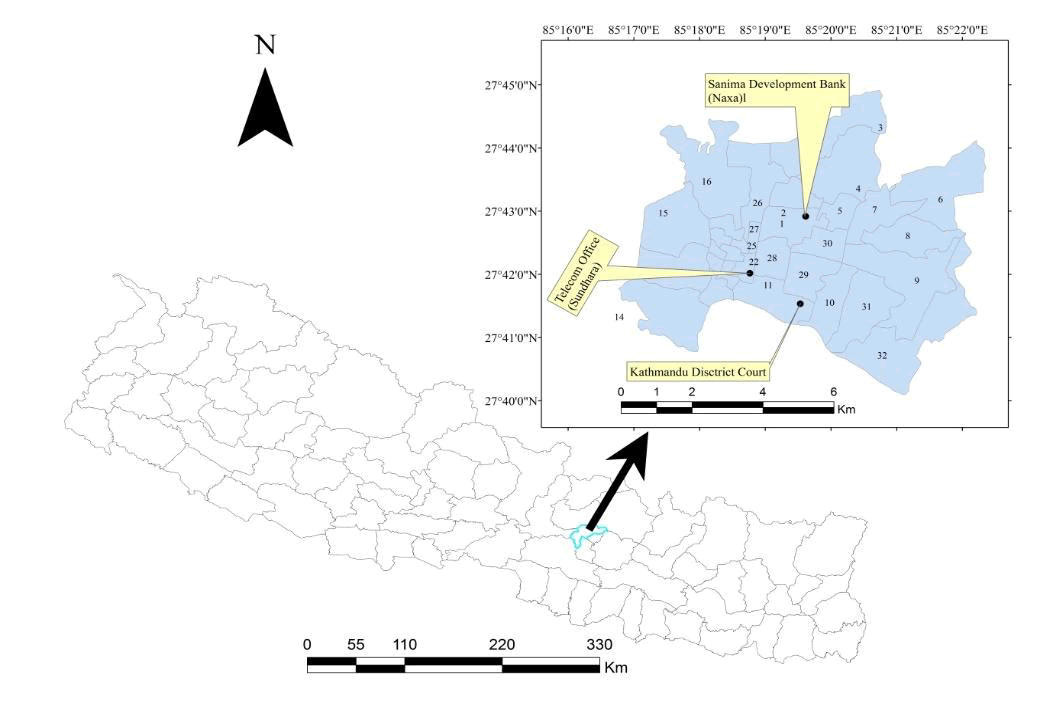
Figure 1. Study area.
Based on insights from the literature review and field survey, a structured questionnaire was developed. The questionnaire was divided into six sections: Company profile, waste minimization and control system, problems with current waste minimization and control system, importance of waste minimization and control, level of material waste in construction projects, and the need for computer applications in waste minimization and control. Designed in a closed format, the questionnaire aimed to gather specific responses regarding current practices and the perceived need for a computerized system. The data from the questionnaire were statistically analyzed using excel software. From the findings of the field survey and questionnaire responses, the conclusions and recommendations were formulated based on the survey results and data analysis, as illustrated in the flow chart for conducting research (Figure 2).
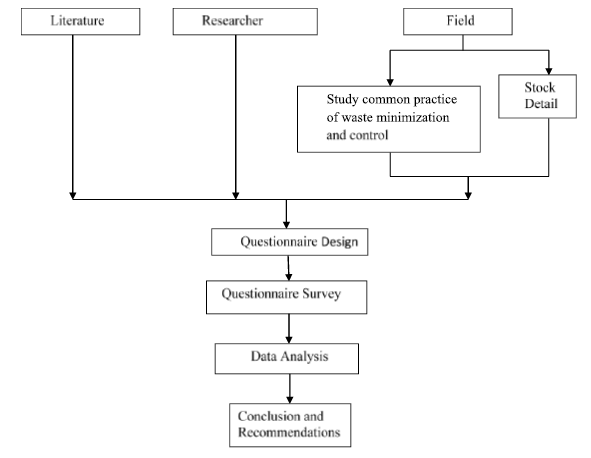
Figure 2. Flow chart for conducting research.
This research targeted contracting companies classified under the “A” category, as registered with the contractor’s association of Nepal. According to the association, there are 194 such companies. A sample of 19 "A" class Nepalese construction companies was selected, representing about 10% of the total population. Out of these, responses were obtained from 13 companies. The sample was chosen randomly, considering the companies' turnover and work experience.
Data for this research was collected through site visits and questionnaires. Frequency distribution and percentage were used to describe various aspects of the data. Excel software was utilized for data analysis. The conclusions and recommendations were derived from the survey data analysis and fieldwork research.
The results illustrate and discusses the characteristics of the study population, current practice for waste minimization and control, problem with current practice, importance of waste minimization and control, and level of material waste in construction projects.
Characteristics of the study population
The year of establishment, sector of specialization, total volume of construction works executed, annual net worth, qualification of employees of contracting companies were studied to determine the financial and technical capability of the contracting companies. Table 1 shows that 69.23% of the contracting companies were established before 2045 B.S. and 30.76 % were established after 2045 B.S. This indicates that most of the companies are old established companies having more than 24 years of experience.
| Variable | Contractors | ||
| Frequency | Percentage (%) | ||
| Year of establishment | Before 2045 B.S. | 9 | 69.23 |
| 2045 B.S. and after 2045 B.S. | 4 | 30.76 | |
Table 1. Year of establishment of contracting companies.
Table 2 shows that all the respondents are involved in building works, 92.3% are involved in building and road works, and 30.76% are involved in building, road and water supply/sanitation works.
| Company field work | Contractors | |
| Frequency | Percentage | |
| Building | 13 | 100 |
| Building+road | 12 | 92.3 |
| Building+road+water supply/sanitation | 4 | 30.76 |
Table 2. Field of company specialization.
Table 3 Shows that 23.07% of respondents executed projects with value 51 to 100 Million and 76.92 % contractors executed projects with a value greater than 100 Million Rupees during last five years. This indicates that most of executed projects are of large size.
| Volume of construction works executed during last five years (Rs. Million) | Frequency | Percentage (%) |
| Less than 10 | ||
| 10-30 | ||
| 31-50 | ||
| 51-100 | 3 | 23.07 |
| >100 | 10 | 76.92 |
Table 3. Volume of construction works.
Table 4 shows that 61.53% of respondents have annual net worth less than 30 million rupees, 15.38% have net worth 31-50, next 15.38% have net worth 51-75 and 7.69% have net worth greater than 100 Million Rupees. This indicates that most of the companies have low working capital.
| Annual net worth (Rs. million) | Frequency | Percentage (%) |
| Less than 30 | 8 | 61.53 |
| 31-50 | 2 | 15.38 |
| 51-75 | 2 | 15.38 |
| 76-100 | ||
| >100 | 1 | 7.69 |
Table 4. Annual net worth.
It has been found from Table 5 that 49.65% employees have qualification SLC and less, 26.84% have qualification certificate, 16.22% have qualification bachelor and 6.09% have qualification masters. These figures show that the companies employ majority of personnel having qualification certificate, SLC and less. They employ few numbers of bachelors and very few numbers of employees having master’s degree.
| Variable | Frequency | Percentage (%) |
| Ph.D. | ||
| Masters | 62 | 6.09 |
| Bachelor | 165 | 16.22 |
| Certificate | 273 | 26.84 |
| SLC and less | 505 | 49.65 |
Table 5. Qualification of employees in contracting companies.
Waste minimization and control system
The survey was conducted to reveal the current practice of contracting companies for waste minimization and control system. The store unit, project unit, purchasing unit and tracking unit had been looked into while conducting the survey. Table 6 shows that only 15.38% prepare waste minimization plan prior to the commencement of the project. This indicates that most of the contracting companies don’t prepare waste minimization plan prior to the commencement of the project.
The results demonstrate that 76.92% keep up-to-date Stock detail of materials regarding receiving, consumed and balance quantities, 69.23% record up-to-date activity-wise record of material consumed vs. norms consumption, 76.92% keep proper record of scrap detail with quantity, price and amount but only 30.76% calculate material waste quantity, amount and its percentage. This indicates that the contracting companies are not well informed of the actual quantity and amount of waste they are bearing from their construction projects.
From the information in Table 6, it is clear that most contracting companies (84.61%) prepare required material file needed for the project. 76.92% maintain up-to-date record of material, labor and equipment to know profit or loss at any stage of the project. But only 38.46% record activity-wise material requirement and material consumption. This shows that the quantities demanded by the site are not well checked whether the demands are justified or not. The figure shows that most of the contracting companies don’t maintain the activity-wise material consumption data.
46.15% cross check for quantity error in running bills with actual cost of construction i.e., the contracting companies, in general, compares the quantity of running bill with consumed quantity of material, labour/subcontractor, equipment and overhead of the project site. Contracting companies (100%) cross checks for the quantities demanded by the project site before issuing P.O. Only 61.53% maintain systematic procedure for vendor rating. Other observation, 76.92% contracting companies tally materials with specifications and quantity mentioned in P.O. and invoice before receiving the materials.
| S. no. | Description | Contractors response (yes) | |
| Frequency | Percentage (%) | ||
| A | Prepare waste minimization plan prior to the commencement of the project | 2 | 15.38 |
| B | Store unit | ||
| 1 | Keep up-to-date stock detail of materials regarding receiving, consumed and balance quantities | 10 | 76.92 |
| 2 | Calculation of material waste quantity, amount and its percentage | 4 | 30.76 |
| 3 | Up-to-date activity-wise record of material consumed vs. norms consumption | 9 | 69.23 |
| 4 | Keep proper record of scrap detail with quantity, price and amount | 10 | 76.92 |
| C | Project unit | ||
| 1 | Prepare required material file needed for the project | 11 | 84.61 |
| 2 | Record activity-wise material requirement and material consumption | 5 | 38.46 |
| 3 | Up-to-date record of material, labor and equipment to know profit or loss at any stage of the project | 10 | 76.92 |
| 4 | Cross check for quantity error in running bills with actual cost of construction | 6 | 46.15 |
| D | Purchasing unit | ||
| 1 | Cross checks for the quantities demanded by the project site before issuing P.O. | 13 | 100 |
| 2 | Maintain systematic procedure for vendor rating | 8 | 61.53 |
| E | Tracking unit | ||
| 1 | Tally materials with specifications and quantity mentioned in P.O. and invoice before receiving the materials | 10 | 76.92 |
Table 6. Current practice of waste minimization and control system.
Table 7 represents the major problems with current waste minimization and control system. The results show that the respondents (92.30%) agree that lack of user friendly software is the major problem for waste minimization and control. Most contracting companies (76.92%) believe the current problem of waste is due to follow of the simple traditional manual management. On the other hand, results show that 69.23% of contracting companies believe the lack of waste minimization system as another major problem. 53.84% contracting companies intermediately agree for the little attention and non-realization of contractors towards waste minimization. 38.46% intermediately agree which reveals that the shortage of qualified personnel is not a major problem for waste minimization and control. The above results show that most of the contracting companies feel the need of computer software and a system for waste minimization and control.
| S. no. | Problem | Agree % | Intermediately agree % | Disagree % |
| 1 | Little attention and non-realization of contractors towards waste minimization | 15.38 | 53.84 | 30.76 |
| 2 | Lack of waste minimization system | 69.23 | 30.76 | |
| 3 | Simplicity in traditional manual management | 76.92 | 23.07 | |
| 4 | Lack of user friendly software for waste minimization and control | 92.3 | 7.69 | |
| 5 | Shortage of qualified personnel | 38.46 | 38.46 | 23.07 |
Table 7. Problems with current waste minimization and control system.
Table 8 represents the factors regarding the views, opinions and realization of contractors to have a system for waste minimization and control. The results show that the majority of the contracting companies believe that most of the factors, which are shown in Table 8 help in waste minimization on construction site. They believe that the system which have bigger effect on waste minimization are waste reduction (100%), reduce duplication of material orders and material issue (100%) and reduce problems related to late delivery and required quantity needed to the project (100%).
On the other hand, the factor which they believe that the system helps are, to know exact quantities of materials required (84.61%), maintain up-to-date stock detail (92.30%), the total profit or loss of the project (84.61%), helps in preparing accurate bill of quantities (92.30%), increase awareness among contractors to decrease waste (92.30%) and reduce final cost of the project (84.61%). 61.53% contracting company’s opinion the system helps in maintaining better relation with suppliers and 76.92% view the system helps in pricing bids.
| S. no. | Importance | Agree (%) | Intermediately agree (%) | Disagree (%) |
| 1 | To know exact quantities of materials required | 84.61 | 15.38 | |
| 2 | Maintain up-to-date stock detail | 92.3 | 7.69 | |
| 3 | Waste reduction | 100 | ||
| 4 | Reduce duplication of material orders and materials issue | 100 | ||
| 5 | To know the total profit or loss of the project | 84.61 | 15.38 | |
| 6 | Better relation with suppliers | 61.53 | 23.07 | 15.38 |
| 7 | Reduce problems related to late delivery and required quantity needed to the project | 100 | ||
| 8 | Helps in preparing accurate bill of quantities | 92.3 | 7.69 | |
| 9 | Helps in pricing bids | 76.92 | 23.07 | |
| 10 | Increase awareness among contractors to decrease waste | 92.3 | 7.69 | |
| 11 | Increases contractor’s profit | 69.23 | 30.76 | |
| 12 | Reduce final cost of the project | 84.61 | 15.38 |
Table 8. Importance of waste minimization and control system.
Formwork with an average of 22.69%, sand with an average of 18.23% and aggregate with an average 15.77% showed the highest percentages of waste among all materials. While other materials such as reinforcing steel, cement and brick reveal an average waste of 10.12%. 5.12% and 9.92% respectively. The mean (average) rates of waste for major materials are presented in Table 9 below:
| S. no. | Material | Average % |
| 1 | Steel | 10.12 |
| 2 | Cement | 5.12 |
| 3 | Sand | 18.23 |
| 4 | Aggregate | 15.77 |
| 5 | Bricks | 9.92 |
| 6 | Formwork | 22.69 |
Table 9. Material waste in construction projects.
Enormous variation in answers was found. It can be interpreted as lack of accurate knowledge due to the absence of regular feedback through kept records (database) about waste rates from previous projects. The significant variations in answers were found as in Table 10.
| S. no. | Material | % |
| 1 | Steel | 4.5 to 15 |
| 2 | Cement | 0.5 to 10 |
| 3 | Sand | 10 to 25 |
| 4 | Aggregate | 10 to 20 |
| 5 | Bricks | 1 to 20 |
| 6 | Formwork | 15 to 30 |
Table 10. Variations in answers regarding material waste.
Need of computer application for waste minimization and control
The result of Table 11 shows that all the respondents don’t use computerized system for waste minimization and control.
| S. no. | Description | Contractors response (no) | |
| Frequency | Percentage (%) | ||
| 1 | Computerized system followed for waste minimization and control | 13 | 100 |
Table 11. Computerized system followed by the company.
All the contractors surveyed (100%) are willing to get and use user friendly construction waste minimization software for maintaining database of material, labour, equipment, supplier, waste quantity, amount and their percentage which are needed for managing construction projects (Table 12).
| S. no. | Description | Necessary (%) | Sometime necessary (%) | Unnecessary (%) |
| 1 | Computerized system | 100 | ||
| 2 | Up-to-date database of material, labour, equipment and supplier | 100 | ||
| 3 | Database regarding waste quantity, amount and its percentage | 100 |
Table 12. Necessity of computer software for waste minimization and control.
Table 13 shows the respondents efficiency of using computer software. The results show that most of the contracting companies (92.30%) feel easy to use MS-Excel spreadsheets.
| S. no. | Description | Contractors response (yes) | |
| Frequency | Percentage (%) | ||
| 1 | Excel | 12 | 92.3 |
| 2 | Word | ||
| 3 | Access | ||
| 4 | Other | 1 | 7.69 |
Table 13. Efficiency of respondents in using popular computer software.
The fieldwork research was carried out for 3 projects of Kathmandu executed by contractor United Builders and Engineers Pvt. Ltd. under centralized control system (Table 14).
| S. no. | Name of project | Project cost (NRs.) |
| 1 | Sanima Bikas Bank Building at Naxal | 166.4 Million |
| 2 | Nepal Telecom Building at Sundhara | 174.4 Million |
| 3 | Kathmandu District Court Building at Babarmahal | 289.1 Million |
Table 14. Surveyed projects.
The stock book, running bill, bill of quantities and documents for waste management and control were studied. The flowchart as shown in Figure 3, explains the current practice followed for material management and control. The shortcoming of the current system was listed and presented in Table 15. The fieldwork study shows that there is manual system of material management and control. The excel software was used for recording data only. The data regarding quantity, amount and percentage of waste were not properly kept.
The system followed is presented by the flowchart as below.
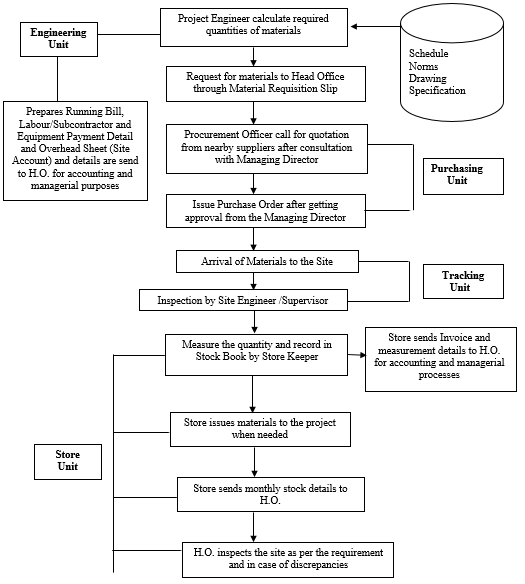
Figure 3. Current practice of Nepalese construction for material management and control.
| S. no. | Shortcoming of each unit |
| 1 | Engineering unit |
| i | Activity-wise material required sheet is not prepared. Only the total quantity of materials required sheet is prepared |
| ii | Don’t maintain up-to-date activity-wise record of material consumed vs. norms consumption (to see whether material consumed is more than norms) |
| iii | Cross checks are not made for running bill quantity and amount with actual quantities of material, labor and equipment consumed and there are chances of error in running bill quantities |
| 2 | Purchasing unit |
| i | Issue purchase order based on material requisition slip from the project site. Cross checks are not made whether the quantities demanded are justified |
| ii | No systematic procedure for vendor rating |
| iii | P.O.’s are not issued to project site |
| iv | Not well informed about the tools/equipments available in the project site |
| 3 | Tracking unit |
| i | Don’t tally quantity received in site with P.O. and are not well informed of the specifications mentioned in P.O. |
| 4 | Store unit |
| i | Manual stock detail |
| ii | Issue materials to project without material requisition slip |
| iii | Do not maintain material consumed sheet |
| iv | Don’t keep record of waste quantity, waste percentage and proper scrap detail |
| v | Do not tally consumption norms before issuing materials |
| vi | Rates are not entered in stock book. Actual amount figures for received quantity and consumed quantity are not known |
| vii | Excel software is used for recording data |
| viii | Don’t know about total profit and loss on materials even after the end of the project |
Table 15. Shortcoming of current system
The conclusions have been derived based on fieldwork research and questionnaire survey. The current practice of waste minimization is manual based. Most of the contracting companies don’t prepare waste minimization plan prior to the commencement of the project and are not well informed of the actual quantity and amount of waste they are bearing from their construction projects.
Most of the contracting companies prepare required material file needed, maintain up-to-date record of material, labour and equipment but don’t maintain activitywise material requirement and consumption. Lack of user friendly software is the major problem for waste minimization and control. Most contracting companies believe the current problem of waste is due to follow of the simple traditional manual management and lack of waste minimization system.
The contractor’s opinion that that the system which have bigger effect on waste minimization are waste reduction, reduce duplication of material orders and material issue and reduce problems related to late delivery and required quantity needed to the project. As in Table 9, formwork with an average waste 22.69%, sand with an average 18.23% and aggregate with an average of 15.77% reported the highest percentage of waste. While other materials such as reinforcing steel, cement and brick reveal an average waste of 10.12 %. 5.12% and 9.92% respectively. Enormous variation in answers was found. It can be interpreted as lack of accurate knowledge due to the absence of regular feedback through kept records (database) about waste rates from previous projects. The contractors don’t use computerized system for waste minimization and control. All the contractors are willing to get and use user friendly construction waste minimization software for maintaining database of material, labour, equipment, supplier, waste quantity, amount and their percentage which are needed for managing construction projects (Table 12). The contracting companies feel easy to use MS-Excel spreadsheets as illustrated on Table 13. The software was easy to use for maintaining database of material, labour, subcontractor, supplier and equipment and for material reconciliation.
All authors contributed to the study conception and design. Data collection, model generation and analysis were performed by Sabir Baidya. The first draft of the manuscript was written by Raghu Nath Prajapati, and both Authors read and approved the manuscript.
There is no support of fund for this research work.
Data and materials are available from the corresponding author upon request.
The authors declare no competing interests.
The authors would also like to express sincere gratitude to the anonymous reviewers for their invaluable feedback and constructive comments, which significantly enhanced the quality and rigor of this manuscript. Also, the dedicated editorial team is extended appreciation for their guidance and support throughout the publication process.
[Crossref] [Google Scholar] [PubMed]