

 +44 3308180992
Research Article - International Research Journal of Basic and Clinical Studies ( 2025) Volume 10, Issue 1
Received: 01-Nov-2024, Manuscript No. irjbcs-25-151634; Editor assigned: 04-Nov-2024, Pre QC No. irjbcs-25-151634 (PQ); Reviewed: 18-Nov-2024, QC No. irjbcs-25-151634; Revised: 16-Mar-2025, Manuscript No. irjbcs-25-151634 (R); Published: 23-Mar-2025, DOI: 10.14303/irjbcs.2025.57
Over 59 million dollars’ worth of health care assets was destroyed in Northeastern Nigeria due to the prolonged Boko Haram conflict which claimed many health workers lives. Attitudes of health workers towards healthcare service delivery stand the risk of being compromised. This study assessed the health worker’s attitudes on the increasing Health needs of the internally displaced population in camps. A mix methods survey approach was employed to collect data using open data kits. A total of 360 individuals, internally displaced persons in camps and communities, and health workers were interviewed. Findings reveal that 87.9% of the health workers have good attitudes towards their patients, 80.4% of health workers are courteous, polite, speak with soft tone and empathy, and timely in attending to their patients. An average of 49.1% holds that health worker’s attitudes have not prevent them seeking health care in the facilities. Among the Health workers, 77.2% affirmed that the increased demand influences their attitudes towards their patients and the manners they perform their duties. The study concluded that, although patients have a positive perception of health workers’ attitudes, there is evidence of stress from the health workers. Efforts should be put in place to ameliorate this burden.
Attitude, Health workers, Healthcare services, Internally displaced person, Borno state, Nigeria
The Northeastern Nigeria has continued to suffer insufficient healthcare needs over the years due to increase the humanitarian needs in the insurgency affected states of Borno, Adamawa and Yobe (BAY) (Atobatele S et al., 2022). Fourteen years into the conflict, the humanitarian crisis in northeast Nigeria remains profound and widespread (Badu E et al., 2016). Across BAY states, over 7.9 million people face severe protection concerns, extreme deprivation beyond their existing poverty levels, and daily threats to their well-being, out of which over 2 million people were internally displaced and are reported to be in dire need of humanitarian health assistance in these state (Brinkhoff T, 2022). The crisis has claimed over 38,500 lives with crude mortality rate of 0.31 death per 10,000 people per day in late 2021 and maternal mortality of 1,549/100,000 live births across the BAY states (BSG, 2020). Borno is the most affected state, with more than half the people in need-3.8 million (Olasupo JO, 2020). Adamawa and Yobe follow with 2.3 million and 1.8 million people in need, respectively (Mannava P et al., 2015). The state suffers health infrastructural assets damage of worth 59 million dollars with over 3 million people in need of health care and mortality rate of 4,200/100,000 live birth (Borno state government) (Portoghese I et al., 2014). This health care needs continued to suffer set back especially due to inadequacy of human resources with only 8,315 health personnel, 5/100,000 and 6.5/100,000 doctors and nurses & midwives per patient ratio respectively (van Puymbrouck L et al., 2020).
Social relationship plays critical role in most human endeavour and like any other platform of interaction, health care centers provide an avenue for socialisation between the service providers and those in need of the health care services (Yawson H, 2022). Mannava et al., established that if patients are treated with respect, care, friendliness, support or sympathy they will be encouraged to demand for health care service (Solanke BL, 2018). Studies has also revealed that sometime health care service providers treat patients and/or clients in inappropriate manners and sometimes with disdain; they abuse, yelled, careless respond and abandon or pay little to no attention or listen to them (Anierobi CM et al., 2024). Perceptions are built on experience, experience inform future interaction, as such bad experience would influence negative perception which in turn leads to negative response towards health seeking for health services (Akwash FB, 2020).
Although quality of health care has no universal definition, it goes beyond the effectiveness of clinical process and safety with patient experiences being a very important factor (Oladeji O et al., 2021). Hence, the experience of the individual defines the quality of the health care provision and the chances of utilising the same facility in the future especially where there is alternative or option (Sule B et al., 2019).
The severe infrastructural damages incurred due to the conflict, the loss of lives, migration, poor housing in displacement camps as well as lack of access to some communities due to the ongoing conflict has continued to exacerbate the impact of the diseases on the vulnerable population. Also, increasing the demand for limited health care resources as the number of cases are on the increase daily with limited personnel in health care service provision.
The continued demand for health care services exacerbated by the protracted conflict in Borno state amidst the limited resources available which is confronted by the constant outbreaks of diseases emanating from the environmental condition of the conflict affected population. Also, the overwhelming needs of the health care services requires additional efforts to keep affected population motivated to seek health care service timely. And to mitigate the impact of continued disease outbreak among the population. Although the emergency context continued to mount pressure on the service delivery with limited attention to quality as the goal remain to save lives, and avoid re-traumatizing the vulnerable population remain paramount to effectiveness in addressing health care needs. Hence, this study is necessary to ensure that health care workers are aware of their actions and the perceptions it generates among the vulnerable population as well as it influences on their health seeking behaviour.
Built off the premise of health believe model and the theory of reasoned action, this research seeks to determine the attitudes of health care workers toward the fragile, conflict affected and vulnerable population in Borno state and how it influences the demand and utilisation of health care services.
Research method
The study adopted a survey approach which combine both qualitative and quantitative method to collect relevant data to assess and establish the relations between health care worker’s attitudes and increasing demand for health care services among the IDPs population in Borno state.
Borno is a state in North-Eastern Nigeria. It is the central fragment of the old Bornu empire of the Kanuri people. Its name is said to mean “Home of the Berbers”. Borno state is pluralistic in ethnic composition with rich but diverse historical and cultural heritage. Borno state borders the Republic of Niger to the North, Lake Chad (and the Republic of Chad) to the Northeast, and Cameroon to the East; on the South and West it borders the Nigerian states of Adamawa, Gombe, and Yobe. According to the 2006 census, Borno state has a population of 4,151,193 people, but Brinkhoff city population projected 5,860,200 people in 2016.
The state consists of twenty-seven local government areas, grouped into three Senatorial districts (North, South and Central). Maiduguri is the state capital, Maiduguri has an airport and is served by a railway to Bauchi and the south, as well as by trunk roads to Potiskum, Bauchi, Yola, and Ndjamena (Chad).
Population of the study
The population of the study was among people who were internally displaced from their communities and living as either IDPs in host communities or IDPs in camps as well as the health workers in the identified health care facilities in the accessible Local Government Area (LGAs) in Borno state such as Maiduguri Metropolitan Council (MMC), Jere, Gwoza, Bama, Monguno, Biu, Askira/Uba and Ngala (depending on the security context).
Sample size and sampling technique
The samples were drawn from all members of the population who are accessing care at the designated facilities. A combination of purposive and convenience sampling was adopted for the study. With a total sample of 360 respondents from the IDPs and host community populations.
Source of data
The data for the study were sourced from both primary and secondary sources.
Primary sources: The data from primary sources were obtained through survey questionnaires administered to community members of all classes, IDPs in camp, IDPs in host communities and health care workers across accessible LGAs in Borno state.
Secondary data were sourced from records, reports and publications of journals, articles, scholarly papers, reports, newspaper publications and internet materials on the impacts of the attitudes of health care workers on increasing demand of health care services among conflict affected people in Borno state.
Administration of data collection instrument
The questionnaires were uploaded into Kobocollect (Kobocollect ODK) form for online and offline administration by the research team. Data collection enumerators were recruited and trained across the target locations to administer the questionnaire using the Kobocollect ODK which was uploaded via internet. The adoption of the online and offline Kobocollect ODK for data collect helped to manage the risks pursed by insecurity and travels of the researchers across the study location.
Methods of data analysis
Quantitative data from the questionnaire was downloaded on excel from the Kobocollect. Data collected were collated, cleaned and analysed using SPSS version 20 to categorise responses in simple percentages.
The qualitative data were generated from the semi structured questions, collated and descriptively analysed. A conventional content analysis was used to analyse the findings and directly reported. Results were presented on tables, charts and graphs as well as in narrative form.
Ethical clearance
The study was also subjected to the ethics committee of the National Open University of Nigeria (NOUN) for guidance and approvals to ensure that approach adopted comply with the school ethical guidelines. The study received approvals from Borno state government through the state health research ethics committee of Ministry of Health and Human Service Maiduguri, Borno State, Nigeria.
A total of 360 persons participated in the study by granting interviews to the data collection team who fill out and returning the questionnaire electronically. 281 (78.0%) Internally Displaced Persons (IDP) (Table 1), and 79 (22.0%) healthcare workers (Table 2). Of the IDPs who participated in the study by responding to the survey and the interviews, 120 (42.7%) were male, while 161 (57.3%) were female. The most common age group of the IDP respondents were 25 to <35 years 108 (38.4%) with range of 18-60 years and mean age 34.86 (± SD 2.76)
Substantial number 110 (39.1%) were unemployed or housewives, while others 105 (37.4%) petty traders or low-income business owners and 55 (20.1%) were student/apprentice/youth corps members. Interestingly only 11 (3.9%) were civil servants among the IDP respondents (Table 1).
Most of the IDPs 186 (66.2%), reside in camps outside their communities, while 70 (24.9%) IDPs reside in the host community.
| Variables | Male 120 (42.7%) | Female 161 (57.3) | Total 281 (100%) | P-value |
| Age | ||||
| 15 - <25 | 10 (3.6) | 21 (3.5) | 31 (11.0) | 0.000 |
| 25 - <35 | 34 (12.3) | 74 (21.3) | 108 (38.4) | |
| 35 - <45 | 43 (15.3) | 62 (22.1) | 105 (37.4) | |
| ≥ 45 | 33 (11.7) | 4 (1.4) | 37 (13.1) | |
| Marital status | ||||
| Single | 42 (14.4) | 18 (6.4) | 60 (21.4) | 0.000 |
| Married | 74 (26.3) | 109 (38.8) | 183 (65.1) | |
| Divorced | 0 (00.0) | 4 (1.4) | 4 (1.4) | |
| Widow/Widower | 4 (1.4) | 30 (10.7) | 34 (12.1) | |
| Occupation | ||||
| Student/Apprentice/Youth copper | 18 (6.4) | 14 (5.0) | 32 (11.9) | 0.000 |
| Public servants (Civil servant) | 8 (2.8) | 3 (1.1) | 11 (3.9) | |
| Petty trader or low income business owners | 64 (22.8) | 41 (14.6) | 105 (37.4) | |
| Self-employed | 13 (4.6) | 10 (3.6) | 23 (8.2) | |
| Unemployed/Housewives | 17 (6.0) | 93 (33.1) | 110 (39.1) | |
| Community/IDP camp membership | ||||
| IDP in Host community | 39 (13.9) | 31 (11.0) | 70 (24.9) | 0.012 |
| IDP in camp outside their communities | 75 (26.7) | 111 (39.5) | 186 (66.2) | |
| Host community | 6 (2.1) | 19 (6.8) | 25 (8.9) | |
Table 1. Bio demographic characteristic of the IDP respondents.
Out of the 79 health workers who participated in the study 31 (39.2%) are Nurses and 20 (25.4%) are community health workers. Only 6 (7.6%) Medical doctors and 5 (6.3%) laboratory scientist participated in the study. However, 17 (21.5%) of the health workers were categorized as others which included dentists, dieticians, radiographers, opticians, hospital attendances (Table 2).
| Designation | Male 29 (45.3%) | Female 35 (54.7%) | Total 64 (100%) | P value |
| Medical doctor | 6 (7.6) | 0 (1.6) | 6 (7.6) | 0.001 |
| Pharmacist | 0 (0.0) | 0 (0.0) | 0 (0.0) | |
| Medical laboratory scientist | 5 (6.3) | 0 (0.0) | 5 (6.3) | |
| Nurse | 17 (21.5) | 14 (17.7) | 31 (39.2) | |
| Community/environmental health workers | 4 (5.1) | 16 (20.3) | 20 (25.4) | |
| Other hospital employee | 9 (11.4) | 8 (10.1) | 17 (21.5) |
Table 2. Designation of healthcare workers at the various IDP camps in Borno state.
Senatorial location of the IDPs
The geographical distribution of the respondents presented in Figure 1 below shows that Central Borno senatorial district had the highest 116 (41.3 %) respondents while Southern follows with 99 (35.2%). Then 66 (23.5 %) were recruited from Northern Borno although, one of the local government areas in the southern senatorial district was under the captivity of the insurgent groups for more than 9 months.
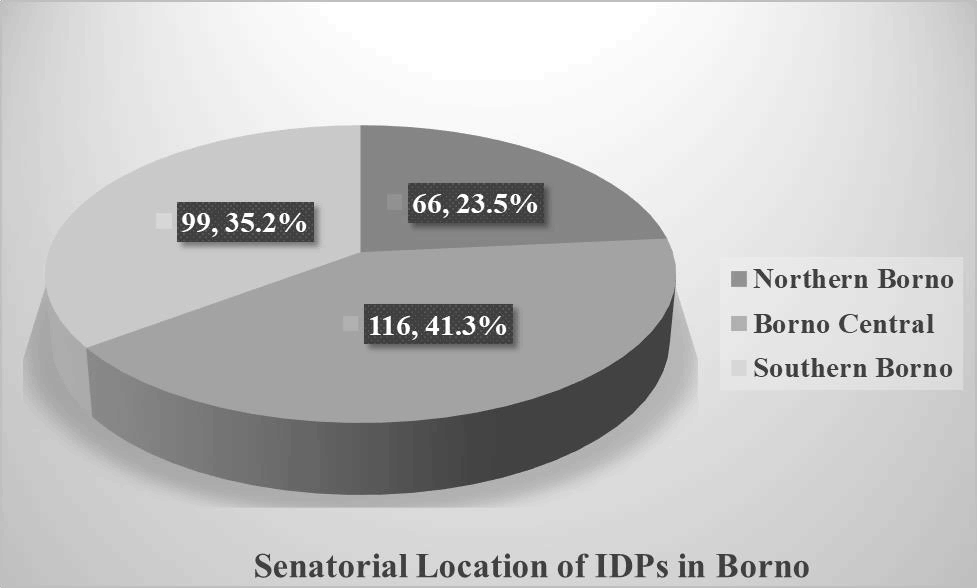
Figure 1. Geographical distribution of the research participants.
Healthcare seeking behaviour
The participant’s attitude towards visiting the health care facility to seek for medical assistance when ill, shows that 81% admit that that they go to the hospital when they are sick however, of the 19% who opine that they don’t go to hospital when ill, majority insist that their reasons are based on the illness not serious enough to sick health care professionals’ attention while others holds distance and cost of transportation to the health facilities as their reasons. Cultural believe and poor quality of service delivery were also reasons that came out strongly among the respondents, but attitude of the health care workers was the least of concern to the participants. This shows that though they feel sick, seeking professional health care services remain limited for reasons such as severity of illness, distance and cost of accessing services, poor quality of services and cultural belief (Figures 2 and 3).
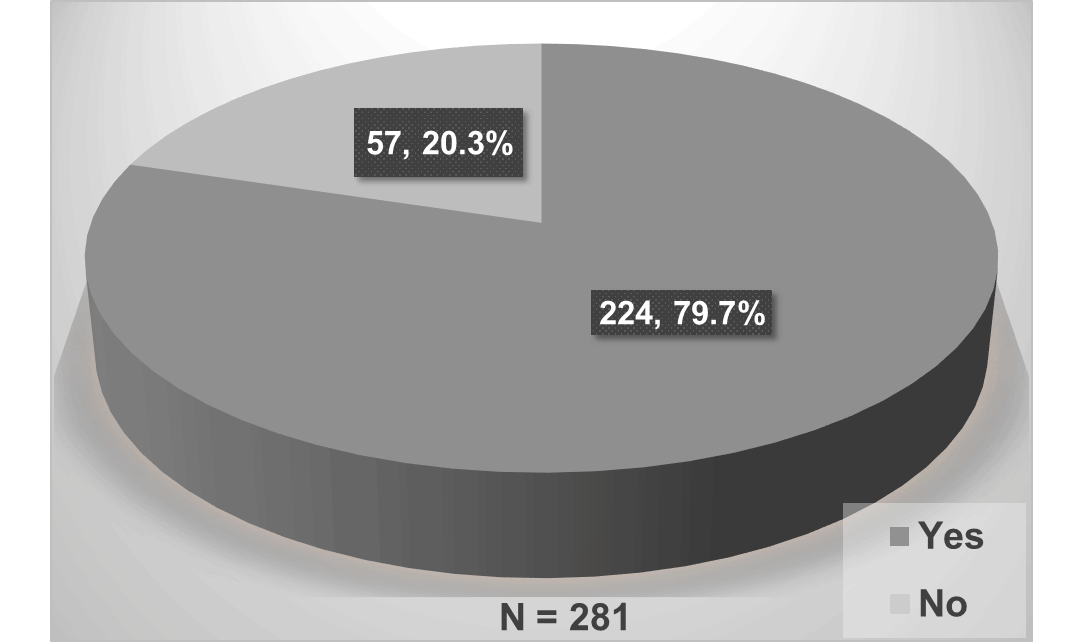
Figure 2. Showing respondents who admit going to hospital or not when ill.
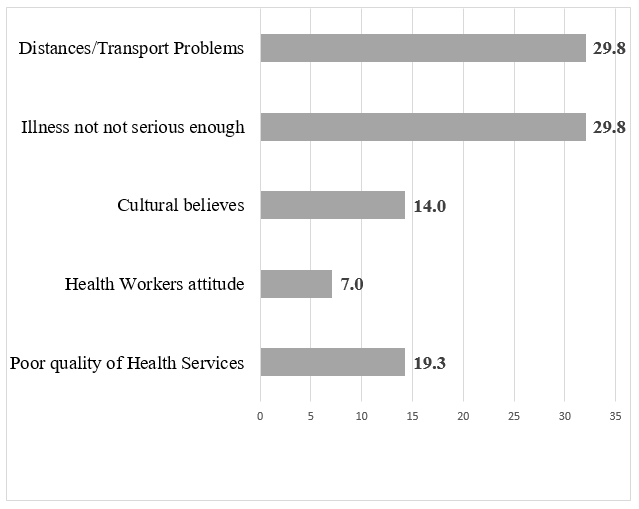
Figure 3. Reason for not seeking medical attention when seek among the IDPs {(N = 57 (20.3%)}.
Perception of the IDPs about health care workers’ attitudes
The IDPs have divided opinion about the health care worker’s attitude in influencing their decision to go to the hospital when they feel unwell, while 29.9% of the IDPs feels their decision to go to hospital when sick is influenced, 29.5% disagree. Inadvertently 13.2% strongly agree, while 14.6% strongly disagree and 40.2% disagree that if health care worker’s attitude is rude and aggressive even if the other hospital is far and more expensive it has no influence on their decision to seek medical attention when sick.
Despite the over burn work of the few healthcare workers, most of IDPs attest that 50.9%, 40.9%, 45.2% and 54.0% attested that the Health workers in the health facility attends to them in a good attitude and treated them courteously in a calm, polite with soft tone and empathy respectively.
However, while majority of the IDPs 25.2% and 11.8% disagree or strongly disagree that there is enough healthcare facility provided for the Clinic, 31.1% and 19.3% disagree that there is no enough facility in the hospital. Interestingly the IDPs were satisfied 57.1% by the adequacy of health care workers/staff’ in the health facility in their community (Table 3).
| Indicators | SA | A | SD | DA | N |
| The attitude of health care workers influences my decision to go to the hospital when I feel unwell | 43 (15.3) | 84 (29.9) | 55 (19.6) | 83 (29.5) | 16 (5.7) |
| I prefer going to another hospital than return to the hospital where the staff were rude and aggressive to me even if the other hospital is far and more expensive for me | 37 (13.2) | 43 (15.3) | 41 (14.6) | 113 (40.2.) | 47 (11.7) |
| Health workers in the health facility I attended most recently have a good attitude towards the patients | 1141 (40.6) | 143 (50.9) | 0 (0.0) | 11 (3.9) | 13 (4.6) |
| Health workers in the health facility I attended most recently have a bad attitude towards the patients | 3 (1.1) | 33 (11.7) | 86 (30.6) | 115 (40.9) | 44 (15.7) |
| Health workers in the health facility I attended most recently treated me and other patients courteously and attended to us timely | 83 (29.5) | 127 (45.2) | 18 (6.4) | 39 (13.9) | 14 (5.0) |
| Health workers in the health facility I attended most recently speaks to me in a calm, polite and soft tone with empathy | 90 (32.0) | 152 (54.0) | 3 (1.1) | 21 (7.5) | 15 (5.3) |
| There is enough and adequate health facility provided for the IDP | 23 (19.3) | 37 (31.1) | 14 (11.8) | 30 (25.2) | 15 (12.6) |
| There is enough and adequate health care workers/staff’ in the health facility in your community? | 12 (10.1) | 68 (57.1) | 14 (11.8) | 8 (6.7) | 17 (14.3) |
| Note: SA: Strongly agree; A: Agree; SD: Strongly Disagree; DA: Disagree; N: Neutral | |||||
Table 3. Shows the perception of the IDPs of health care workers’ attitudes in the conflict affected context of Borno state (N=281).
The study was intentional in harnessing the opinion of the health care worker in line with the research objectives and 79 health workers spread across the study areas were interviewed as presented in Table 2.
Most of the respondents (60.7%) suggest that their attitudes towards the patients were influenced by the impact of the conflict. However, a significant population of the health workers (31.7%) believe that the manner with which they perform their duties and attend to patients has not been affected by the conflict in anyway.
Further investigation reveals that 77.2% of the health workers opined that their attitude has been influenced by the demand and utilisation of the health care service among the IDPs and conflict affected population.
Majority of the respondents (82.3%) insist that amidst the influence of the demand and utilisation of services, they treat patients and IDPs with special care, tenderness and affection when seeking for health care services. With 91.1% insisting that the manners with which they address the patients and attend to their needs increases the chances of such patient to seek for health care services in the facility again.
Overall, 58.23% of the health workers opined that the community have a positive perception of health workers’ attitude towards them which implies that they (health workers) have positive attitudes towards the patients (Table 4).
| Perception query | SA (%) | A (%) | SD (%) | DA (%) | NT (%) |
| The conflict affected the manners in which you perform your duties and attend to the patients | 22 (27.8) | 26 (32.9) | 12 (15.2) | 13 (16.5) | 6 (7.6) |
| The community have a positive perception of health workers attitude towards them | 46 (58.2) | 0 (0.0) | 6 (7.6) | 8 (10.1) | 19 (24.1) |
| Your attitude has been influences by the demand and utilisation of health care services among IDPs and conflict affected people | 61 (72.2) | 2 (2.5) | 0 (0.0) | 6 (7.6) | 10 (12.7) |
| The manners with which you address the patients and attend to their needs has increases the chances of such patient to seek for health care services in the facility again | 46 (58.2) | 26 (32.9) | 7 (8.9) | 0 (0.0) | 0 (0.0) |
| You no longer treated IDP patients with special care, tenderness and affection when seeking for health care services. | 4 (5.1) | 4 (5.1) | 35 (44.3) | 30 (38.0) | 6 (7.6) |
Table 4. Perception of healthcare workers’ attitude among the conflict affected population (N=79).
The study evaluated the tremendous increased demand health care has since the conflict in Borno state especially with the additional patients from the IDPs, the workload on the health workers had increased by 98.4% according to the health workers who participated in the study.
The influx of IDPs to the garrison towns had led to the overcrowding of the towns and the sanitation and hygiene issues associated with overcrowded population, further increased the demand for health care services.
In this study, 51.6% of health workers, are of the opinion that there had been increased demand that has pressured the discharge of their duties which sometime impact their actions.
The research tool was designed with multiple question structured to validate the findings on the attitudes of the health care workers. The opinion of the research participants on good and bad attitudes of the health workers has further confirmed the finding which established that 71.5% of health workers have good attitudes towards the conflict affected population. Data from participants’ response to good and to bad attitudes of health workers was subjected to correlation analysis which yielded a Pearson correlation coefficient of -0.72. This correlation coefficient shows a very strong negative relationship between the participant’s response to questions on good and on bad attitudes of health workers. The research probe further to understand the informing factors that suggested the respondents’ opinion of health worker’s attitude by examining the research participant’s opinion about parameters such as being treated courteously, politely, empathetically, calmly and timely by the health care workers during their visits to the hospital. Across all these parameters, the finding reveals that an average of 80.4% respondents ascertained that health workers have positive attitudes towards the patients. This further validated the findings as the different parameters align with basic indicators of measuring good attitude. Although there are limited literatures on attitudes of health workers towards conflict affected patients, this finding is in contrast with the majority of studies on the attitudes of health workers towards different groups of patients especially in none conflict affected settings. van Puymbrouck, et al., work shows that biased attitudes of health care workers towards People with Disability (PWD) contributes to inequitable access to health care and health outcome. Whereas Olasupo, et al., opine that attitude of health workers influence the patronage of health care services. They emphasized that bad attitude of health workers reflects the quality of health care, and it influences seeking of health service in quality not quack facility among pregnant women and nursing mothers. The research findings disagree with the work of Mannava et al., which established that the negative attitude of maternal health care provider far outweigh the positive ones.
Similarly, the attitude of the health workers towards the patients was carefully investigated from the angle of the health worker’s opinion of the manners they treat patients in the conflict context. The study established that the health workers are confronted with stress due to high demands for care among the conflict affected population. This is a result of the additional health care needs of IDPs, the short supply of health facilities infrastructure, and limited human resources. Portoghese et al., established that there is a strong relationship between workload and burnout which have high chance of impacting the health worker’s ability to manage their attitude towards the patients. This align with findings the study which state that 79.7% of the health worker’s attitude are influenced by the demand and utilization of the of health care service among the IDPs and conflict affected population. The study also established that 58.2% of the health workers have positive perception of their attitude towards the displaced population with healthcare needs. This is validated by the findings from the responses of 87.9% of the IDPs. This is in conformity with the world health organization statement that ‘Health care service delivery in emergency, fragile, conflict affected, and vulnerable setting is quite different while identifying acceptability as one of the factors on which the quality of the service hinges on’. WHO. Similarly, acceptance is subject to trust built on the health workers and the overall health care system. The positive attitudes of the health care workers towards the conflict affected population established in this study could be associated to the fact that majority of the health care facilities within the study area are managed by the international humanitarian aid agencies. This is because their terms and conditions of employment emphasize the value of professionalism in service delivery. Majority of the staff engaged by the humanitarian aid workers are subjected to the “Do No Harm” training with the expectation to hold it principles dearly in delivering their duties. Also, protection training in addition to the natural sympathy for the conflict affected population might further contribute to the empathetic attitude of the health workers towards the affected population.
Furthermore, the study established that the conflict affected population’s health seeking behavior is not influenced by the attitude of the health workers as majority (54.8%) of them opine that the health worker’s attitude has no influences on their (patients) decision to seek health care in the same health facilities. Although, the conflict affected the livelihood and economic status of the study population (54.80%), they remain resolute to seek health care services in the IDP health care facilities. However, this is not aligning with the study of Mannava et al.; Olasupo et al.; and Yawson, which holds that attitude of the health workers towards their patients (pregnant women, nursing mothers and people with disability) affect the patients’ health seeking behaviour especially in the same facility. Although these studies were conducted with populations under ideal condition where patients were not displaced or associated with humanitarian or emergency conditions. Also, the traumatic experiences of the target population of study might influence their decision especially as traumatize patient may not have choice and/or alternative. Similarly, the cost implication of opting for another health care facility could further determine their choice of settling down with what is available to them.
The findings from the study reveal that the health worker’s attitudes have been influenced by the demand and utilization of health care services among the conflict affected population as opine by 77.2% of the research participants. As established by literature and the study, the demand of health care services has tremendously increased especially with the overcrowding of the people in garrison towns and IDP camps as well as the drastic reduction of the functional health care facilities to 52% only in a partial and fully functional condition. The study reveals that health workers are stressed by serious pressure in delivering their duties due to the increased demand.
Generally, the study established that there is increased demand for health care services among the affected population which increases pressure on the health workers thereby impacting their attitudes towards delivering their duties. It further reveal that the fragile, conflict affected and vulnerable population in Borno state have a positive perception of the attitude of health care workers towards them. They emphasized that health workers possess good attitudes towards them as averagely 80.4% of the study population insisted that health workers are courteous, polite, calm, soft tone and timely in response. This is further emphasized by the health workers who insisted that the community people (fragile, conflict affected and vulnerable) have a positive perception of their attitudes. But majority of the population holds that the attitudes of health workers have no influence on their health seeking behaviours which was further emphasized by the majority of the population who insisted that they will seek health care services in the same health care facility where the health workers were rude and aggressive to them. This established that the attitudes of health workers have no influence on the health seeking behaviors of the study population.
There is no conflict of interest to declare
This study was self-sponsored by researchers
We acknowledgements Mrs. Thlawur Jarafu, Ms. Christina Alkali, Mrs. Naomi Thomas, Mr. Jidayi Jantuku Mamza and Mr. Jeremiah Ngini who were instrumental during the data collection of this research across the hard-to-reach and highly insecure local government areas of the Borno state.
[Crossref] [Google Scholar] [PubMed]
[Crossref] [Google Scholar] [PubMed]
[Crossref] [Google Scholar] [PubMed]
[Crossref] [Google Scholar] [PubMed]
[Crossref] [Google Scholar] [PubMed]
[Crossref] [Google Scholar] [PubMed]
[Crossref] [Google Scholar] [PubMed]