

 +44 3308180992
Research Article - International Research Journal of Agricultural Science and Soil Science ( 127) Volume 14, Issue 1
Received: 26-Nov-2024, Manuscript No. IRJAS-26-153383; Editor assigned: 29-Nov-2024, Pre QC No. IRJAS-26-153383 (PQ); Reviewed: 13-Dec-2024, QC No. IRJAS-26-153383; Revised: 15-Mar-2025, Manuscript No. IRJAS-26-153383 (R); Published: 22-Mar-2025, DOI: 10.14303/2251-0444.2025.105
The main problem of water bodies is the growth and expansion of Eichhornia crassipes. The spread of Eichhornia crassipes on Lake Dambal impedes the livelihoods of society that depends on it. The aim of the stu dy is to examine the impact of Eichhornia crassipes on the livelihoods of societies. Four hundred and fourteen (414) respondents were selected from all peasant associa tions found around Lake Dambal using a simple random sampling technique. Questionnaire was the instrument used for data collection. Data were analyzed using SPSS software and the results were described in frequency counts, percentages, Chi-square (χ2), and Analysis of Variance (ANOVA). The results show that Eichhornia crassipes expansion was affecting the livelihoods of the society engaging their activities by depending on Lake Dambal. ANOVA showed that Eichhornia crassipes was encumbering the livelihood ac tivities of the communities in the area. Eichhornia crassipes was also used for animal fodder in the study area. However, it affected animal health and milk production. All concerning bodies including commun ities, stakeholders, government and non non-governmengovernment organizations should have to involve on removal of Eichhornia crassipes in the Lake Dambal and its surrounding through manually and mechanically.
Eichhornia crassipes, Weed expansion expansion, Eichhornia crassipes impact, Livelihood activities activities, Communities
The water bodies particularly in tropics and sub-tropics has the problem of extensive growing of aquatic weed of Eichhornia crassipes. Eichhornia crassipes is an invasive aquatic plant associated with a variety of ecological and economic effects on freshwater ecosystems (Chunkao et al., 2012). It causes conservation challenges and socioeconomic problems due to its fast growth and lateral expansion.
Eichhornia crassipes was first originated from the Amazon basin and later expanded into many parts of the world including Africa. Eichhornia crassipes was first found in Africa in 1879 in Egypt. The weed is a free moving aquatic weed that grows in water bodies like Lakes. It is a perennial monocotyledonous crop that belongs to the Pontederiaceae family.
Eichhornia crassipes is the most common, extensive and damage aquatic species from water bodies considered as a toxic according to UNEP. The several water bodies in African continents have been invaded by Eichhornia crassipes (Dagno et al., 2012). Biodiversity loss, deterioration of water quality, reduction of economic development and human well-being, are the main negative impacts of Eichhornia crassipes that not managed and difficult to reverse. Eichhornia crassipes have negatively affecting the socio-economic activities of the communities according to Navarro and Phiri.
Eichhornia crassipes was discovered in Ethiopia for the first time in 1965 in Qoqa Lake and the Awash River. In Ethiopia, Eichhornia crassipes infestation has been observed on a large scale in many of the country's water bodies. The introduction and rapid spread of this weed in the Awash river basin (Qoqa artificial Dam), Abbay river basin (Lake Tana, Blue Nile), Baro-Akobo river basin (Sobate, Baro, Gillo and Pibor rivers), and Rift Valley basins system (Lake Ellan, Lake Abaya), has created problems for the water as a resource.
The dense of Eichhornia crassipes increase hunk waterway, inhibit ship travel, disorder trade disrupting hydro-electric operations, blockage of canals and rivers, causing flooding and human health problem, increased evapotranspiration, interference with fishing, irrigation, navigation, livestock watering, and reduction of biodiversity.
One of the freshwater Lakes infested by Eichhornia crassipes is Lake Dambal, which is the third-largest of the seven Ethiopian Rift Valley lakes. Horticulture company, small-scale irrigation schemes, production of fishes, drinking water for livestock, recreational activities, etc. are the major ecosystem goods and services providing by Lake Dambal.
Eichhornia crassipes was first observed in Lake Dambal in 2015. The weed has affecting the potential of the Lake to support economic development and local communities’ livelihoods. The blockage of major waterways, difficulty of fishing, inhibit of ship travel, blockage of irrigation canals, inhibit the growth of Typha latifolia are the main problems caused due to the growth and expansion of Eichhornia crassipes. Therefore, the expansion of Eichhornia crassipes on Lake Dambal is deteriorating and posing various threats to the livelihoods of the local communities. The study’s wish to analyze the impacts of Eichhornia crassipes expansion on the major livelihoods of communities who living surrounding Lake Dambal. Therefore analyzing the impacts of Eichhornia crassipes on livelihoods will be important for sustainability of socio-economic status of the communities and future management of the lake.
The study area location
Lake Dambal is located about 160 km to the south of the capital city Finfinnee, Ethiopia. The lake is between 864500 meter N to 897000 meter N Latitude and 468000 meter E to 494000 meter E Longitude (Figure 1).
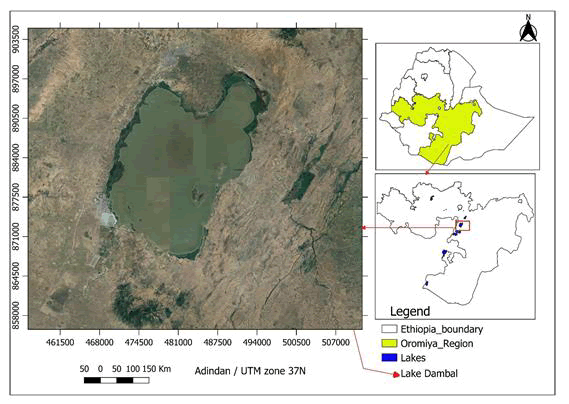
Figure 1. Lake Dambal and its catchment.
Research design
The study was adopted the mixed-method approach of both quantitative and qualitative data. The concurrent mixed method approach composed of quantitative and qualitative data was employed for the study. This means that both quantitative and qualitative data were collected simultaneously and the results were embedded during the analysis.
Software
SPSS version 20 software was used for the study to analyze socio-economic data collected from households about the impacts of Eichhornia crassipes on the livelihoods of the society.
Sampling techniques
There are 31 number of Peasant Associations that are found along the lake’s shoreline. The sample respondents were taken from all Peasant Associations found along the lake’s shoreline. The proportional allocation of a sample size to each peasant association was determined. A simple random sampling technique was used to select the respondents in each peasant association for questionnaires. This technique ensures that each population has an equal and independent chance of being selected. Random lists of numbers that correspond to the number of households represented in the PAs were generated and then the households included in the sample were picked at random from each list.
Sample size
The sample size used in the study was generated from the target population who live in the peasant associations found along the Lake’s shoreline. Therefore, the sample size was determined by using Yemane formula at 95% confidence interval.

Where n is the sample size; N is the population size, and e is the level of precision at 95% confidence interval (5%=0.05).
According to FAO, during sample size determination; there should be a contingency of sample because there might be non-response or recording error. Therefore, 5% contingency of calculated sample size was taken. Contingency (5%)=395 × (5/100)=19. The total sample size was 414. From this 406 of questionnaires were returned and 8 were not. Accordingly, data were analyzed based the returned questionnaires.
Data types and sources
Primary data: Data directly collected from households were primary data. The semi-structured questionnaires were distributed to the selected respondents to assess the impact of Eichhornia crassipes on the livelihoods. The observation was used to guide the researcher during data collection. This tool was used to observe the status and distribution of Eichhornia crassipes around the shoreline of the Lake.
Secondary data: Published and unpublished materials including books, scientific reports and other official publications related to the area of the study were used and collected.
Data analysis
Both quantitative and qualitative data collected were coded and transferred into the SPSS software (Version 20). Descriptive statistics such as frequency counts, percentages and cross-tabulation were used for data analysis and the outputs were presented in Table.
Finally, a one-way Analysis of Variance (ANOVA) was employed to analyze the effects of Eichhornia crassipes on each livelihood activity.
Data validity and reliability
Questionnaire was prepared from simple words that the respondents can easily understood. The items of questionnaires were checked whether it is properly addressed the objective of the study. Finally, it was translated to Afan Oromo, which is the language that the households can easily understand to give responses.
The test-retest reliability approach was used to check the consistency of the result. Means administrating the same instrument (questionnaires) twice on the same sample households at different times. Therefore, questionnaires were pilot-tested on a sample of 10 households (respondents) from one peasant association. After a week the same questionnaires were administered to the same households and then a Pearson correlation coefficient was calculated. The mean Pearson correlation coefficient achieved was 0.93 (93%), it shows that there is strong consistency of results (answers) obtained from households.
Eichhornia crassipes observation in and the surround of Lake Dambal
The first question asked was said, ‘Did you observed Eichhornia crassipes in and around Lake Dambal? Therefore, all respondents even those whose livelihood is not directly depend on Lake Dambal were knew and observed Eichhornia crassipes.
Next, ‘The year when Eichhornia crassipes was first observed’. Accordingly, the majority of respondents were replied that Eichhornia crassipes was first observed around Lake Dambal between 2007-2009 particularly in 2007.
Mechanism of Eichhornia crassipes came into Lake Dambal
All respondents were agreed that Eichhornia crassipes was came to Lake Dambal from Lake Qoqa, but the difference is only the mechanism it was came to the Lake. The majority of respondents were reacted that Eichhornia crassipes was came to Lake Dambal by excavators and nets.
They were said that “excavators came from the area around Lake Qoqa to drill irrigation canals around Lake Dambal. At that time, it was brought with the seed or living plant of Eichhornia crassipes to our lake. Others were said “the fishing nets used by fishermen on Lake Dambal were mainly came from Lake Qoqa, so that the seed of Eichhornia crassipes was came with the nets.
Similar studies discovered that in Ethiopia, Eichhornia crassipes was first reported about 60 years ago in Lake Qoqa and the Awash River. Eichhornia crassipes infestation is now distributed in many water bodies of the country from these water bodies.
For further test a Chi-square, (χ2) test was used to envestigate a relationship between respondent’ livelihood (occupation) and the mechanism of Eichhornia crassipes came and the result was stated in Table 1. The Chi-square test indicated that the p-value is 0.001 which is less than 0.05 (the alpha level associated with a 95% confidence level). The χ2 test result shows that the respondents’ livelihoods and the mechanism of Eichhornia crassipes came to Lake Dambal were dependent on each other. That means there is a statistically significant relationship between respondents’ livelihood and perception of the mechanism of Eichhornia crassipes came.
| Category | Value | df | P-value |
| Pearson Chi-square | 46.008 | 21 | 0.001 |
| Likelihood ratio | 50.2 | 21 | 0 |
| N of valid cases | 308 |
Table 1. Chi-square tests for the mechanism of Eichhornia crassipes came.
Season of Eichhornia crassipes infestation
Eichhornia crassipes infestation became critical in the area between the spring and summer season with mostly being the summer season. During the summer season specifically in 2019 and 2020 years; there was much amount of rain as a result, flooding was occurred. Many of the population were displaced from their home and some irrigated lands close to the lake were occupied by water and Eichhornia crassipes.
Akinyemeju (1987) has pointed out that Eichhornia crassipes spreads faster during the rainy season due to the reduced salinity within the water bodies, and reduces during the dry season because of increased salinity. Similarly, another study conducted in Wonji-Shoa, Ethiopia; indicated that Eichhornia crassipes coverage was positively correlated with Rainfall (RF), Nitrogen, Phosphorus, Potassium and Temperature (T), and negatively correlated with the depth of the water bodies and altitude. This means that Eichhornia crassipes coverage is increasing during the rainy season (summer) and decreasing in a place where water depth and elevation are high.
Impact of Eichhornia crassipes on livelihood of community
Because of its rapid growth and mat formation, Eichhornia crassipes have a range of detrimental effects on the livelihoods of the communities. The dense mats disrupt socioeconomic and subsistence activities for example ship and boat navigation restricted access to water for irrigation, fisheries, and tourism.
Impact of Eichhornia crassipes on irrigation
This section is attempted to establish the influence of Eichhornia crassipes on irrigation activities around Lake Dambal. The impacts of Eichhornia crassipes on irrigation activities includes blocking an irrigation canal, absorbs water used for irrigation and causing sediment deposition on irrigated land.
Study reported that Eichhornia crassipes causes wastage of water through excessive evapotranspiration that would otherwise be used for irrigation in Wonji. The estimated water loss due to this weed from the highly infested water were ranged between 393,660 to 2,945,160 m3. This amount of water could irrigate an additional 31.12 to 232.84 ha of land. Other reports also said that the weed reduces the flow of water through irrigation canals by 40%-95%. According to Chapungu et al., laboratory experiment in 14-day indicated that Eichhornia crassipes covered water surfaces lose more water through transpiration than Eichhornia crassipes free water surfaces.
In the area some of farm (irrigated) lands were occupied and invaded by Eichhornia crassipes. During data collection, the researcher was observed the distributed Eichhornia crassipes in irrigated land. Some residents of the area said that, “during the summer season of 2020 G.C there was much amount of rain and as a result flooding was occurred. As a result Eichhornia crassipes was distributed in to irrigated lands with flood.”
Eichhornia crassipes and irrigation productivity
Eichhornia crassipes have impacts on productivity of crops or vegetables produced. The study’s results revealed that Eichhornia crassipes has decreased the productivity of crops and vegetables produced through irrigation.
The study’s finding was agreed with others in that, Eichhornia crassipes has clogged the irrigation pipes or canals. This has posed technical difficulties to the irrigation process and has seen a decline in agricultural production. Reduction in agricultural production is a threat to food security in the communities along Lake Dambal. The problem of clogging of irrigation pipes was not reported during the Eichhornia crassipes free period. This shows that Eichhornia crassipes in Lake Dambal pose problems for agricultural production and may contribute to food insecurity. Despite the clogging of irrigation pipes, Eichhornia crassipes has been reported by communities along the Lake to be influencing water loss from the Lake. Winter water shortages are closely linked to the invasion of the Eichhornia crassipes. Excessive water loss from the lake has been regarded as a threat to food security especially in the face of climate change.
A one-way Analysis of Variance (ANOVA) was also calculated to explain the differences in the perception of the respondents (irrigators) on the effect of Eichhornia crassipes on irrigation activities. The results are presented in Table 2.
| Variation | Sum of squares | df | Mean square | F | P-value |
| Between groups | 0.135 | 3 | 0.045 | 2.679 | 0.049 |
| Within groups | 2.812 | 167 | 0.017 | ||
| Total | 2.947 | 170 | |||
| Note: df: degrees of freedom | |||||
Table 2. ANOVA on the effect of Eichhornia crassipes on irrigation.
The results in Table 2 shows that F (3,167)=2.679 this means p-value of 0.049 which is less than alpha value at 0.05 (α-value at 5%). This implies that Eichhornia crassipes has a significant impact on the irrigation activity of the societies.
Impact of Eichhornia crassipes on fishing
Fisheries are an important part of food security and nutrition, particularly for many poor people in developing countries (Adewolu and Adoti, 2010). Felegeselam and Petra et al. indicated that the Lake Dambal ecosystem had the economical benefit for the residents of the shoreline of Lake especially for fishermen and Small-Scale Irrigation Users (SSIU). The fishermen got their main household income by catching fish and selling for the local fish wholesale merchants or by selling directly to the market. According to Seyoum, the mean number of fish produced per year from Lake Dambal is 2,524 Kg, with a minimum and a maximum number of fishes produced per year were 504 and 16,800 Kg respectively. The fishery of the lake is a year-round source of subsistence food and income for many poor households in the region (Endebu et al., 2015). Even if this Lake is serving the societies as a source of income, Eichhornia crassipes expansion is becoming high and affecting the livelihood activity like fishing.
Effects of Eichhornia crassipes on fishing equipment
This study was tried to explain the effects of Eichhornia crassipes on fishing equipment. So, the effects are; access to sites becomes difficult when weed infestation is present, loss of fishing equipment often results when nets or lines become tangled in the root systems of the weed.
Similarly, study indicated that fishers turn back to the landing site after they lost a lot of extra fuel and labor with no or with a minimum caught. Each branch of Eichhornia crassipes becomes attached to the fishing net, and when the fishers pull their fishing net during fishing it becomes damaged. Besides repairing the damaged fishing net, fishers invest considerable time in detaching Eichhornia crassipes parts (branches) from gillnet after catching or fish. Some fishermen respondents said that ‘we experience loss of fishing gear, time-wasting during fishing and difficult in movement and even sometimes prevent people from fishing’. All these lead to a reduction in fish catch and subsequent loss of livelihood.
Effect of Eichhornia crassipes expansion on fishing activities
The study also tried to examine the effect of Eichhornia crassipes on fishing. Respondents said that “The weed led to transport barriers on water thus hindering better access to fishing point”.
The hyacinth mats reduced their catch by covering fishing grounds, delaying access to markets due to loss of output, increasing fishing costs due to the time and effort spent clearing waterways, forcing translocation and causing loss of nets.
According to Opande et al., when Eichhornia crassipes infestation is present, access to fishing sites becomes difficult for riparian communities which rely solely on fishing as their main economic activity. Study by Frezina also reported that Eichhornia crassipes provide a highly complex habitat structure by restricting the growth of other submerged macrophytes. This modification and habitat complexity at the surface of the water is likely affecting fishing.
In severe infestation especially around the shore area, fishing is therefore too much difficult. This results in blockage of fish landing sites and destruction of fishing gear. Hence, as much as Eichhornia crassipes is viewed; it has harmed fishing, as it causes difficulty in fishing. Other studies also reported that; if Eichhornia crassipes continues in this trend, it can negatively affect the livelihood of fishers in both directions by increasing costs of fishing and reducing the number of fish caught in Lake Tana (Asmare et al., 2016). Eichhornia crassipes can also greatly affect fish catch rates because mats of Eichhornia crassipes can block access to fishing grounds and clog the eye of the net. A study in Lake Victoria by Bhattacharya et al. (2015) also showed fish catch rates decreased by 45% because Eichhornia crassipes mats blocked access to fishing grounds, delayed access to markets and increased the cost (efforts and materials) of fishing.
The change in fish caught is associated with the expansion of Eichhornia crassipes. Fishermen respondents were responded that the change in fish catught is associated with Eichhornia crassipes expansion. Eichhornia crassipes negatively correlates with the change in the number of fish caught. This means in heavy Eichhornia crassipes infestation, the number of fish caught was becoming less.
Similar studies reported that fishermen are being troubled by a reduced range of fish species, loss of nets and impeded access.
Other studies also tried to point out the changes of fish caught after the expansion of the weed. Therefore, after the weed invasion the change in fish caught from Lake Dambal were became decreased. The annual fish production potential in Lake Tana is estimated to be 13000 tons but its current annual production is only about 1000 tons due to Eichhornia crassipes infestation in and around Lake Tana.
A one-way analysis of variance was also carried out to discover the differences in the perception of the fishermen respondents on the effect of hyacinth on fishing activities. The results were presented in the ANOVA Table 3.
| Variation | Sum of squares | df | Mean square | F | P-value |
| Between groups | 0.183 | 1 | 0.183 | 13.292 | 0.001 |
| Within groups | 0.800 | 58 | 0.014 | ||
| Total | 0.983 | 59 | |||
| Note: df: degrees of freedom | |||||
Table 3. ANOVA on the effect of Eichhornia crassipes on fishing.
From the results in Table 3, F (1,58)=13.292 that means p-value= 0.001 which is less than alpha value at 0.05. This shows that there is a significant effect of Eichhornia crassipes on fishing activity around Lake Dambal. Therefore, all of the participants saw a heavy impact of Eichhornia crassipes on fishing activity, particularly difficulty in catching of fish.
Impact of Eichhornia crassipes on transportation on water
Eichhornia crassipes is physically interfering with water transport, communication and access. Infestations are increasing in Ethiopia, creating a range of problems including restricted access.
Penfound and Earle found that Eichhornia crassipes grows rapidly, forming expansive colonies of tall, interwoven floating plants. It blankets large water bodies, creating impenetrable barriers and obstructing navigation.
Boat driver respondents were tried to describe the impact of Eichhornia crassipes on transportation on water. Thus, Eichhornia crassipes has affected the boat's navigation by blocking the ways of the boat and hindering navigation on the water, damaging the bottom of boats as it collides with Eichhornia crassipes.
This studies agreed with that Eichhornia crassipes has blocked waterways and hamper navigation, slow down the speed of the boat, leading to the damage boat’s of hulls as they collide with objects under Eichhornia crassipes mats (Asmare, 2017). In Nigeria, Alimi and Akinyemiju (1991) showed that the costs of fuel and repairs to boats on infested waterways were approximately three times that on un-infested waterways. Economic losses also result from interference with recreational uses of water bodies. Eichhornia crassipes as it invades forming blankets over large bodies of water and creating impenetrable barriers and obstructing water transportation. The thick mats also block access to recreational areas and affect the economies of communities that depend on it.
A one-way analysis of variance was also carried out to discover the differences in the perception of the respondents (boat driver) on the effect of Eichhornia crassipes on transportation on water. The results were presented in Table 4.
| Variation | Sum of squares | df | Mean square | F | P-value |
| Between groups | 4.297 | 3 | 1.432 | 3.197 | 0.043 |
| Within groups | 9.857 | 22 | 0.448 | ||
| Total | 14.154 | 25 | |||
| Note: df: degrees of freedom | |||||
Table 4. ANOVA on the effect of Eichhornia crassipes on transportation on water.
From results indicated in Table 4, F (3,22)=3.197 which means p-value=0.043 this is less than alpha value at 0.05. This indicated that there is a significant effect of Eichhornia crassipes on water transportation. The results, therefore, show that Eichhornia crassipes harm water transportation.
Impact of Eichhornia crassipes on Typha latifolia harvesting
Typha latifolia were used by many indigenous peoples. Historically Typha latifolia has been used throughout the world as building material, bedding, basketry, shoemaking, rope and paper manufacture and within a variety of herbal applications. Still today Typha latifolia are having a large potential and new uses are envisioned, such as biomass production or as a modern-day food crop. Other relatively new uses include water purification, bioremediation as a bioindicator of pollution. Typha latifolia is cultivated as an ornamental. It is often sold commercially and planted for wildlife habitat and in wetland restoration.
Typha latifolia have different importance for local peoples in the study area. It is used for making roofs of the houses, feeding for animals and making pillows and mattresses. The communities in the study area were harvesting and selling Typha latifolia to make roofs for houses and mattresses and pillows.
The expansion of Eichhornia crassipes in and around Lake Dambal is affecting the activity of harvesting Typha latifolia from the wetland. Respondents were agreed that Eichhornia crassipes has negatively affecting Typha latifolia during harvesting. Eichhornia crassipes has negatively affecting the Typha latifolia by preventing the growth of the it densely, controlling harvesting activity well and blocking the way to out the harvested Typha latifolia from the water.
A similar study reported that Eichhornia crassipes highly invaded and destroyed a variety of grass and plant species grown in the wetland. The grazing land has been substantially reduced, creating a serious challenge for the community engaged in cattle breeding.
Respondents were said that “after Eichhornia crassipes was densely populated in the area around Lake, we can’t harvest Typha latifolia in much amount as before. Therefore, the amount of Typha latifolia (broadleaf cattail) harvested was decreased due to the expansion of Eichhornia crassipes, but its cost was increased on the market.”
A one-way analysis of variance was also carried out to discover the differences in the perception of the respondents on the effect of Eichhornia crassipes on harvesting Typha latifolia activity. The results are presented in Table 5.
| Variation | Sum of squares | df | Mean square | F | P-value |
| Between groups | 6.126 | 4 | 1.532 | 4.239 | 0.005 |
| Within groups | 16.619 | 46 | 0.361 | ||
| Total | 22.745 | 50 | |||
| Note: df-degrees of freedom | |||||
Table 5. ANOVA on impacts Eichhornia crassipes on Typha latifolia activity.
From results stated in Table 5, F (4,46)=4.239 that means p-value=0.005 this is less than alpha value at 0.05. Theresults, therefore described that there is a significanteffect of Eichhornia crassipes on Typha latifolia harvestingactivity.
The benefit of Eichhornia crassipes
Eichhornia crassipes has limited beneficial uses. Using the Eichhornia crassipes as animal fodder is a traditional practice in many areas of Asia, including China, Bangladesh, Indonesia, India, Malaysia, the Philippines, and Thailand. In Malaysia, fresh Eichhornia crassipes is cooked with rice bran and fishmeal and mixed with copra meal as feed for pigs and ducks. However, it is suited to all animals as Eichhornia crassipes has high water and mineral content.
The local communities around Lake Dambal are worried about the invasion of Eichhornia crassipes to their shore farm and grazing lands. As different studies conducted in many countries even though Eichhornia crassipes causes various socio-economic and environmental problems, there are experiences that the plant has been turned to useful purpose before it became a problem.
Farmers in the study area faced a shortage of cattle feed due to mostly absence of common grazing ground in the locality. The cattles were forced to use Eichhornia crassipes for feed. This indicated that besides its adverse effects, the Eichhornia crassipes plant could be turned to useful purposes. In the study area the benefit of Eichhornia crassipes were not well recognized by the local communities even if livestocks were feeding it. They also not awaring to the importance of Eichhornia crassipes for the preparation of compost.
However, studies reported that Eichhornia crassipes has the potential to be used as green or compost manure, which can directly be applied to the soil as green manure.
Eichhornia crassipes as animal fodder
The study also described the way of livestock grazing Eichhornia crassipes, change on body weight and milk production after livestock fed it.
In the area animals were feeding (grazing) Eichhornia crassipes by their own without adding things like salts. However, respondents stated that the livestocks losts their body weight after they fed Eichhornia crassipes as compared to before. Studies showed that Eichhornia crassipes has a negative impact on livestock feed because it contains too much silica, calcium oxalate, potassium and too little protein. Therefore, these leads to reducing grazing potential, and have a negative impact on animal health, milk and meat quality and economic reduction on the livestock sector of the country. Feed containing 30% more Eichhornia crassipes can reduce weight gain by over 90%.
Additionally, Eichhornia crassipes was reducing the production of milk after cattle fed it. mats of Eichhornia crassipes affect livestock production by suppressing submerging grasses (hippo grass) which feed lots of cattle for the surrounding inhabitants. Therefore, there was highly decrease in their milk and milk by-products because of the devastation of this weed. However, the impacts of Eichhornia crassipes on the livestocks will need further investigation.
Eichhornia crassipes has adversily affecting the livelihood of the societies even if it was using as source of animal fodder, and for germination. The negative impacts of Eichhornia crassipes were; it blocks the waterways, hampering irrigation, fisheries, hindering navigation on the water, unemployment among the fishermen, destruction of the fishing nets, impeding of boat movements, and deteriorating of Typha latifolia harvesting. Generally, Eichhornia crassipes has affected the major livelihoods of societies that engaged by depending on Lake Dambal. Eichhornia crassipes also affect grazing and other agricultural activities by forming impenetrable thickets and hindering movements of humans and animals, destroying and replacing natural biodiversity, inaccessibility of drinking water by livestock, and impairing recreational activities.
• An action plan should be developed to carry outan awareness on the impact of Eichhorniacrassipes.
• Involve the stakeholders, and local communitiesin the removal of the Eichhornia crassipes fromLake Dambal.
• Change the Eichhornia crassipes into economicadvantage like compost preparation.
• A detail assessment on the impact of Eichhornia crassipes on the socio-economical (social andeconomical) prospect will be required.