

 +44 3308180992
Research Article - International Research Journal of Engineering Science, Technology and Innovation ( 2025) Volume 11, Issue 2
Received: 09-Sep-2024, Manuscript No. irjesti-24-147606; Editor assigned: 11-Sep-2024, Pre QC No. irjesti-24-147606 (PQ); Reviewed: 25-Sep-2024, QC No. irjesti-24-147606; Revised: 08-Apr-2025, Manuscript No. irjesti-24-147606 (R); Published: 15-Apr-2025, DOI: 10.14303/2315-5663.2025.125
The Internet of Things (IoT) has a major potential and already started to improve the human life in all sectors including education sector. In education, the IoT technologies represent a great opportunity for schools and may be used in various ways: To collect and use data to enhance the learning experience, to support the meeting of the learning goals, to improve the overall school operations etc. Since IoT field is expected to grow significantly in the next years, it is a must to prepare young generations for these changes. This paper is aimed at describing adoption of Internet of Things IoT and its role in higher education and also identifies and hypothetically describes the benefits, challenges and educational policy related to the adoption of the IoT in higher education. In order to analyze the impact of the IoT adoption in the education environment, it propose an assessment model based on four hypotheses, the data which were collected from 125 students in the case higher education by the questionnaire survey method and structural equation modeling is used in the study to validate the suggested model as well as to determine how the adoption of the IoT relates to benefit, challenges, potential roles and education policies. For this quantitative approach was applied where outer loading, reliability was checked through Cronbach’s alpha and ensured the constancy of data and frequency of demographics were taken through descriptive analysis using SMART Pls3 software.
Internet of things, IoT role, Benefits, Challenges, SEM, IoT adoption, SmartPls3
IoT: Internet of Things; ICT: Information and Communications Technologies; AAiT: Addis Ababa institute of Technology; RIoT: Role Internet of Things; BIoT: Benefits of Internet of Things; CIoT: Challenges Internet of Things; AIoT: Adoption of Internet of Things; EPIoT: Education Policy of Internet of Things; AVE: Average Variance of Extract; CR: Composite Reliability; RQ: Research Question; DIY: Do It Yourself
The developments in Information and Communications Technologies (ICT) come with changes in all the fields of life, including the education system (Ajigini OA, 2022). At the same time, the IoT (Internet of Things) is turning ever more important as regards the overall benefits that it brings to smart cities as well as the education system (Aldowah H et al., 2017).
The Internet of things is a new system designed to increase connectivity between computer systems and is rapidly making its way into classrooms and higher institutions in ways never before imagined (Bacon DR et al., 1995). In 1999, Kevin Ashton introduced the term IoT, which refers to a system where internet is connected to the physical world via ubiquitous sensors.
IoT is uniquely identifiable connected objects with RadioFrequency Identification (RFID) technology (Banica L et al., 2017). IoT applications are widely used in healthcare, automotive industries, transportations and is currently gaining acceptance in the higher education sector (Bido D de S et al., 2019). Different from earlier innovations, IoT technologies are ubiquitous and inspire solutions to be intelligent and autonomous (Brous P et al., 2020).
Advances in IoT technology can pose many challenges to universities, such as tracking key resources, developing information channels, better plans, and designing safer campuses (Fauzi MA, 2022). The IoT system has tremendous potential, attracting and encouraging students and teachers to make higher education more important and accelerate education (Gafurov K et al., 2019). Accordingly, the use of the Internet in Ethiopia is largely focused on the area of higher education (Gokcearslan S et al., 2024). Addis Ababa University, which is the most prominent of all the higher education institutions of the country, is undertaking major steps towards interconnecting all of its campuses (Gul S et al., 2017). Internet access was first established in 2002 on the main campus (Janadari MPN et al., 2018).
Addis Ababa Institute of Technology (AAiT), which was established about 60 years ago, is the leading institute of technology in Ethiopia (Kahlert M et al., 2016). At present, it is functioning with special autonomy from Addis Ababa University. It has a Supervisory Board, which is the highest governing body (Kwong-Kay K, 2013). The Institute is led by a Scientific Director with the rank of University Vice President (Liu J et al., 2021).
Currently, there are over 10,000 undergraduates and graduate (M.Sc. and PhD) students enrolled in the various programs of the Institute (Mircea M et al., 2021). The overall ICT infrastructure development was carried out on a phase by phase basis. As part of the first phase project, 5- Kilo Campus have had network infrastructure installed that provides a limited service to the staff and students (Morgan J, 2020). Today an Internet service is being provided to all the post graduate students, undergraduate students, academic staff and administrative and support staff.
The most used outlets are the libraries and the computer laboratories (Muneer S et al., 2021). In addition to the free Internet access they get from these centres, students can also get special assistance from attendants especially placed in the libraries. These attendants give advice on how to surf the Internet and how to search for relevant material (Wong KK, 2016).
Students are offered better access to everything from learning materials, teaching facilities, study performance results to communication channels and improves the ability to measure student learning progress in real-time, a phenomenon known as part of the ‘personalization of the education experience’.
The IoT will connect people, processes, devices and data, which will enable the stakeholders in education to find an easier way to turn the data collected from sensors and portable devices into valuable information and to carry out significant actions based on that information (Kaur P et al., 2018). It is critical to look at the values that the adoption of the IoT may have, to see the benefits and challenges of the IoT in education. Especially since the IoT is still incipient in the education system (Zaky G et al., 2020).
The IoT comes with countless benefits, such as: The creation of smart interactive classrooms; the possibility to customize interactive models whereby students are proactive actors in the learning process; the stimulation of creativity; real time reporting on the students’ cognitive activities.
Research outline: The article is organized as follows: The paper includes the general objective of the study with research questions to be answered in the study. Following that discussed some theoretical foundations of Internet of Things with hypotheses regarding the values that the adoption of the IoT will have on the higher education system, collected from different papers and then the research methodology section contains data and methodological aspects. A thorough justification is provided in the result and discussion section which contains a detailed analysis reports the results of a survey conducted in the institute on the intensive role of the IoT in school and on the adoption of the IoT in the university. The article’s conclusions are stated in the conclusion section which includes the core points of the study.
Research objectives
The main objective of this paper is to evaluate the adoption of Internet of Things IoT and its role in higher education the case of Addis Ababa Institute of Technology and this paper is addressed towards finding adequate answers to the research questions listed below.
Research questions
IoT and its role experienced in the institute while using the services of IoT are assessed. Notably, the following research questions have been addressed.
The Internet of Things (IoT), which consists of the Internet and various sensors and activators, connects humans to humans, humans to things, and even things to things. It is being hailed as an industrial information revolution and is attracting attention from industrial, academic, and educational realms.
The concept of the IoT was first mentioned in The Road to the Future by Bill Gates in 1995, and then the term “IoT” was formally proposed by MIT Auto-ID Lab in 1999. The definition of the IoT was expanded in a report by the International Telecommunication Union (ITU) in 2005, which asserted that Radio Frequency Identification (RFID) technology, sensor technology, nanotechnology, and intelligent embedded technology are the four core technologies of the IoT. Thereafter, the IoT has had a key presence in the national development plans of many countries (Figure 1).
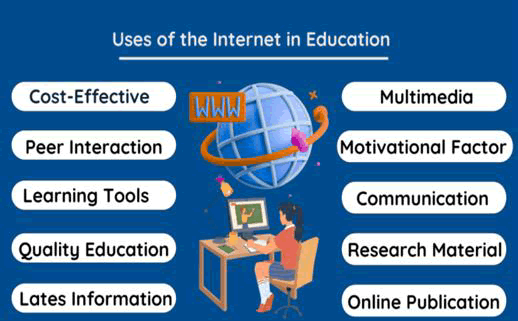
Figure 1. The use of IoT in education.
Internet of Things (IoT) is defined as the extension of Internet into real world objects wherein physical items are present both in real and virtual worlds and can be monitored remotely. It is an interconnection of massive devices in cyber space through data collection, sharing, and analysis in heterogeneous networks. The growth of IoT depends on advances in mobile devices, embedded and ubiquitous communication, cloud computing, and data analytics. IoT provides services over the traditional Internet by enabling human-to-thing, thing-to-thing, or thing-tothings communications.
Technology in education has played a significant role in connecting and educating the students. IoT technology has an important impact on education field. IoT has not only changed the traditional teaching practices but has also brought changes in the infrastructure of educational institutions.
The term internet of things in education is considered two faceted because of its use as a technological tool to enhance academic infrastructure and as a subject or course to teach fundamental concepts of computer science. And also playing a likely role for the improvement of education at all levels including school, college and university teaching. From student to teacher, classroom to campus, everything can get benefited with this technology.
Hypotheses: This study proposes four main hypotheses about the adoption of the IoT in higher education. The vital constructs employed in the study and the proposed model structure has a positive association between each other in the path.
H1: IoT in higher education has a positive influence through offering many advantages to education. The implementation of technology gives education professionals new tools to optimize classwork, improve the efficiency of the learning process, connect with students better, and ensure on-site safety. Some of the benefits of using IoT in education include:
H2: IoT in higher education has a positive potential role: The role of IoT: Unlocking new opportunities for growth and success. It plays an important role in the educational process by providing great opportunities for development. Thanks to the Internet, students can study remotely and gain access to many useful courses provided free of charge by the world’s leading universities.
H3: The adoption of the IoT in higher education results in different challenges. The existence of a large number of IoT devices and sensors increases the threat of malicious software attempts and requires more layers of security. Among the reasons that have resulted in the failure of the IoT projects, it is noteworthy data quality and integration as well as the shortage of financial resources. lack of skilled personnel to implement and manage the systems. development, complexity and implementation of IoT, ethics, trust and privacy, quality and data security were major challenges of IoT in education.
H4: There is a relationship between the adoption of the IoT in higher education and education policies, in terms of managerial support and attitude towards change Education policies are critical to encouraging the adoption of technology in classrooms and their effective integration in education programs.
The adoption of IoT allows users to implement a learning management system. With the help of it, teachers can remotely structure the educational process, and track the effectiveness of educational programs and students' progress. As for students, they can take courses, tests, and exams at a convenient time and in any place.
H5: The impacts of technology in education can't be overestimated. It has extended far and wide, beyond traditional brick-and-mortar classrooms into virtual schools, particularly so at the height of the pandemic. A specific part of this boom in technology is the Internet of Things, or IoT. The IoT encompasses a wide range of interconnected or networked smart and non- smart gadgets. Interconnected IoT devices are now being used for various purposes to aid education not just in student learning, but also in schools’ administrative functions. The various impacts of technology in education can be placed into three categories:
These education policies facilitate the adoption of the IoT. Technology in higher education. It also encourages a positive attitude to change and international cooperation in the advancement and strengthening of education. Through experiencing the benefit and challenges of the IoT in the institute.
Facilitating condition is regarded as the influence of both organizational and technical infrastructures to support IoT usage in universities. It is also regarded as the extent to which students and lecturers trust the institution and technical infrastructure in sustaining the usage of the system. Such facilitating conditions are available, then the people are more likely to form positive attitudes to use the IoT technology.
Research methodology
Research design: A structured questionnaire was used to collect primary data. The survey included six parts. First, the demographic information section consists of four main questions: Respondents’ age, education, gender, and profession. Then, the following section part 2. The questionnaire elaborated on the dependent and the independent variables, which were to be assessed in the survey. It contained five main dimensions of factors of the trust model. Dimension 1 to 3 is about the dependent variables.
The first dimension consists questions about their comprehensive understanding on IoT, roles consists of 3 potentials questions in using IoT services experienced during learning process, the second dimension consists 3 potential questions about the benefits of IoT during learning process in the institutes, third dimension of the questionnaire consists of 3 challenges experienced while using IoT services during the teaching learning process. Fourth question is about the mediator variable its use of IoT adoption attitudes by the participants in the institute. The participants were asked to share their perceptions by rating their responses on a five-point level of agreement Likert scale. Finally, the fifth dimension is about independent variable consists of 3 question about impact of educational system policy in adoption of IoT (Table 1 and Figure 2).
| H1 | Hypotheses 1 | Role of IoT | Shows that the significant potential role on the adoption of IoT in higher education |
| H2 | Hypotheses 2 | Benefits of IoT | Shows that the significant benefits of higher education on the adoption of IoT |
| H3 | Hypotheses 3 | Challenges of IoT | Shows that the significant challenges on the adoption of IoT in higher education |
| H4 | Hypotheses 4 | Adoption of IoT on higher education | Shows that the significant impacts of adoption of IoT on higher education |
| H5 | Hypotheses 5 | Education policy of IoT | Shows that the significant impacts of education policy of IoT on the adoption of IoT in higher education |
Table 1. Hypotheses indicators.
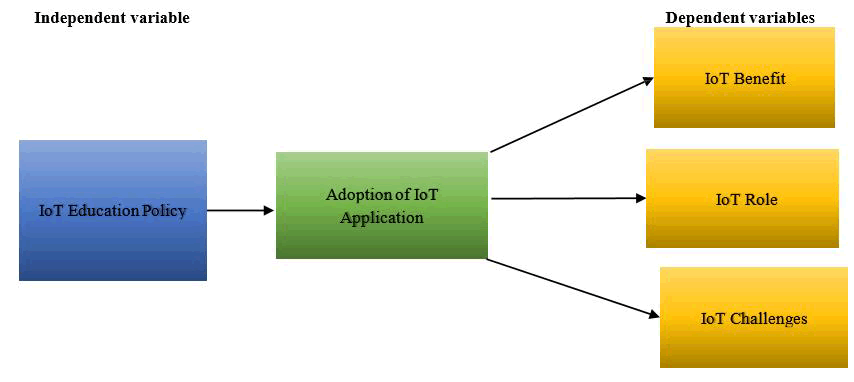
Figure 2. Proposed structural model.
Research questioner: The questionnaires were designed closed-ended items. And they were distributed to all level of students, in the educational institutions. In this study, the sets of questionnaires were utilized for the data gathering process. The set of questionnaire is used for students only to rate their understanding and perception practice, the role, benefits and challenges of IoT.
Sample and data collection: The used sampling method was convenient sampling, where IoT users in different fields were identified in a convenient approach. The survey data was collected from the target sample size of 125 undergraduate and postgraduate students of AAiT campus. in the paper survey form, the questions were presented in written format and respondents wrote their answers on the paper. A total of 125 questionnaires fully completed surveys were received, resulting in a response rate of 100%. Among the 125 respondents, 80 (64%) were from the undergraduate students, and 45 (36%) were from postgraduate students. Next, the participants were asked to share their perceptions by rating their responses on a fivepoint level of agreement Likert scale.
Method of analysis: SmartPLS3.2.9 full version was used for analysing collected data. In addition, Cronbach alpha values and corrected item-total correlation were used to investigate the consistency and reliability of constructs, and an exploratory factor analysis was used to inspect validity. Other methods include descriptive analyses and qualitative discussions.
Descriptive analysis: Respondents’ demographic profile Descriptive statistics aim to summarize large sets of quantitative information in numerical form. It is normally used for analysis of demographic variables and an elaboration of the mean, standard deviation and correlation of the constructs. Two common presentations of descriptive statistics are the measure of central tendency (mean, median, and mode) and dispersion (the range, standard deviation, standard error and variance) (Table 2).
| Potential role of IoT | PRIoT1 | IoT has a significant potential role to make our activities more convenient and efficient |
| PRIoT2 | IoT has the potential to embedded with technologies for the purpose of connecting and exchanging data with other devices | |
| PRIoT3 | IoT has the potential to perform management tasks faster and risk-free, reliable access to everything | |
| Benefit of IoT | BIoT1 | IoT can improve the learning experience and performance of university operations |
| BIoT2 | IoT helps to guide, monitor a progress with digital rewards, stimulates excellence in the teaching-assessment activity | |
| BIoT3 | IoT can help universities to better understand to the needs of their students and improve the security and sustainability of university campuses | |
| Challenges of IoT | CIoT1 | IoT can be a privacy risk and concerns about the security of IoT data |
| CIoT2 | IoT has an impact on students’ privacy | |
| CIoT3 | IoT can be expensive, lack of skilled personnel to implement and manage the systems | |
| Adoption of IoT | AIoT1 | IoT is a technology that allows us to add a device to an inert object and ready to use the IoT |
| AIoT2 | Exchange real time data with other connected devices and systems over networks able to adopt IoT tech | |
| AIoT3 | Greater transparency, control and performance when applied to any industry and keep track of major resources, create smarter lesson plans able to adopt IoT technology | |
| Education policy of IoT | EPIoT1 | System policies are critical to encouraging the adoption of technology in classrooms and their effective integration in education programs |
| EPIoT2 | The programs/platforms/guidance designed at national and institutional level stimulate the adoption of the IoT in universities | |
| EPIoT3 | The programs/platforms/guidance designed at international level stimulate the adoption of the IoT in universities |
Table 2. Questions used for survey to validate the model.
Result of the study
Respondents’ demography: As described earlier in the sample data collection part, the survey conducted within the university and collected 125 forms from the respondents who showed at least average IoT knowledge, the detail distribution of the respondent demography is discussed below in Table 3.
Age: From Table 2 the study shows most of the respondents were in the range of 18-28.
| Age range | 18-28 | 29-39 | 40-49 | >60 |
| QTY | 90 | 35 | 0 | 0 |
Table 3. Age profile of the participants.
Gender: From Table 3 the gender participants show that 68% the total participants are male and 32% are female.
Education: As shown in Table 3, among the 125 participants, 60% belonged to a bachelor’s degree, 32% belonged to a master’s, and 8% belonged to a PhD (Table 4).
| S/N | Question | Frequency (n=125) | Percentage |
| 1 | Gender | ||
| Male | 85 | 68% | |
| Female | 40 | 32% | |
| 2 | Education | ||
| B.Sc. | 75 | 60% | |
| M.Sc. | 40 | 32% | |
| Ph.D. | 10 | 8% | |
| 3 | Department | ||
| CHEM. | 15 | 12% | |
| ELE. | 28 | 22.40% | |
| CIV | 36 | 28.80% | |
| MEIE | 46 | 37.80% | |
Table 4. Others profile of the participants.
Education level
From Table 3 data shows the highest participants 37.8% are from school of mechanical and industrial engineering department. 28.8% from civil engineering department, 22.4% from electrical department and 12% from chemical engineering department.
Evaluation of the measuring model
The quality and usefulness of the collected data is determined by factors of reliability and validity. There are several criteria to measure the reliability and validity of the measurement model, including the coefficient of determination (R-squared), the Average Variance Extracted (AVE), the Composite Reliability (CR) and Cronbach’s alpha. Reliability refers to the outer loadings of the construct measurement indicators. In order to preserve an element inside the measurement model, it must have a higher outer loading. The validity of the construct in the SEM model can be checked through construct validity and discriminant validity.
The reliability of indicators is checked by investigating the outer loadings numbers, where the preferred value is at least 0.7. Convergent validity emerges from the AVE numbers, which must be at least 0.5.
SmartPLS3 report
SmartPLS3 is a software with graphical user interface for variance-based Structural Equation Modelling (SEM) using the Partial Least Squares (PLS) path modelling method. The quality and usefulness of the collected data is determined by factors of reliability and validity. There are several criteria to measure the reliability and validity of the measurement model, including the coefficient of determination (R-squared), the Average Variance Extracted (AVE), the Composite Reliability (CR) and Cronbach’s alpha. Reliability refers to the outer loadings of the construct measurement indicators. In order to preserve an element inside the measurement model, it must have a higher outer loading. The validity of the construct in the SEM model can be checked through construct validity and discriminant validity. Convergent validity emerges from the AVE numbers, which must be at least 0.5.
Table 4 shows that the criteria of internal consistency for every construct employed in this research was achieved as all values in the three assessments almost all are above 0.70. It presents a summary of the results following the execution of the PLS algorithm.
The AVE value for each of the constructs (refer to Table 4), ranging from 0.613 to 0.697, was above the minimum cutoff value of 0.50 (Table 5).
| Cronbach's alpha | Rho-A | Composite reliability | Average Variance Extracted (AVE) | |
| AIoT | 0.782 | 0.79 | 0.873 | 0.697 |
| BIoT | 0.693 | 0.79 | 0.825 | 0.613 |
| CIoT | 0.779 | 0.784 | 0.872 | 0.695 |
| RIoT | 0.749 | 0.774 | 0.852 | 0.657 |
| EPIoT | 0.77 | 0.799 | 0.864 | 0.68 |
Table 5. Reliability and validity.
Outer loadings: Are the estimated relationships in reflective measurement models (i.e., arrows from the latent variable to its indicators). They determine an item's absolute contribution to its assigned construct.
The values range from 0 to 1. The outer loadings value should be higher than 0.70 and it should be considered for deletion if the removal of the indicator with outer loadings which is between 0.40 and 0.70 if it contributes to an increase in composite reliability and average variance extracted. Based the concept, this result is acceptable (Table 6).
| Outer loadings | |||||
| AIoT | BIoT | CIoT | RIoT | SPIoT | |
| AIoT1 | 0.793 | ||||
| AIoT2 | 0.827 | ||||
| AIoT3 | 0.882 | ||||
| BIoT1 | 0.892 | ||||
| BIoT2 | 0.737 | ||||
| BIoT3 | 0.708 | ||||
| CIoT1 | 0.874 | ||||
| CIoT2 | 0.795 | ||||
| CIoT3 | 0.829 | ||||
| RIoT1 | 0.816 | ||||
| RIoT2 | 0.832 | ||||
| RIoT3 | 0.783 | ||||
| EPIoT1 | 0.848 | ||||
| EPIoT2 | 0.800 | ||||
| EPIoT3 | 0.825 | ||||
Table 6. Outer loading.
Discriminant validity
Discriminant validity assessment has become a generally accepted prerequisite for analyzing relationships between latent variables. For variance-based structural equation modeling, such as partial least squares,
| Fornell-larcker criterion | |||||
| AIoT | BIoT | CIoT | RIoT | SPIoT | |
| AIoT | 0.835 | ||||
| BIoT | 0.627 | 0.783 | |||
| CIoT | 0.998 | 0.632 | 0.833 | ||
| RIoT | 0.577 | 0.736 | 0.575 | 0.811 | |
| EPIoT | 0.615 | 0.677 | 0.614 | 0.678 | 0.825 |
Table 7. Discriminant validity.
Cross loadings: According to cross loadings, a particular item should have higher loadings on its own parent construct in comparison to other constructs in the study. If an item loads well onto another construct in comparison to its own parent construct, then there are issues of discriminant validity. The difference of loading less than 10 also indicates that the item is cross loading onto the other construct and hence could be a threat to discriminant validity. Table 7 below translates the results of discriminant analysis under the cross-loading method. The results validate that all the indicator loadings were clearly separated across the latent variables, as the loadings are high on their own constructs whilst low at the other construct (Table 8).
| AIoT | BIoT | CIoT | RIoT | SPIoT | |
| AIoT1 | 0.793 | 0.482 | 0.797 | 0.383 | 0.487 |
| AIoT2 | 0.827 | 0.502 | 0.826 | 0.463 | 0.496 |
| AIoT3 | 0.882 | 0.581 | 0.874 | 0.586 | 0.554 |
| BIoT1 | 0.651 | 0.892 | 0.654 | 0.582 | 0.632 |
| BIoT2 | 0.398 | 0.737 | 0.401 | 0.472 | 0.512 |
| BIoT3 | 0.347 | 0.708 | 0.35 | 0.742 | 0.41 |
| CIoT1 | 0.882 | 0.581 | 0.874 | 0.586 | 0.554 |
| CIoT2 | 0.784 | 0.483 | 0.795 | 0.376 | 0.481 |
| CIoT3 | 0.825 | 0.511 | 0.829 | 0.464 | 0.496 |
| RIoT1 | 0.568 | 0.577 | 0.564 | 0.816 | 0.705 |
| RIoT2 | 0.442 | 0.621 | 0.442 | 0.832 | 0.475 |
| RIoT3 | 0.341 | 0.606 | 0.339 | 0.783 | 0.396 |
| EPIoT1 | 0.612 | 0.64 | 0.612 | 0.612 | 0.848 |
| EPIoT2 | 0.398 | 0.492 | 0.398 | 0.54 | 0.8 |
| EPIoT3 | 0.47 | 0.514 | 0.465 | 0.514 | 0.825 |
Table 8. Cross loading.
R square statistics explains the variance in the endogenous variable explained by the exogenous variable(s). An Rsquared value shows how well the model predicts the outcome of the dependent variable. R-squared values range from 0 to 1.
An R-squared value of 0 means that the model explains or predicts 0% of the relationship between the dependent and independent variables.
A value of 1 indicates that the model predicts 100% of the relationship, and a value of 0.5 indicates that the model predicts 50%, and so on and F-square is the change in Rsquare when an exogenous variable is removed from the model. f- =square is effect size (>=0.02 is small; >= 0.15 is medium; >= 0.35 is large (Tables 9 and 10).
| R square | R square adjusted | |
| AIoT | 0.378 | 0.373 |
| BIoT | 0.393 | 0.389 |
| CIoT | 0.995 | 0.995 |
| RIoT | 0.333 | 0.328 |
Table 9. R square.
| AIoT | BIoT | CIoT | RIoT | SPIoT | |
| AIoT | 0.649 | 209.457 | 0.5 | ||
| BIoT | |||||
| CIoT | |||||
| RIoT | |||||
| EPIoT | 0.608 |
Table 10. F square.
Latent variable is a variable that cannot be observed. The presence of latent variables, however, can be detected by their effects on variables that are observable. Most constructs in research are latent variables. Consider the psychological construct of anxiety (Table 11).
| AIoT | BIoT | CIoT | RIoT | SPIoT | |
| AIoT | 1 | 0.627 | 0.998 | 0.577 | 0.615 |
| BIoT | 0.627 | 1 | 0.632 | 0.736 | 0.677 |
| CIoT | 0.998 | 0.632 | 1 | 0.575 | 0.614 |
| RIoT | 0.577 | 0.736 | 0.575 | 1 | 0.678 |
| EPIoT | 0.615 | 0.677 | 0.614 | 0.678 | 1 |
Table 11. Latent variable correlations.
Once the measuring model is completed, it is important to analyse the coefficients of determination (R2 ), the size and significance of the path coefficients (Table 12),
| AIoT | BIoT | CIoT | RIoT | SPIoT | |
| AIoT | 1 | 0.627 | 0.998 | 0.577 | 0.615 |
| BIoT | 0.627 | 1 | 0.632 | 0.736 | 0.677 |
| CIoT | 0.998 | 0.632 | 1 | 0.575 | 0.614 |
| RIoT | 0.577 | 0.736 | 0.575 | 1 | 0.678 |
| EPIoT | 0.615 | 0.677 | 0.614 | 0.678 | 1 |
Table 12. Latent variable covariance.
Table 9 shows the values of a set of variables that indicate the level to which the data support the hypothesis of the model.
With regard to the path coefficients (O in Table 9), the higher the absolute value, the stronger the predictive relation between the latent variables. The adoption of the IoT has the strongest effect (O=0.998) on excellence in the teaching activity and the weakest effect on data security and integrity (O=0.577) (Table 13).
| Mean, STDEV, T-Values, P-Values | |||||
| Original sample | Sample mean | Standard deviation | T statistics (|O/STDEV|) | P values | |
| AIoT -> BIoT | 0.627 | 0.624 | 0.081 | 7.774 | 0 |
| AIoT -> CIoT | 0.998 | 0.997 | 0.001 | 7.624 | 0 |
| AIoT -> RIoT | 0.577 | 0.572 | 0.086 | 6.713 | 0 |
| EPIoT -> AIoT | 0.615 | 0.604 | 0.083 | 7.42 | 0 |
Table 13. Path coefficients.
Figure 3 presents the model following the execution of the PLS algorithm. It highlights the coefficients of determination (R2) for endogenous variables (written on the symbol of the latent variable–in the circle), the path coefficients and the outer loadings.
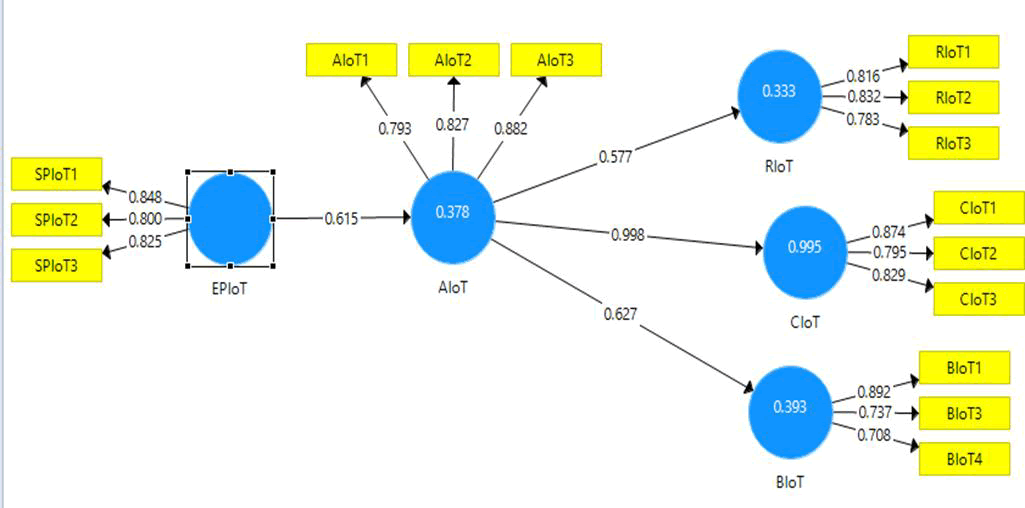
Figure 3. Outer loading assessment, R square and path coefficient.
The use of IoT technology is promoting a gradual disruption in the teaching and learning process. The use of the IoT in higher education has contributed to an increase in the quality-of-learning, flexibility for the actors in the educational process, significant cost savings compared to conventional education, effectiveness, efficiency in the teaching-learning processes, among many others, which ensure a level of primacy in educational institutions that are willing to implement these tools in their educational centres.
Figure 3 corresponds with Table 9. It provides the significance levels of each path obtained by bootstrapping. The Smart PLS software draws random samples from the data to estimate the path model 5,000 times and determine p values to evaluate the significance level. Bootstrapping determines the standard error. This enables computation of t values and determines the significance level from the p values. The study regarded a p-value of 0.05 or smaller as statistically significant. Figure 3 and Table 9 indicate that all hypotheses are significant with their coefficient P value all at (P=000) all variables are supported to the designed model and have a strong positive effect on the adoption of IoT in higher education.
The implies that developing an effective system policies are very critical to encouraging the adoption of technology in teaching learning and their effective integration in education programs that enables an effective and equitable use of digital technologies in education.
IoT is a new technology based tools that have connected variety of devices around us and it has made world as a global village. As it emerges from this study, IoT has its own tremendous challenges to higher education and also the adoption of the IoT in higher education has a positive role in overall educational system that gives benefits to the user as well.
In general, the study validated the strength and values of effects on Internet of things on higher education. The proposed research model included the potential role of IoT, the benefits of IoT, the challenges of IoT, the adoption of IoT and the education policy on IoT and Fifteen indicators were used and highly valuable for Insights the IoT application status of the university and Graspping the students’ general understanding of internet of things and its role in the institute.
Major benefits and challenges of adoption of the IoT in higher education
Benefits of IoT in education: The IoT, a network of interconnected devices that collect and exchange data, is rapidly transforming industries, and education is no exception. From smart classrooms to personalized learning, let’s explore the exciting benefits that IoT brings to the learning landscape
The Internet of Things (IoT) is a system of interconnected, internet-connected objects that collect and transmit data without human intervention over a wireless network. The world has more connected devices than people. As a result of the IoT, businesses, governments, and human beings interact differently.
Challenges of IoT in education
Even as many colleges and universities are interested in using IoT solutions to support student learning, some difficulties become a barrier to the widespread adoption of its tools. Let’s look at some of them, as well as solutions that can be an answer to these challenges.
The study concluded that IoT is necessary to move along with digital world in education sectors. With the advancement in technology i.e., Internet of Things, universities can resolve many challenges such as; keeping track of essential resources, develop access to information, build smarter plans, and design safer institute.
A sample of 125 undergraduate and graduate students were selected to acquit data; all hypotheses the potential role of IoT, the benefits of IoT, the challenges of IoT, the adoption, IoT and the education policy on IoT are analysed and validated with respect to the standard value. Though the SEM analysis of the survey data, through references to the literature as well as to the current status of the institutes technology application.
In the research. Though it has wonderful uses yet there are many challenges in the integration of IoT in education especially for developing countries. For getting maximum benefits from IoT in education, attention may be given to the solution of ethics, trust and privacy challenges.
The result of the research insights that an important aspect of IoT adoption in the university environment which to offer an improvement in the teaching and learning process, delivering more enriching learning experiences by obtaining real-time feedback on student performance. Therefore, the introduction of IoT not only brings the introduction of ICT in the classroom such as e-books, tablets, sensors and augmented reality, but also enhances students’ interest and understanding, thus, improving the quality of teaching in higher education.
The purpose of this study was to find out the potential of IoT in higher education and how to maximize its benefits while addressing its challenges and reducing the risks involved with it and concluded that to focus on advanced technology and a full implementation of IoT in higher education as main future work of the study.
Designing research model by adding some other organizational variables within the scope of adoption of Internet of Things IoT and its role in higher education can be investigated for more accuracy as of personalisation of learning, users attitude, collaborative and participatory learning, smart learning environments, automated feedback and assessment, privacy and security, quality of university with the aim of making the university an innovative learning space adapted to the needs and demands of the 21st century.
Availability of data and materials: The author confirms that the dataset generated, analysed, findings and supplementary materials are all presented within the articles.
The author declares that there is no competing interest.
None.
The author confirms full responsibility for the following aspects of the article review: Article review selection criteria and design, article collection, analysis and result interpretation, further identifying gaps and categorized the articles based on their limitation. the author read and approved the final manuscript to be published.
I am grateful to the editorial office and reviewers for investing the time and effort necessary to evaluate the manuscript. My sincere gratitude goes out to everyone who offered wise comment and suggestion that helped me improve the quality of the manuscript.
[Crossref]
[Crossref]