
Research Article - Journal of Medicine and Medical Sciences ( 2026) Volume 17, Issue 1
Received: 01-Jun-2026, Manuscript No. jmms-26-192774; Editor assigned: 04-Jun-2026, Pre QC No. jmms-26-192774 (PQ); Reviewed: 18-Jun-2026, QC No. jmms-26-192774; Revised: 14-Jul-2026, Manuscript No. jmms-26-192774 (R); Published: 21-Jul-2026, DOI: 10.14303/2141-9477.2026.145
Introduction: Sexual assault is a major public health concern and an important medico-legal issue, particularly in resource limited countries. This study aimed to analyze the epidemiological, behavioral, and judicial profile of perpetrators of sexual assault in Conakry.
Methods: A retrospective descriptive and analytical study was conducted from 2021 to 2025 in the Department of Forensic Medicine of the Regional Hospital of Conakry. Data were collected from forensic, judicial, and law enforcement records. Statistical analyses were performed using the Chi-square (χ²) test and the calculation of Odds Ratios (ORs) with 95% Confidence Intervals (95% CIs).
Results: A total of 1,014 perpetrators were included, all of whom were male. The mean age was 29.8 years, with a predominance of individuals aged 18–30 years (60.2%). Most perpetrators had a low level of education and were from socioeconomically disadvantaged backgrounds. Substance use was identified in 22.8% of cases. Addictive behaviors were significantly associated with arrest (OR=1.62; 95% CI: 1.18-2.23; p=0.003). Younger perpetrators had a higher likelihood of substance use (OR=1.78; p=0.002) and arrest (OR=1.68; p=0.001).
Conclusion: These findings highlight the importance of socio-behavioral determinants in the dynamics of sexual assault and emphasize the need for targeted interventions integrating social prevention strategies and measures to combat substance abuse.
Sexual violence is a major global public health and public safety concern because of its high prevalence, severity, and long-term consequences for victims. According to the World Health Organization (WHO), nearly one in three women worldwide has experienced physical and/or sexual violence during her lifetime, highlighting the magnitude and persistence of this phenomenon (WHO, 2002). Such violence has multiple consequences, including physical injuries, psychological disorders such as Post-Traumatic Stress Disorder (PTSD) and depression, as well as significant social and legal repercussions. Beyond victim care, sexual assault represents a major challenge for forensic medicine, which plays a crucial role in documenting cases, identifying perpetrators, and providing medico-legal evidence. In this context, understanding the profile of perpetrators is essential for guiding prevention strategies, improving criminal investigations, and strengthening public policies aimed at combating sexual violence (Jewkes et al., 2002). However, most scientific research has historically focused on victims, with comparatively little attention devoted to perpetrators, particularly in low-resource settings.
Available evidence nevertheless indicates that perpetrators of sexual assault share relatively consistent characteristics: They are predominantly male, generally young, and frequently originate from socioeconomically disadvantaged backgrounds (Seto, 2008; Hanson et al., 2005; Moffitt, 1993). These findings are consistent with several explanatory theoretical frameworks, including social control theory, strain theory and developmental criminology, all of which emphasize the contribution of individual, social, and environmental factors to the development of violent behavior (Agnew, 1992).
Several risk factors have been consistently associated with sexual offending, including low educational attainment, socioeconomic deprivation, and substance use. Alcohol and drug consumption are particularly important because of their disinhibitory effects, impaired judgment, and increased aggressiveness, all of which may facilitate violent behavior (Abbey, 2002; Testa et al., 2009). These factors are especially relevant in rapidly urbanizing settings, where social, economic, and demographic changes may contribute to the emergence of high-risk behaviors. In sub-Saharan Africa, and particularly in West Africa, sexual violence represents a growing concern that remains insufficiently documented from the perspective of perpetrators. Data collection systems are often fragmented across healthcare facilities, law enforcement agencies (police and gendarmerie), and judicial institutions, thereby limiting the availability of reliable and comprehensive information (UNO, 2019).
In this context, studies integrating multisectoral data sources are particularly valuable for improving the overall understanding of the phenomenon and reducing biases related to underreporting. In Guinea, particularly in Conakry a capital city characterized by high population density and considerable socioeconomic diversity sexual violence constitutes an increasing component of forensic medical practice.
The Department of Forensic Medicine at the Regional Hospital of Conakry serves as a central hub for data collection in close collaboration with law enforcement agencies and judicial authorities. Nevertheless, information on the characteristics of perpetrators of sexual assault in this setting remains scarce. Against this background, the present study aimed to comprehensively analyze the epidemiological, behavioral, and medico-legal profile of alleged perpetrators of sexual assault identified at the Department of Forensic Medicine of the Regional Hospital of Conakry over a five-year period. The study adopted a multisource approach by integrating forensic records, victims' statements, and information obtained from law enforcement agencies and judicial authorities.
Particular emphasis was placed on sociodemographic characteristics, substance use behaviors, and factors associated with the arrest of perpetrators, with the objective of contributing to a better understanding of the phenomenon and informing prevention strategies and judicial responses tailored to the Guinean context.
Study design and setting
This was a retrospective descriptive and analytical study conducted between January 1, 2021, and December 31, 2025, at the Department of Forensic Medicine of the Regional Hospital of Conakry, Guinea.
Study population
The study included all alleged perpetrators of sexual assault with complete and exploitable data identified through forensic and judicial records.
Data collection
Data were extracted from forensic registers, medical certificates, forensic expert reports, police reports, and judicial case files. Cross-validation of information across the different data sources was performed to enhance data reliability and consistency.
Statistical analysis
Statistical analyses were performed using IBM SPSS Statistics, version 26.0 (IBM Corp., Armonk, NY, USA). Categorical variables were compared using the Chi-square (χ²) test. Associations were assessed by calculating Odds Ratios (ORs) with their corresponding 95% Confidence Intervals (95% CIs). A p-value<0.05 was considered statistically significant.
Ethical considerations
The study protocol was approved by the National Ethics Committee for Health Research of Guinea. All data were anonymized before analysis in accordance with the ethical principles of the Declaration of Helsinki.
Study limitations
This study has several limitations inherent to its retrospective design and the multisource nature of the data collection. Some information regarding alleged perpetrators was obtained indirectly from victims' statements or judicial records, which may have introduced information bias and reduced the accuracy of certain variables despite cross-validation procedures.
Nevertheless, the diversity of data sources and the large sample size strengthen the robustness and representativeness of the findings.
A total of 1,014 alleged perpetrators of sexual assault were identified among 929 victims, corresponding to a perpetrator-to-victim ratio of 1.09. This finding indicates the occurrence of sexual assaults involving multiple perpetrators against a single victim. All alleged perpetrators of sexual assault were male (100%) (Figure 1).
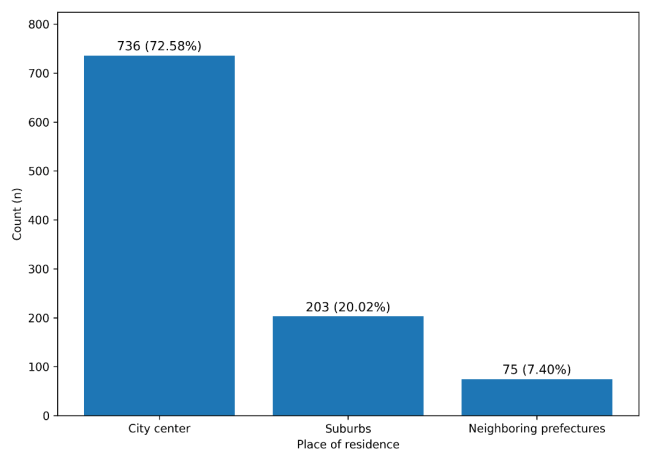
Figure 1. Distribution of alleged perpetrators by place of residence.
Most sexual assaults were committed by a single alleged perpetrator (n=916; 90.3%), whereas assaults involving multiple alleged perpetrators accounted for 9.7% of cases (n=98) (Figure 2).
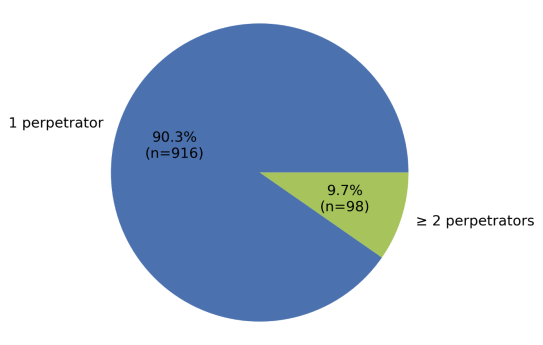
Figure 2. Distribution of alleged perpetrators according to the number of perpetrators involved (N=1,014).
The age distribution of alleged perpetrators showed a marked predominance of young adults aged 18-30 years (n=610; 60.2%), followed by those aged 31-45 years (n=371; 36.6%). Minors (<18 years) were uncommon (n=6; 0.6%), as were alleged perpetrators older than 45 years (n=27; 2.7%). The mean age was 29.8 years (range: 15-58 years) (Figure 3).
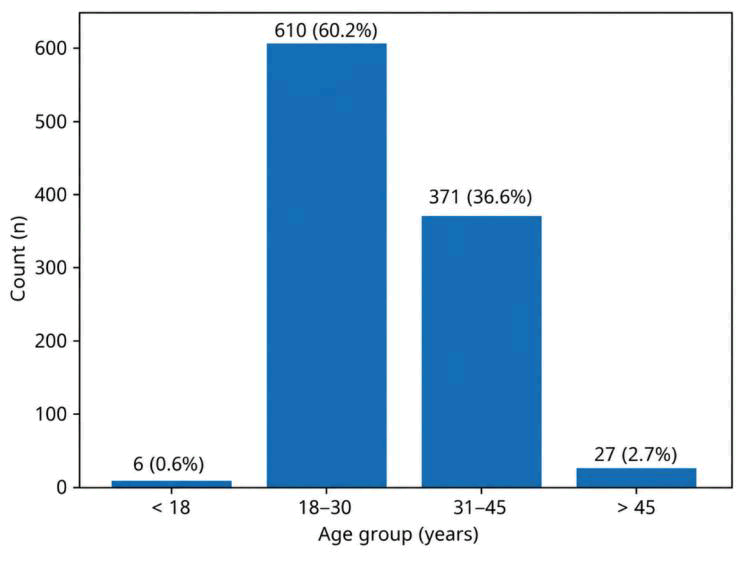
Figure 3. Distribution of alleged perpetrators by age group (N=1,014).
The educational attainment of alleged perpetrators was generally low, with the majority having only primary education (57.2%), followed by no formal education (21.6%), secondary education (19.1%), and, to a much lesser extent, higher education (2.1%) (Figure 4).
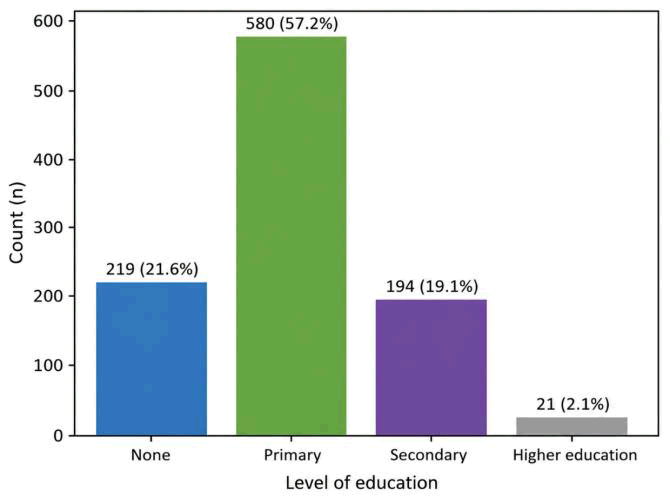
Figure 4. Distribution of alleged perpetrators by educational level (N=1,014).
Alleged perpetrators were predominantly workers/laborers (n=412; 40.6%), followed by pupils/students (n=316; 31.2%) and unemployed individuals (n=175; 17.3%). Other occupational categories including traders, artisans, drivers, and motorcycle taxi riders accounted for 10.9% of cases (n=111) (Figure 5).
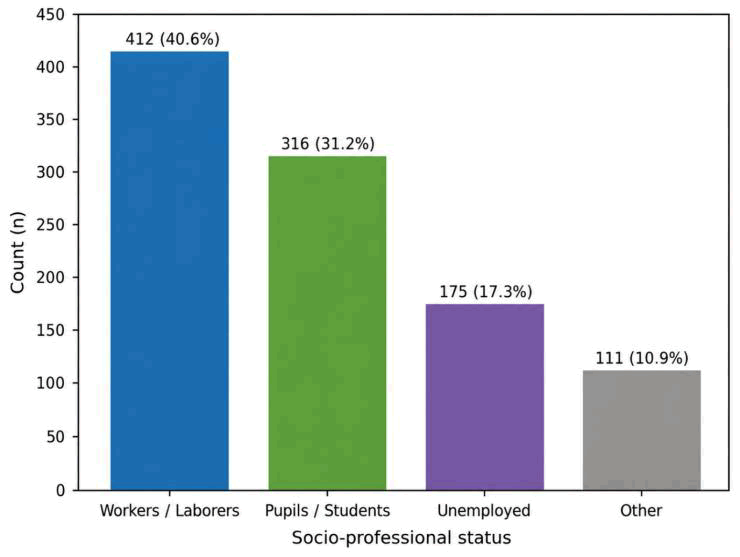
Figure 5. Distribution of alleged perpetrators by socio-professional status (N=1,014).
The distribution of alleged perpetrators by marital status showed a marked predominance of single individuals (n=934; 92.1%). Divorced individuals accounted for 6.6% of cases (n=67), whereas widowed (n=10; 1.0%) and married individuals (n=3; 0.3%) were only marginally represented (Figure 6).
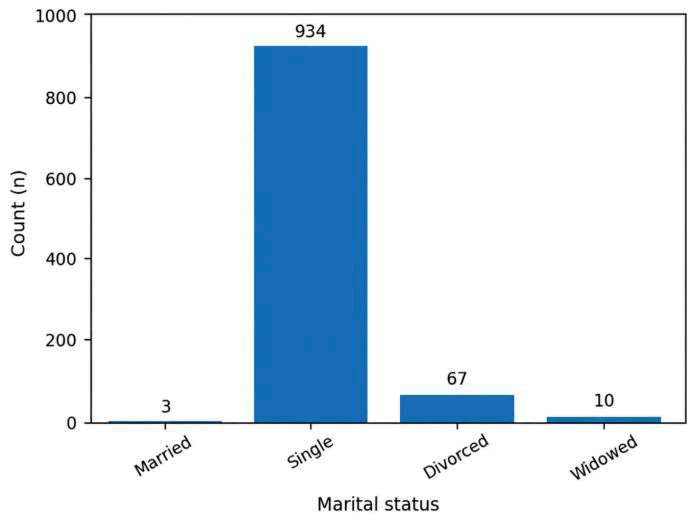
Figure 6. Distribution of alleged perpetrators by marital status (N=1,014).
Substance use was identified in 231 alleged perpetrators, representing 22.8% of the study population. Tobacco use was the most common addictive behavior (12.2%), followed by alcohol use (7.3%), illicit drug use (2.4%), and combined alcohol and drug use (0.9%) (Figure 7).
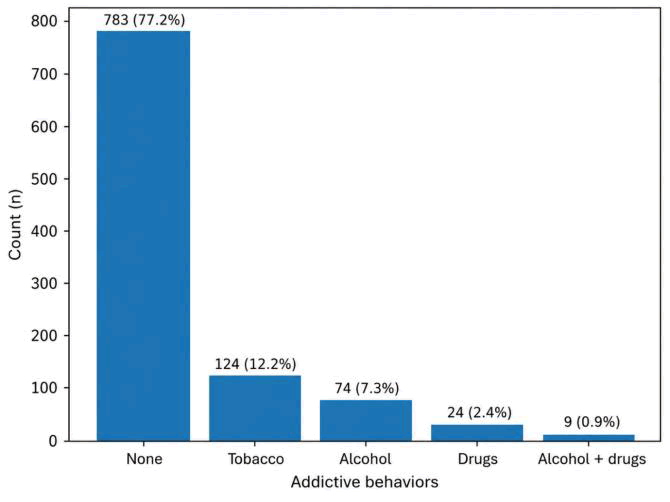
Figure 7. Distribution of alleged perpetrators by addictive behaviors (N=1,014).
Among the alleged perpetrators, 588 (58.0%) were identified and 416 (41.0%) had been arrested. A small proportion remained at large (n=7; 0.7%) or were unidentified (n=3; 0.3%) (Table 1).
| Judicial status | Effective (n) | Percentage (%) |
| Identified | 588 | 58,0 |
| Arrested | 416 | 41,0 |
| At large | 7 | 0,7 |
| Unidentified | 3 | 0,3 |
| Total | 1014 | 100 |
Table 1. Distribution of alleged perpetrators by judicial status (N=1,014).
Substance use was significantly more frequent among alleged perpetrators aged 18-30 years (27.0%) than among those older than 30 years (16.3%). This association was statistically significant (OR=1.78; 95% CI: 1.25-2.54 ; p=0.002), indicating that younger alleged perpetrators were at increased odds of substance use (Table 2).
| Age group | Substance use, n (%) | No substance use, n (%) | Total | OR | 95% CI | p-value |
| 18-30 years | 165 (27.0) | 445 (73.0) | 610 | 1.78 | (1.25-2,54) | 0,002 |
| >30 years | 66 (16.3) | 338 (83.7) | 404 | 1 | - | - |
| Total | 231 (22.8) | 783 (77.2) | 1014 | - | - | - |
Table 2. Association between age group and substance use among alleged perpetrators of sexual assault (N=1,014).
Alleged perpetrators with substance use were more frequently arrested (52.0%) than those without substance use (37.8%). This difference was statistically significant (OR=1.62; 95% CI: 1.18-2.23; p=0.003), suggesting that alleged perpetrators who used substances had increased odds of being arrested (Table 3).
| Substance use | Arrested, n (%) | Not arrested, n (%) | Total | OR | 95% CI | p-value |
| Yes | 120 (52.0) | 111 (48.0) | 231 | 1.62 | (1,18-2,23) | 0,003 |
| No | 296 (37.8) | 487 (62.2) | 783 | 1 | - | - |
| Total | 416 (41.0) | 598 (59.0) | 1014 | - | - | - |
Table 3. Association between substance use and arrest among alleged perpetrators of sexual assault (N=1,014).
Sexual assaults involving multiple alleged perpetrators were more likely to result in an arrest (53.1%) than those committed by a single alleged perpetrator (39.7%). This association was statistically significant (OR=1.94; 95% CI: 1.12-3.36; p=0.013) (Table 4).
| Number of alleged perpetrators | Arrested, n (%) | Not arrested, n (%) | Total | OR | 95% CI | p-value |
| ≥2 perpetrators | 52 (53.1) | 46 (46.9) | 98 | 1.94 | (1.12-3.36) | 0.013 |
| 1 perpetrator | 364 (39.7) | 552 (60.3) | 916 | 1 | - | - |
| Total | 416 (41.0) | 598 (59.0) | 1014 | - | - | - |
Table 4. Association between the number of alleged perpetrators and arrest status (N=1,014).
Alleged perpetrators aged 18-30 years were more frequently arrested (45.1%) than those older than 30 years (34.9%). This difference was statistically significant (OR=1.68; 95% CI: 1.23-2.30; p=0.001), indicating that younger alleged perpetrators had increased odds of being arrested (Table 5).
| Age group | Arrested, n (%) | Not arrested, n (%) | Total | OR | 95% CI | p-value |
| 18-30 years | 275 (45.1) | 335 (54.9) | 610 | 1.68 | [1.23-2.30] | 0.001 |
| >30 years | 141 (34.9) | 263 (65.1) | 404 | 1 | - | - |
| Total | 416 (41.0) | 598 (59.0) | 1014 | - | - | - |
Table 5. Association between age group and arrest among alleged perpetrators of sexual assault (N=1,014).
The present study highlights a relatively homogeneous profile of alleged perpetrators of sexual assault in Conakry, characterized predominantly by young men from socially disadvantaged backgrounds, with a substantial proportion exhibiting substance use. By incorporating robust statistical analyses, this study identifies factors associated with both substance use and arrest, thereby contributing to a better understanding of sexual offending in an African setting where evidence remains limited.
Sociodemographic profile and criminological patterns
The exclusive predominance of male alleged perpetrators (100%) is consistent with international evidence, confirming that sexual assaults are overwhelmingly committed by men regardless of the geographical context (UNO, 2019; WHO, 2021). This consistency underscores the importance of structural determinants related to gender norms, power dynamics, and socially constructed concepts of masculinity. The high proportion of alleged perpetrators aged 18-30 years (60.2%), together with a mean age of 29.8 years, is consistent with the well-established age crime curve described in contemporary criminological research (Seto, 2019; Farrington, 2019). The significant association between younger age and arrest (OR=1.68; 95% CI : 1.23-2.30 ; p=0.001) suggests that this age group is not only more frequently involved in sexual assault but is also more likely to be apprehended by law enforcement. This finding may be explained by greater impulsivity, poorer anticipation of consequences, and increased visibility of offending behavior among younger individuals.
Socioeconomic vulnerability and structural determinants
The low educational attainment and predominance of disadvantaged occupational groups confirm the central role of socioeconomic determinants in the development of violent behavior. These findings are consistent with social criminology theories, particularly strain theory and ecological models of crime, which link socioeconomic deprivation, social marginalization, and deviant behavior (Pratt et al., 2018; Messner et al., 2019). In rapidly urbanizing African settings characterized by marked socioeconomic inequalities, these factors may be amplified, thereby increasing the likelihood of high-risk behaviors. Our findings corroborate recent evidence from comparable settings in sub-Saharan Africa and Europe, emphasizing the pivotal role of socioeconomic and behavioral determinants in sexual violence (Testa et al., 2022; Lussier et al., 2018). They also highlight the need to integrate social and educational interventions into prevention strategies.
Marital status and social control
The high proportion of single individuals (92.1%) observed in this study may reflect lower levels of informal social control, which are often associated with marital stability. Recent studies suggest that structured social bonds may play a protective role against deviant behavior, although this relationship remains complex and multifactorial (Sampson, 2018).
Substance use: A major determinant
The prevalence of substance use (22.8%) represents one of the major findings of this study. The significant association between younger age and substance use (OR=1.78; 95% CI: 1.25-2.54; p=0.002) confirms the particular vulnerability of younger alleged perpetrators. Furthermore, the association between substance use and arrest (OR=1.62; 95% CI: 1.18-2.23; p=0.003) suggests that psychoactive substance use may play a dual role: first, by facilitating sexual offending through disinhibition and increased impulsivity; and second, by increasing the likelihood of arrest. These findings are consistent with contemporary criminological models highlighting impaired executive control and behavioral disinhibition associated with psychoactive substance use.
They also agree with recent studies demonstrating the effects of alcohol and illicit drugs on aggression and reduced inhibitory control (Abbey, 2020; Lussier et al., 2018).
Organization of sexual assaults and judicial response
Most sexual assaults involved a single alleged perpetrator (90.3%), consistent with findings reported in the international literature (Lussier et al., 2018). However, assaults involving multiple alleged perpetrators were significantly associated with a higher likelihood of arrest (OR=1.94; 95% CI: 1.12-3.36; p=0.013). This finding may be explained by the greater visibility of group assaults, the larger number of potential witnesses, and the increased organizational complexity that facilitates the identification of perpetrators. It also highlights the need for specific approaches to collective sexual violence within law enforcement and public safety policies.
Public health and forensic medicine implications
The findings of this study identify several clearly defined risk factors for sexual offending, including young age, socioeconomic disadvantage, and substance use. These factors should be incorporated into prevention strategies through targeted educational programs for young people, policies aimed at preventing and treating substance use disorders, and initiatives designed to strengthen social and community support networks.
From a forensic medicine perspective, the multisource approach represents a major methodological strength, improving the identification of alleged perpetrators and enhancing the quality of medico-legal evidence available for judicial proceedings.
This study highlights a relatively homogeneous profile of alleged perpetrators of sexual assault in Conakry, characterized predominantly by young men who were mostly single, had low educational attainment, and originated from socioeconomically disadvantaged backgrounds. The substantial prevalence of substance use, together with its significant association with arrest, underscores the central role of psychoactive substances in the dynamics of sexual violence. Statistical analyses identified several factors associated with both sexual offending and arrest, including younger age, substance use, and assaults involving multiple perpetrators. These findings confirm the importance of individual and social determinants in the occurrence of sexual violence while also revealing characteristics specific to the urban Guinean context.
The multisource approach adopted in this study, integrating forensic records, victims' statements, and information obtained from law enforcement agencies and judicial authorities, represents an important methodological strength by providing a more comprehensive identification of alleged perpetrators. Despite the limitations inherent to its retrospective design and the nature of the available data, this study provides valuable evidence for improving the understanding of sexual violence in a setting where information on alleged perpetrators remains scarce.
[Crossref] [Google Scholar] [PubMed]
[Google Scholar] [PubMed]
[Google Scholar] [PubMed]
[Crossref] [Google Scholar] [PubMed]